Restoration by Drone
DRI and partners test new method for reseeding native forests after wildfire
MAY 3, 2021
RENO, NEV.
By Kelsey Fitzgerald
Forest Restoration
Technology
Wildfire
Featured research by DRI’s Dave Page, Jesse Juchtzer, and Patrick Melarkey.
As Western wildfires grow larger and more severe, the need for efficient and effective forest restoration techniques is growing as well. In April, scientists from the Desert Research Institute (DRI) partnered with the Sugar Pine Foundation, Flying Forests, and the Carson Ranger District of the Humboldt-Toiyabe National Forest to test a new method for reseeding burned slopes by drone.
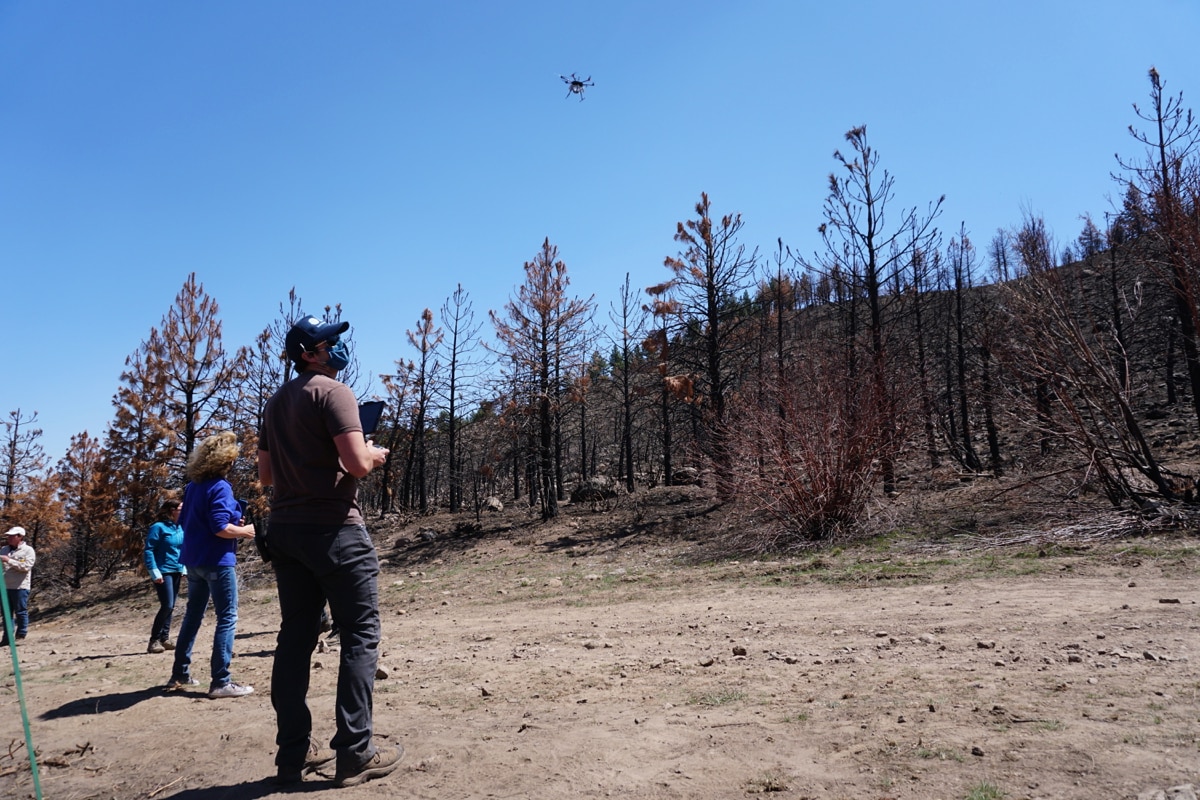
Patrick Melarkey of the Desert Research Institute flies the drone during a reseeding flight at the Loyalton Fire burn area on April 22, 2021.
Credit: DRI.
Drones are being tested for use in reseeding projects in other parts of the world, including California and the Pacific Northwest, but this project marks the first time this technology has been tested in the Eastern Sierra. For a trial area, the group selected a 25-acre site in a portion of the Humboldt-Toiyabe National Forest that burned in the Loyalton Fire of August, 2020.
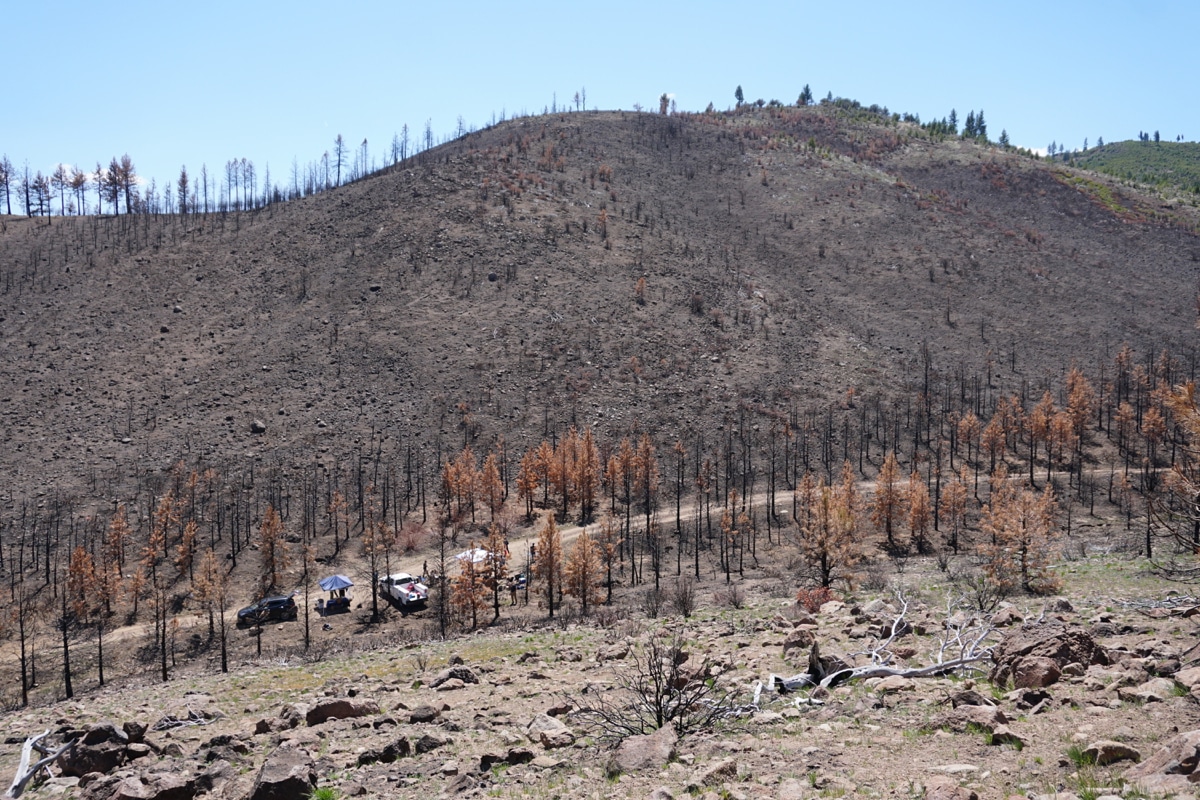
A hillside burned by the Loyalton Fire during August 2020. On April 22, 2021, the Desert Research Institute, Flying Forests, the Sugar Pine Foundation, and the Humboldt-Toiyabe National Forest conducted a reseeding project at this site using new drone technology.
Credit: DRI.
Prior to the drone reseeding event, DRI archaeologist Dave Page, M.A., conducted aerial mapping at the burn site. This detailed imagery was used to determine an appropriate flight path for dispersing seeds evenly across the burn area, and was programmed into software that guided the drone during the reseeding mission.
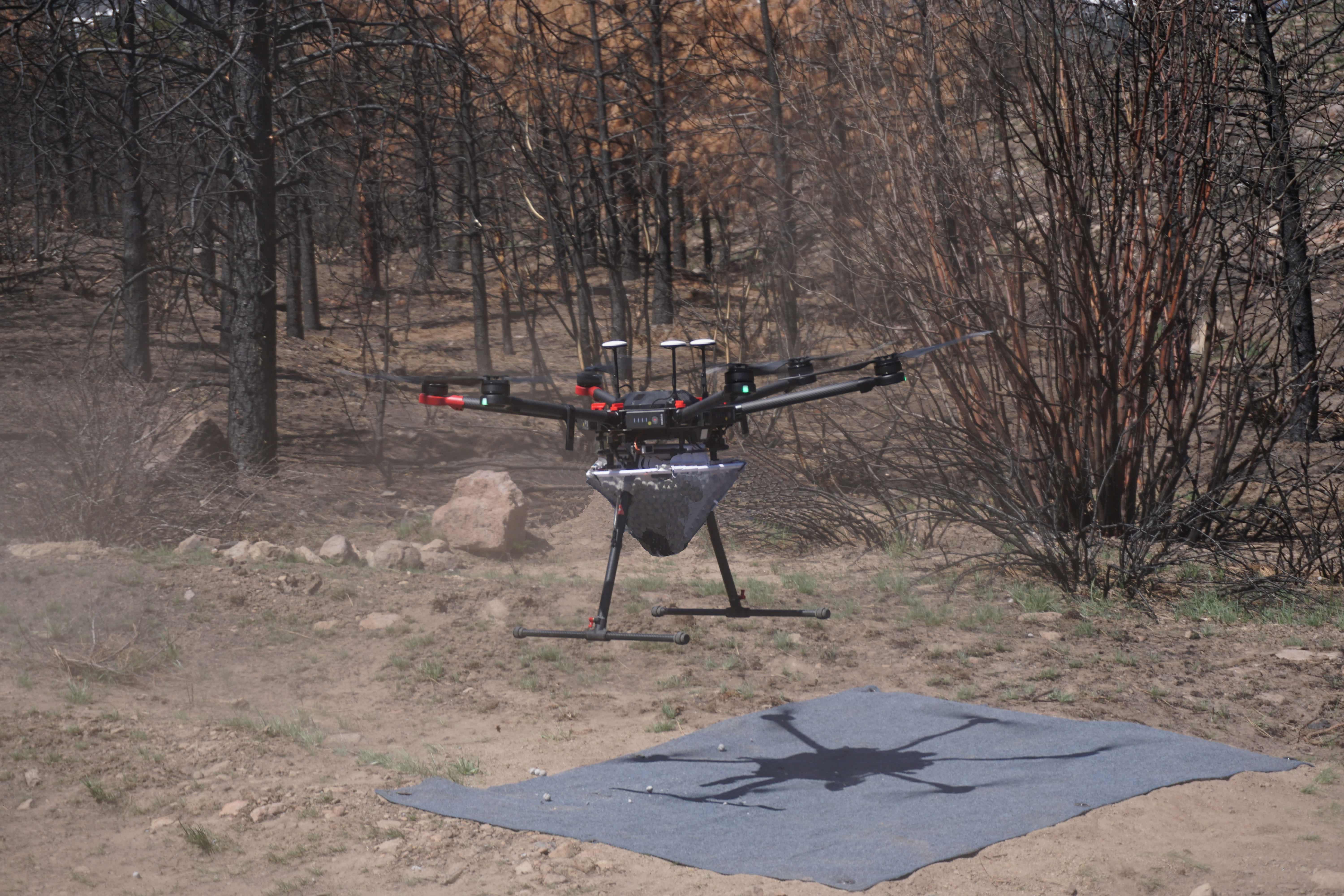
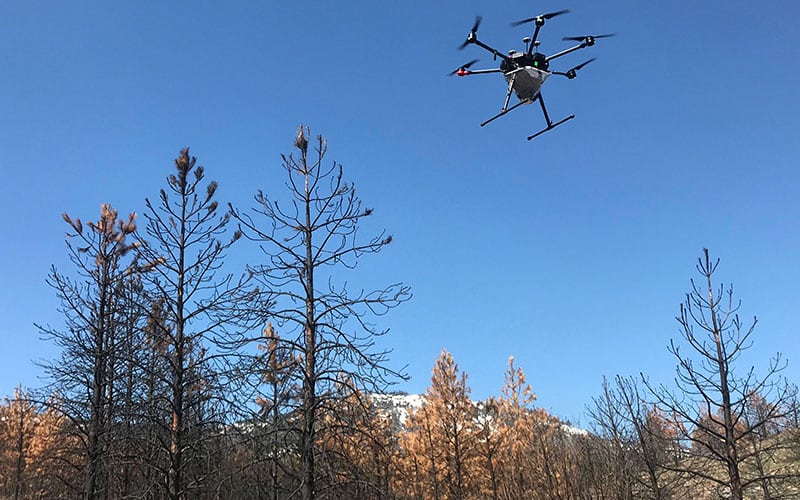
A drone carrying small seed balls of Jeffrey pine takes flight during a reseeding project at the Loyalton Fire burn area on April 22, 2021.
Credit: DRI.
On April 22nd and 23rd, 2021, DRI scientists Patrick Melarkey and Jesse Juchtzer provided technical expertise as drone pilots for the reseeding portion of the project. Over the course of two days of flying, Melarkey and Juchtzer dropped 25,000 Jeffrey pine seedballs across the 25-acre burn area. The drone made a total of 35 flights, carrying approximately 700-750 seedballs per flight.
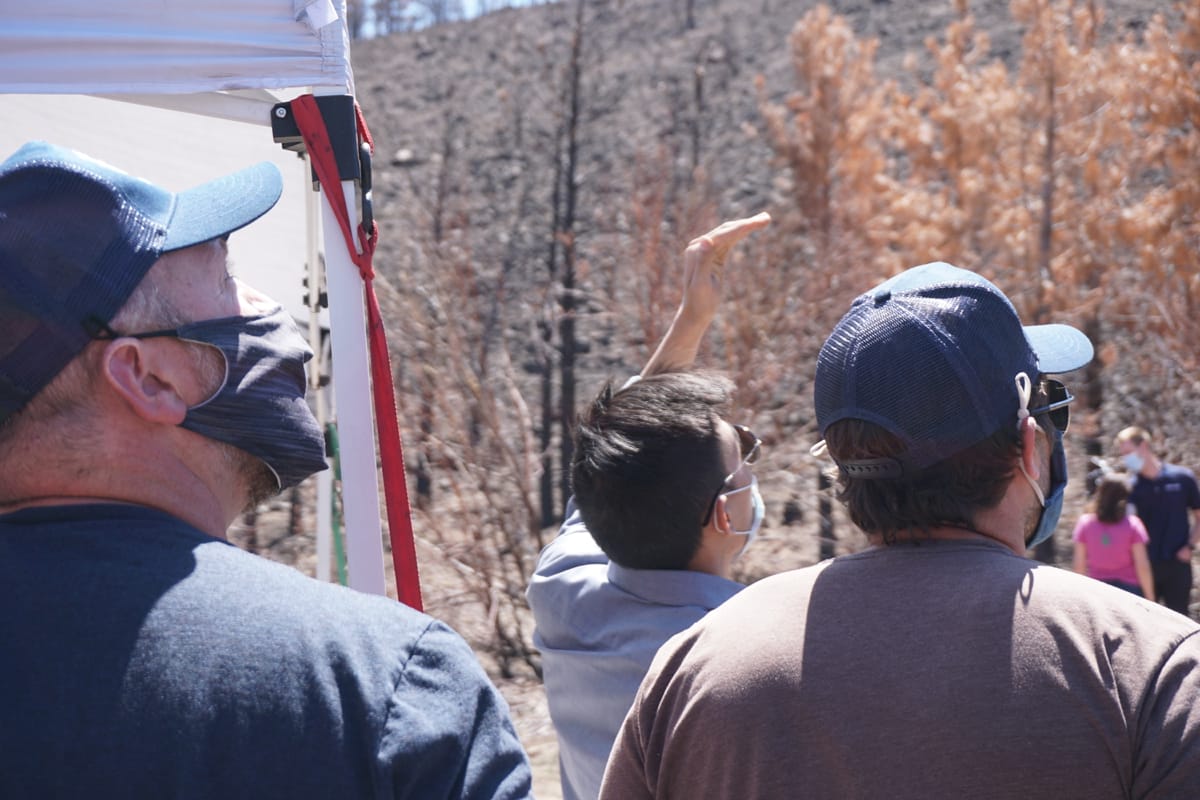
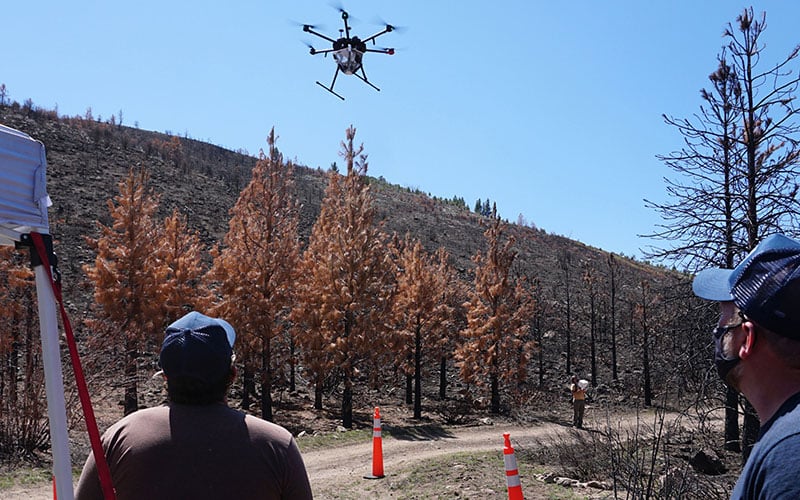
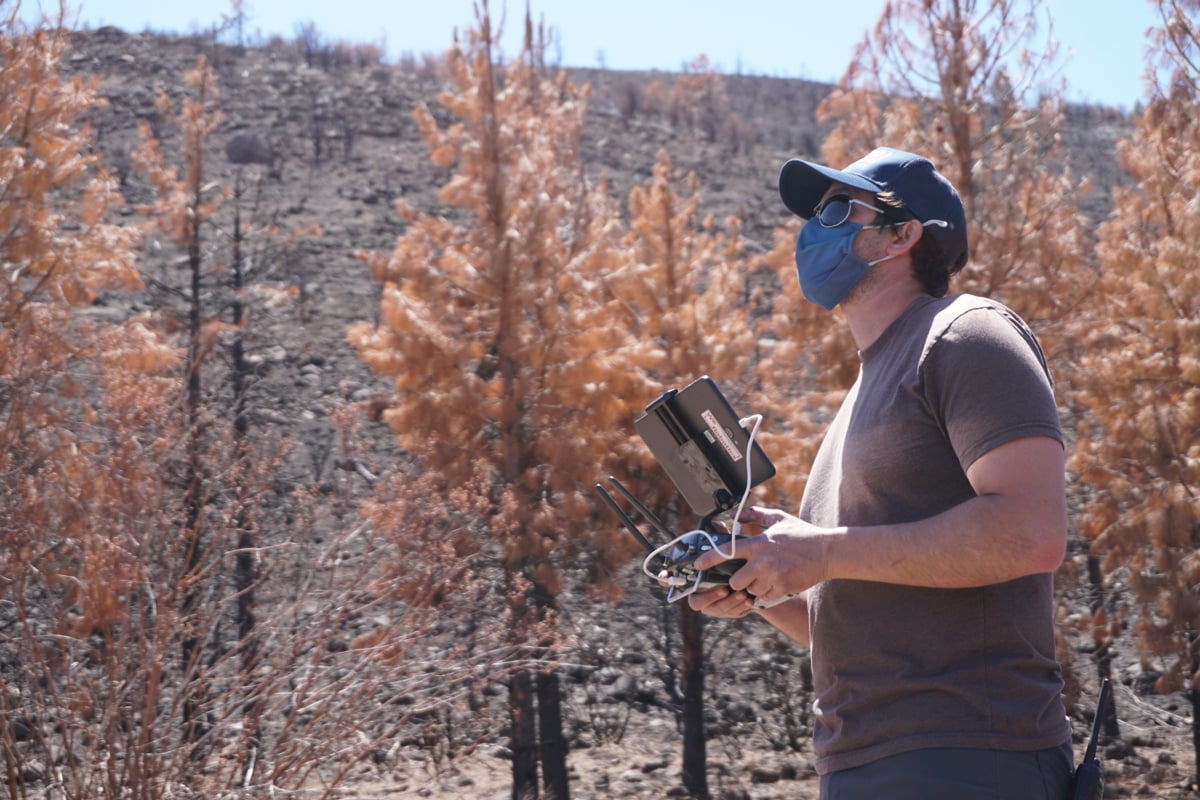
Above: Patrick Melarkey and Jesse Juchtzer from DRI fly a drone carrying small seed balls of Jeffrey pine during a reseeding project at the Loyalton Fire burn area on April 22, 2021.
Credit: DRI.
The seed balls were provided by the Sugar Pine Foundation, which worked with local community volunteers to collect more than 30 pounds of Jeffrey pine seed during the past year. The seed was combined with soil and nutrients into small balls that could be carried and distributed by the drone.
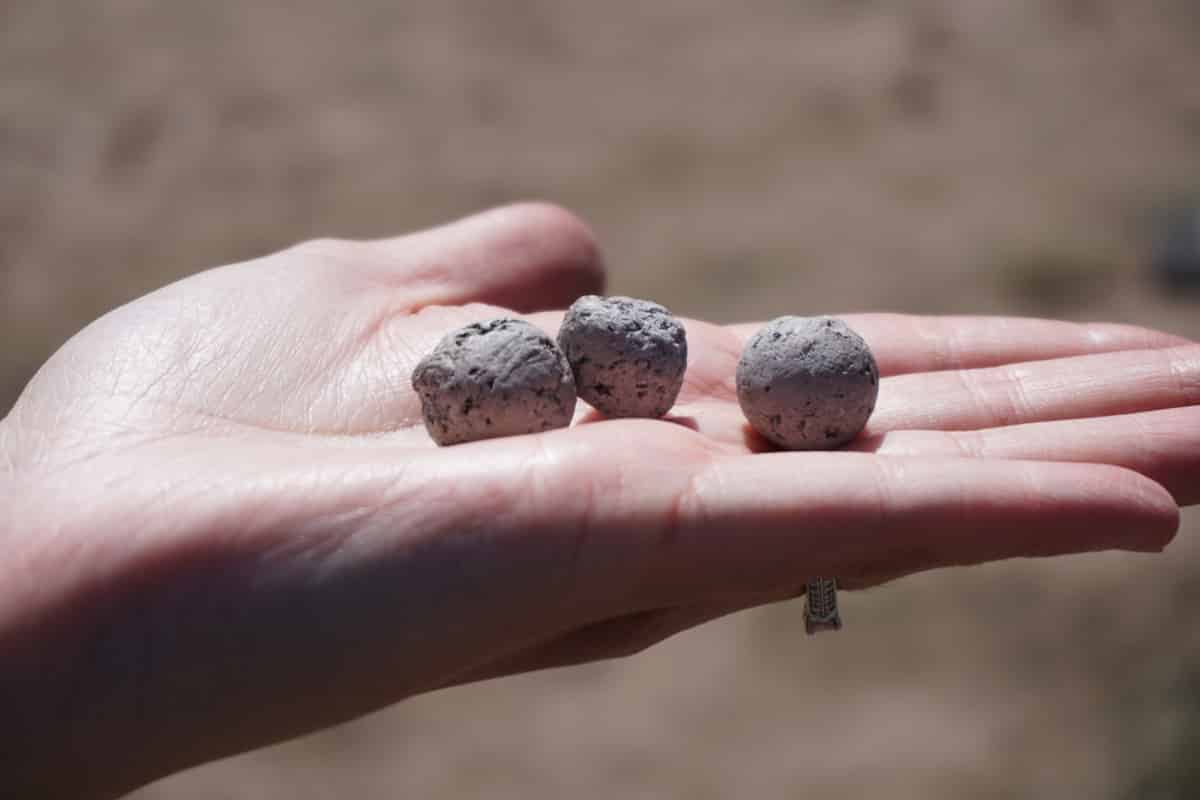
Credit: DRI.
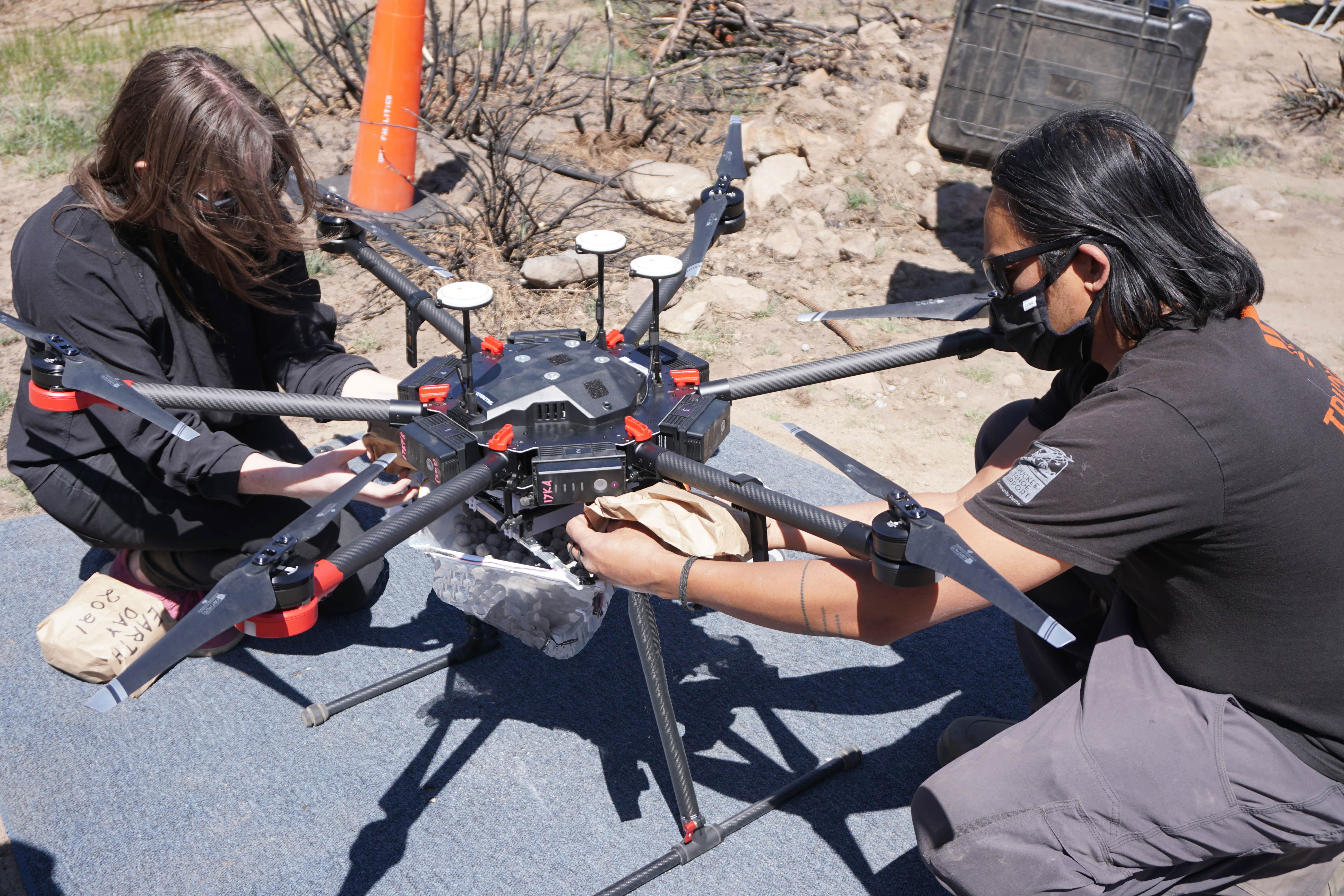
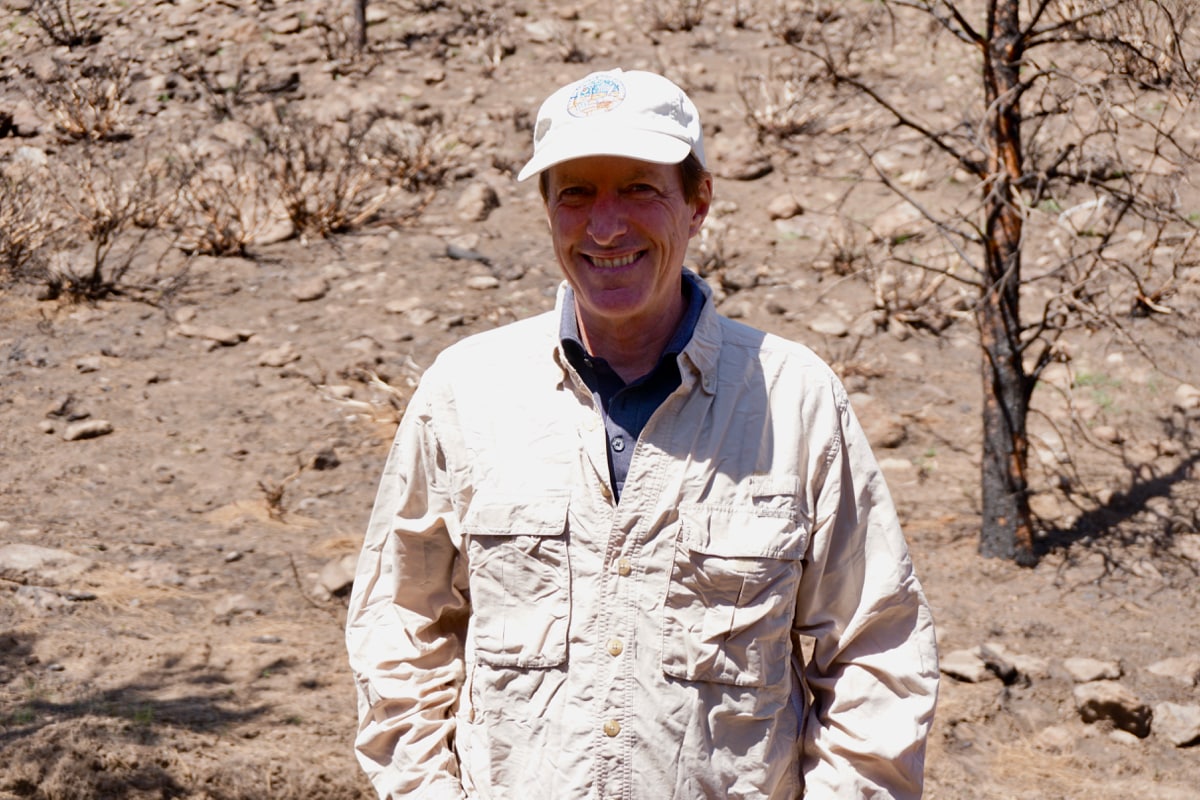
Above, left: Personnel from Flying Forests load seedballs of Jeffrey pine into a drone prior to a reseeding flight at the Loyalton Fire burn area on April 22, 2021. Above, right: Lauren Fletcher of Flying Forests invented the seed-spreading technology that was used during the drone reseeding project.
Credit: DRI.
Replanting native trees in burned areas can help stabilize slopes, reduce erosion, discourage growth of non-native plant species, and speed up the recovery of critical habitat for wildlife. Reforestation of burned areas is often done by planting small tree seedlings – but in areas far from roads or areas with especially steep terrain, this method can be expensive, labor-intensive, and dangerous. Spreading seeds by drone may provide a safer, cheaper, and easier alternative.
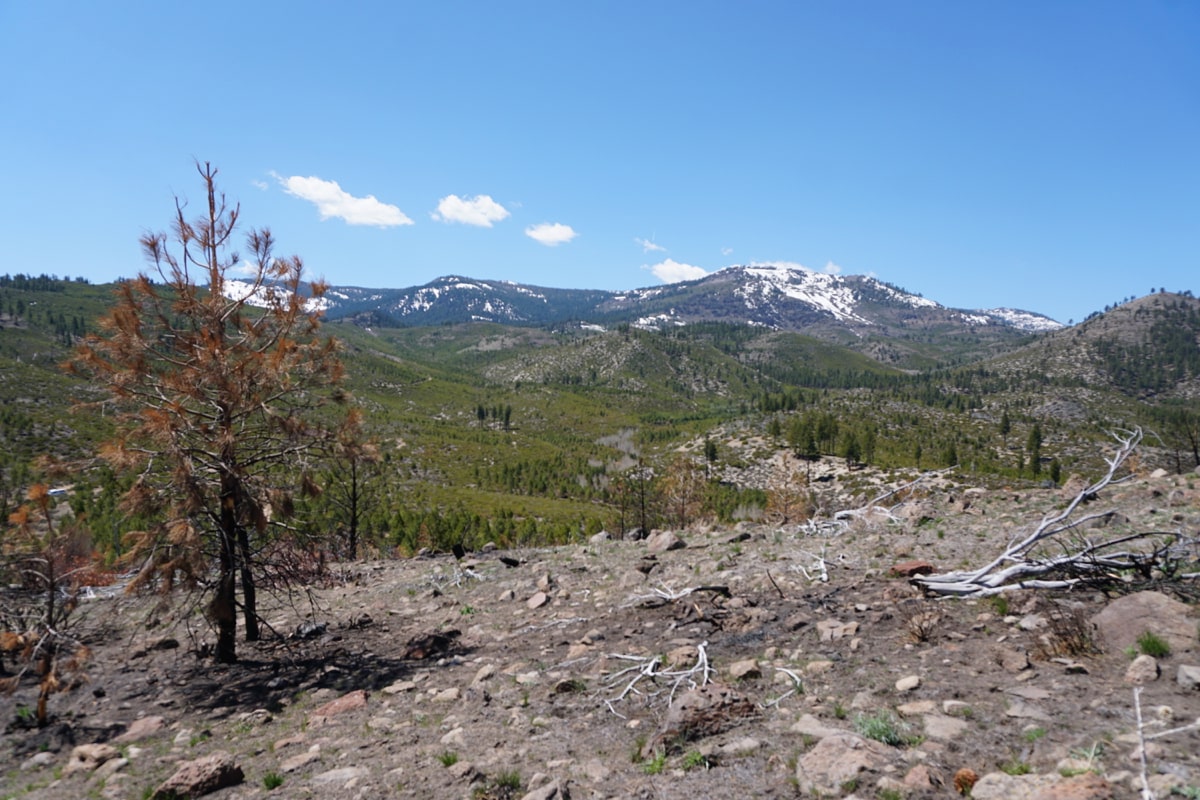
Looking west from a hillside burned by the Loyalton Fire during August 2020. On April 22, 2021, the Desert Research Institute, Flying Forests, the Sugar Pine Foundation, and the Humboldt-Toiyabe National Forest conducted a reseeding project on the burn area using new drone technology.
Credit: DRI
Additional photos:
For more photos of the drone replanting project, please visit: https://www.flickr.com/photos/driscience/albums/72157719000696158/with/51133563971/
Links to Media Coverage:
Restoring area forests one flight at a time, KOLO8 – https://www.kolotv.com/2021/04/23/restoring-area-forests-one-flight-at-a-time/
Drone scatters pine seeds to reforest hillside burned in Loyalton Fire, News4 – https://mynews4.com/news/local/drone-scatters-pine-seeds-to-reforest-hillside-burned-in-loyalton-fire
Pilot drone program helps reseed wildfire-ravaged areas in Tahoe, Sierra Nevada; Reno Gazette-Journal –https://www.rgj.com/story/news/2021/04/26/pilot-drone-program-reseeds-wildfire-ravaged-areas-tahoe-sierra-nevada/7384862002/
About Desert Research Institute
The Desert Research Institute (DRI) is a recognized world leader in basic and applied interdisciplinary research. Committed to scientific excellence and integrity, DRI faculty, students, and staff have developed scientific knowledge and innovative technologies in research projects around the globe. Since 1959, DRI’s research has advanced scientific knowledge, supported Nevada’s diversifying economy, provided science-based educational opportunities, and informed policy makers, business leaders, and community members. With campuses in Reno and Las Vegas, DRI serves as the non-profit research arm of the Nevada System of Higher Education.