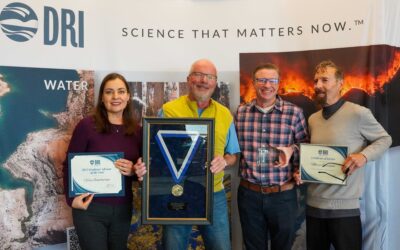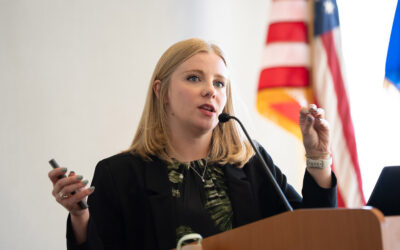
On Friday, April 17th, 17 graduate students presented their research at DRI’s Reno campus for the annual poster presentation session. Organized by Kathleen Rodrigues, PhD, Assistant Research Professor of Luminescence, the event offers an opportunity for DRI-affiliated graduate students to network with each other and with DRI faculty, hone their presentation skills, and showcase the research they’re working on in pursuit of their degrees. Their scientific interests span a range of topics, from using aquatic insects as water quality indicators to supporting rural air quality monitoring. The three winning students selected for their exceptional science communication skills are highlighted below.
For more information about ways to conduct graduate research at DRI while earning a degree through UNR or UNLV, visit https://www.dri.edu/education-workforce-development/graduate-programs/.
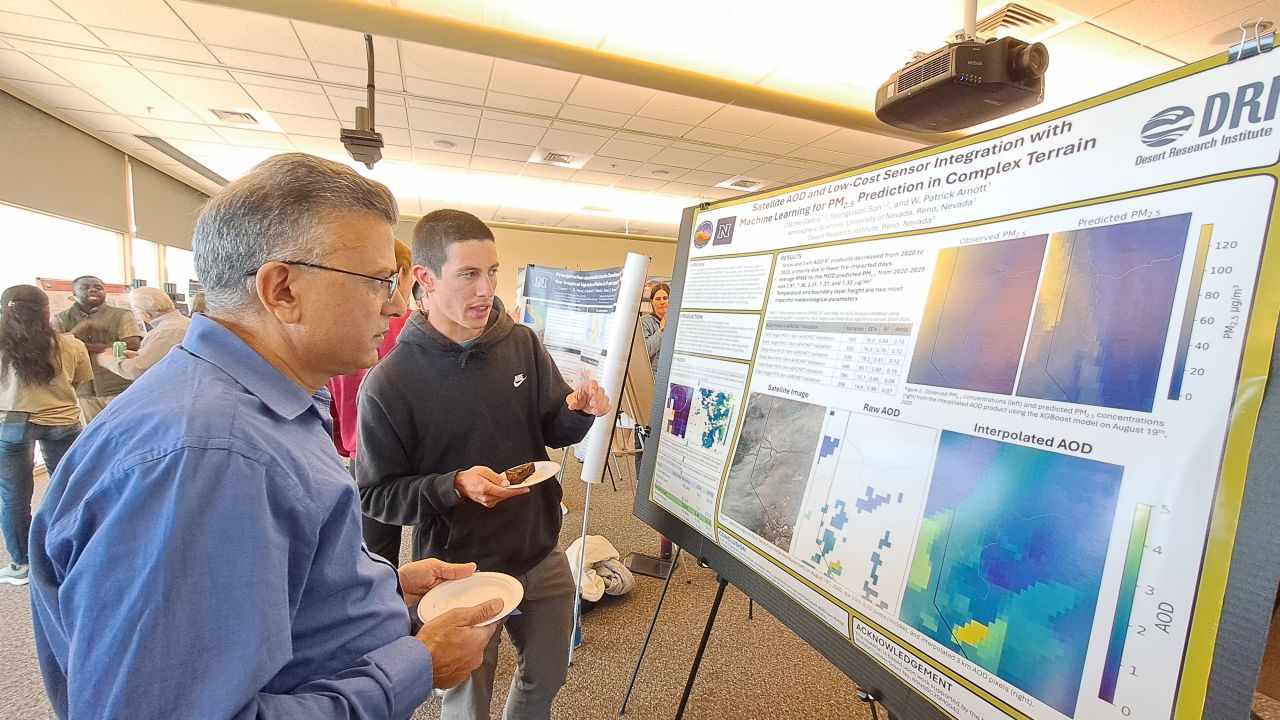
First Place: Celime Garcia
Advisor: Dr. Yeongkwon Son, DRI
Third year PhD candidate in the Atmospheric Sciences Graduate Program
Project Title: Satellite AOD and Low-Cost Sensor Integration with Machine Learning for PM2.5 Prediction in Complex Terrain
- What problem is your research seeking to solve?
Rural communities often lack access to reliable air‑quality information because traditional monitoring networks rarely extend beyond urban centers. To close this data gap, my research introduces a new technique for reconstructing missing satellite data and combining it with measurements from low‑cost air quality sensors. This integrated approach improves the ability to estimate surface pollution levels in underserved areas.
- What is the most important thing you want people to know about your research?
The most important thing to understand about my research is that accurate air‑quality information becomes critical during wildfire events, which can seriously harm human health and worsen long‑term cardiovascular and respiratory conditions. Rural communities often lack reliable monitoring during these high‑risk periods, leaving people without the information they need to protect themselves. By developing better methods to estimate air quality, especially in places where data is limited, this research helps ensure that everyone, from children to older adults, has access to reliable pollution information year‑round.
- What do you want your DRI colleagues to know about you?
I can run a 5k in 14 minutes and 31 seconds.
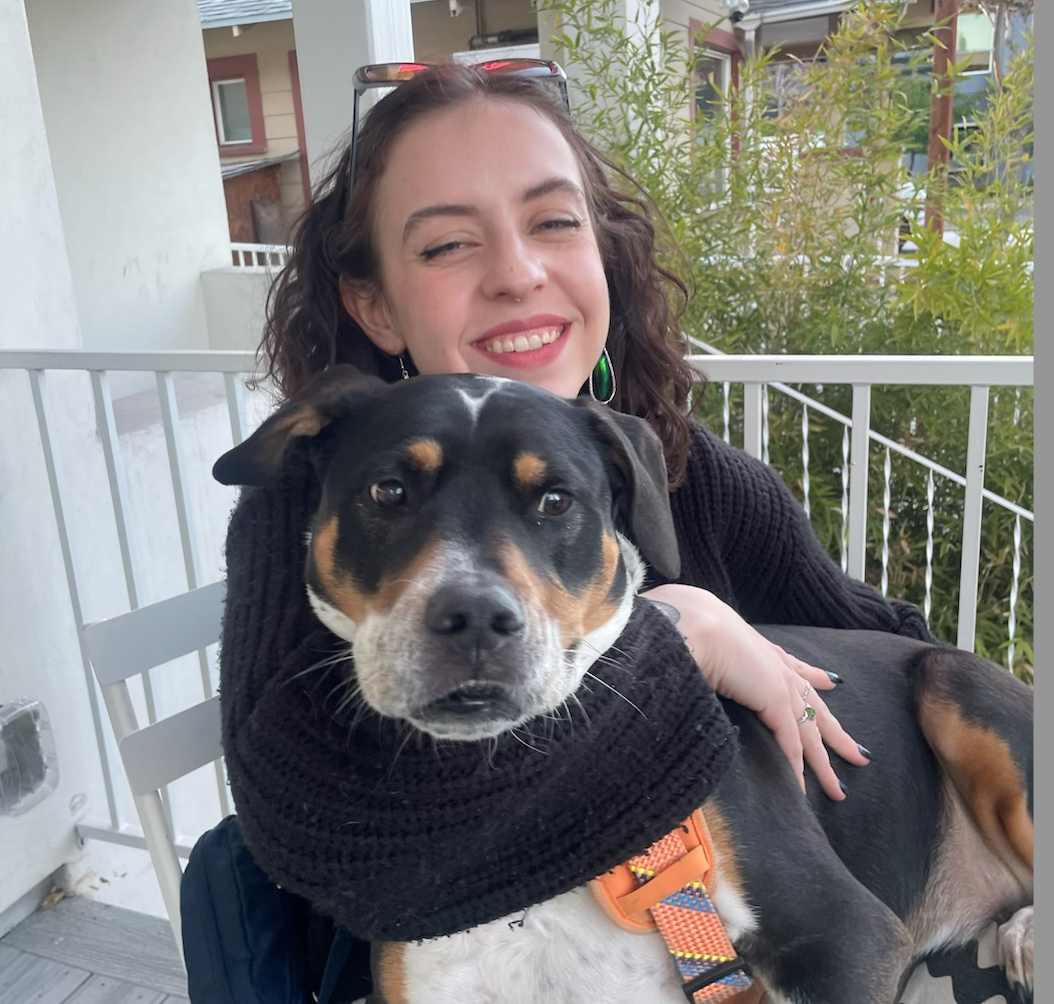
Second Place: Marin Monteith
Advisor: Dr. Monica Arienzo, DRI
First year M.S. student in the Ecology, Evolution, and Conservation Biology Program at UNR
Poster title: Bugs and Burn Scars: Benthic Macroinvertebrates as Indicators of Post-Wildfire Water Quality in Sierra Nevadan Streams
- What problem is your research seeking to solve?
My research is investigating the impacts of wildfire on water quality in the Sierra Nevadas. These high elevation, snowpack-fed streams face myriad novel threats from wildfires, drought, shifting flow and snowfall regimes, and other climate-driven and anthropogenic disturbances. Invertebrate communities integrate these instream signals and offer insight into the applied ecological effects of fire disturbance and regime shifts over time.
- What is the most important thing you want people to know about your research?
Mountains feature more than 50% of the world’s biodiversity hotspots and provide up to 80% of the world’s freshwater. I often refer to benthic macroinvertebrates in these systems as “canaries in the coal mine;” they are excellent storytellers of how these incredibly important systems are doing. I strongly believe that the amazing work being done on post-wildfire research, modeling, and management should better incorporate biomonitoring and applied ecological frameworks, as nature can tell us so much about how it’s struggling if we know how to listen.
- What do you want your DRI colleagues to know about you?
The way to my heart is through a cool bug fact, a good pastry and cup of coffee, or sharing pictures of our pets. Ask me about fig wasps or my pup, Fig Newton!
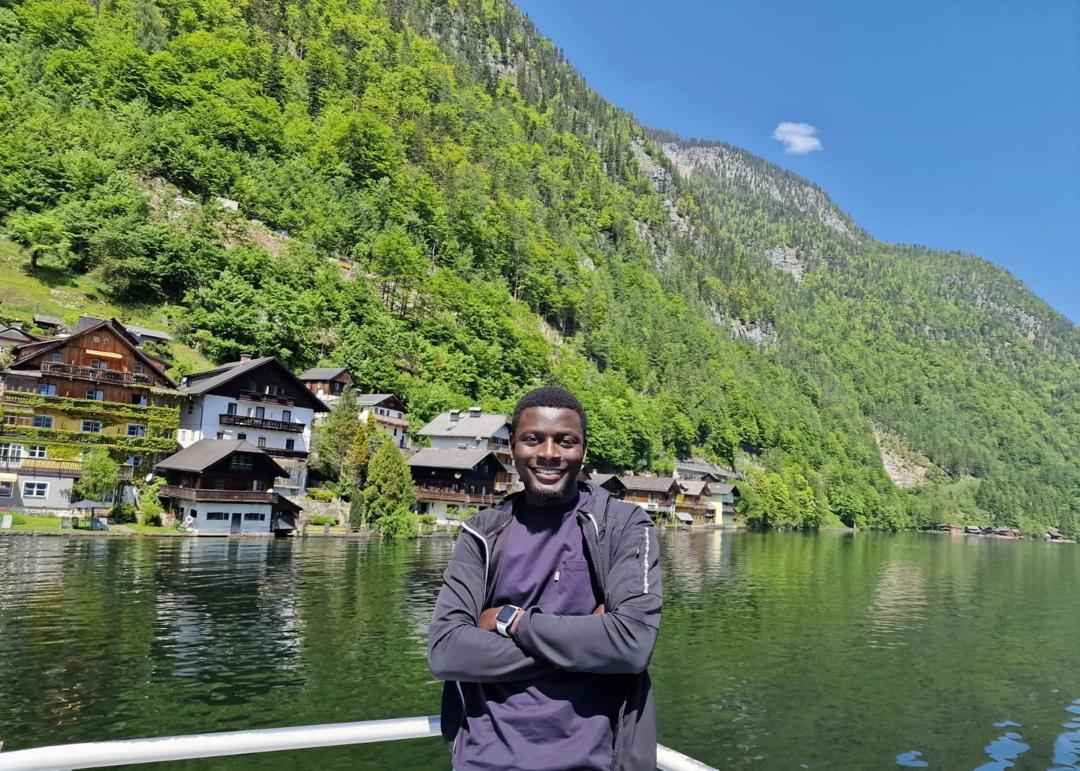
Third Place: Gbenga Alawode
Advisor: Dr. Erin Hanan, UNR
Second year PhD student in the Graduate Program of Hydrologic Sciences.
Project Title: Spatial Pattern and Modeling of Ignitions in the Pacific Northwest
- What problem is your research seeking to solve?
My research applies ecohydrological, statistical, and machine-learning models to understand changes in wildfire regimes, how landscapes respond to shifts in fire regimes, the impacts on water quality, and how different management activities can be used to minimize their impacts. Generally, my research increases our understanding of how changing wildfire regimes affect watershed hydrology and post-fire water quality, particularly nutrient and dissolved organic carbon (DOC) dynamics.
- What is the most important thing you want people to know about your research?
Wildfires are not just an ecological disturbance; they are a growing water-quality threat, and my work helps improve our ability to predict and manage their impacts on freshwater systems.
- What do you want your DRI colleagues to know about you?
I am an interdisciplinary researcher who combines process-based modeling and data-driven approaches to study wildfire–water interactions, and I value collaboration and applying research to real-world challenges. Outside of research, I enjoy listening to history podcasts and exploring new places.