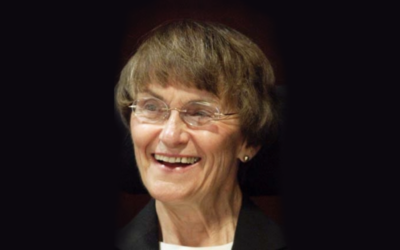
April 30, 2020 (RENO) – Drs. Judith Chow and John Watson, research professors in the Division of Atmospheric Sciences at the Desert Research Institute in Reno, were awarded Elsevier Publisher’s 2019 Haagen-Smit Prize for outstanding paper published in the journal Atmospheric Environment.
Awarded annually, the Haagen-Smit Prize recognizes two outstanding papers out of the nearly 24,000 articles published in Atmospheric Environment since 2001. The 2019 Prize went to Chow, Watson, and their colleagues for their 1993 paper, “The DRI thermal/optical reflectance carbon analysis system: Description, evaluation and applications in U.S. air quality studies,” which has received more than 925 citations. It is the 12th most cited article in Atmospheric Environment since the journal’s inception.
“This paper has had a major influence on the practice of atmospheric science as evidenced by its very high number of citations,” wrote the Haagen-Smit Prize Committee.
The winning paper by Chow, Watson, and their DRI colleagues describes and evaluates instrumentation and methodology developed at DRI. The DRI Carbon Analyzer instrument and their analytical method was subsequently commercialized and adopted in air quality networks in the United States and other countries, including Canada and China. The resulting measurements have been used to determine the contributions to air pollution from sources like domestic cooking and heating, engine exhaust, wildfires, and other emitters, all of which affect human health, visibility, material soiling, and climate.
“We greatly appreciate this recognition for all of the contributing DRI faculty and staff, including Lyle Pritchett, Cliff Frazier, Rick Purcell, and especially our former Executive Director, the late Bill Pierson,” said Chow. “It illustrates the importance of the team efforts that distinguishes DRI.”
Dr. Ari Haagen-Smit was a pioneering air quality scientist who discovered and elucidated the origins of photochemical smog in southern California. He was a colleague of Dr. Frits Went at the California Institute of Technology, who later joined the DRI faculty and is the namesake of DRI’s Frits Went laboratory. Dr. Went developed methods to measure organic emissions from agricultural crops that Dr. Hagen-Smit applied to the engine exhaust emissions that created the smog.
This award is distinct from the California Air Resources Board’s (ARB) Haagen-Smit Clean Air Awards, often termed the “Noble Prize” of air quality science and policy. Dr. Haagen-Smit was the first ARB chairperson. Dr. Chow received this honor in 2011, and the 2018 award was bestowed on Dr. Watson.
At DRI, Chow leads Environmental Analysis Facility, where she, Watson, and her colleagues develop and apply advanced analytical methods to characterize air pollutants, identify sources and their effects on health, climate, visibility, ecosystems, and cultural artifacts.