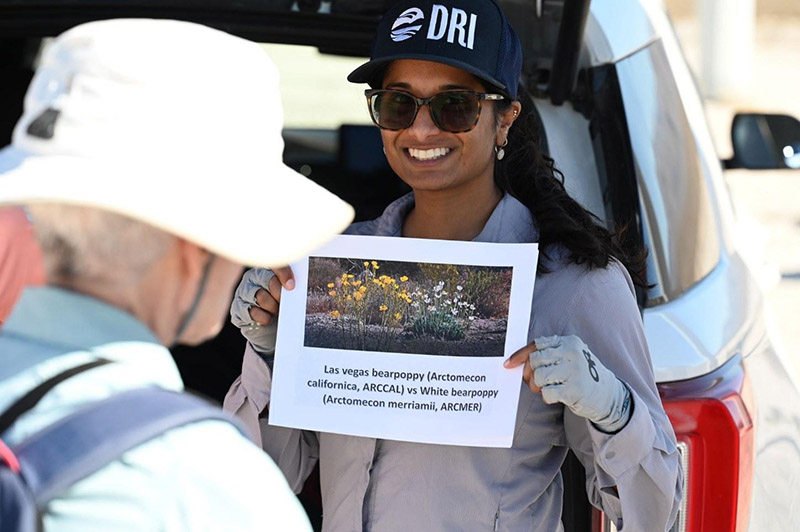
Tiffany is wearing a DRI hat and holding up a picture of the Las Vegas Bearpoppy to a group of volunteers.

Join DRI’s Conservation Ecology Lab in Protecting Desert Flora & Fauna

The DRI Conservation Ecology Lab, led by Tiffany Pereira and Tsvetelina Stefanova, helps guide the conservation and restoration of the Southwest’s diverse flora and fauna through basic and applied ecology and collaboration with federal agencies, community non-profits, and more. Central to the Conservation Ecology Lab’s mission to protect desert ecosystems is addressing and educating the public on the detrimental effects of invasive species, particularly on rare and threatened species.
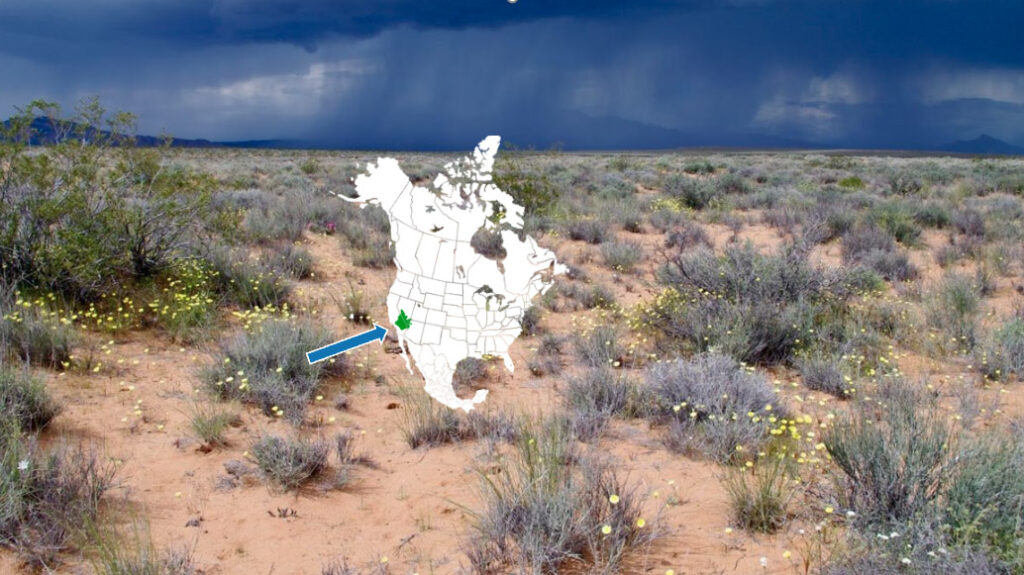
A map of the North American Continent with a background image of the desert on a rainy day.

A Rare Desert Plant Shows Benefits of Sustainability Efforts at a Large Solar Array in the Mojave Desert 

Although sunlight is one of the cleanest forms of renewable energy available, clearing large swathes of desert habitat to build solar arrays has consequences for the plants and animals it displaces. Researchers are trying to find better ways to preserve desert landscapes without impeding solar energy development. Now, a new study demonstrates that with careful planning and consideration for the ecosystem around it, at least one desert plant is surviving — and thriving — amidst the solar panels helping to power Las Vegas.  

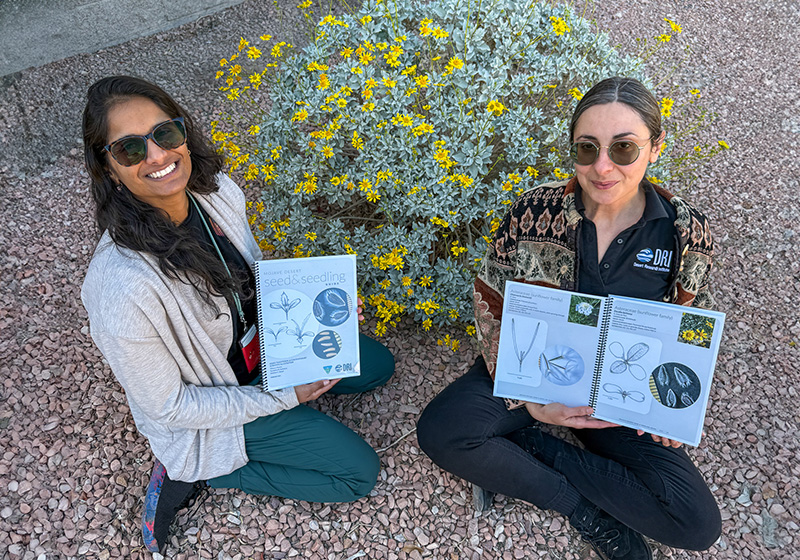
Tiffany and Tsvetelina holding the seedling guide in front of a blooming desert plant with yellow flowers.

Tiffany Pereira Blends Art and Science in New Mojave Seedling Guide

The ecologist and illustrator created a first-of-its-kind seedling guide to help land managers and community members identify native plant seeds and aid with restoration work. DRI sat down with Pereira for more information about her goals and inspiration for the project, the benefits of fusing art with science, and the miracles contained in the tiniest seeds.