Students from DRI’s WASH Capacity Building Program learn about dry sanitation during a field trip to the University of eSwatini (Swaziland) project site at the community of Buka, eSwatini. September 2018. Credit: Braimah Apambire/DRI.
In August and early September 2018, several faculty members from the Desert Research Institute (DRI) found themselves far from home – teaching courses in water, sanitation, and hygiene (WASH) and environmental issues in the Kingdom of eSwatini, formerly known as Swaziland, a small country nestled along South Africa’s eastern border with Mozambique.
The courses, all focused on a set of interconnected environmental issues and public health challenges referred to by the acronym “WASH” (short for water, sanitation, and hygiene) are part of an ongoing WASH Capacity Building Program, operated by DRI’s Center for International Water and Sustainability (CIWAS). This program received a five-year funding award from humanitarian non-governmental organization World Vision earlier in 2018 and provides technical capacity training to field staff who work in the WASH sector in developing countries.
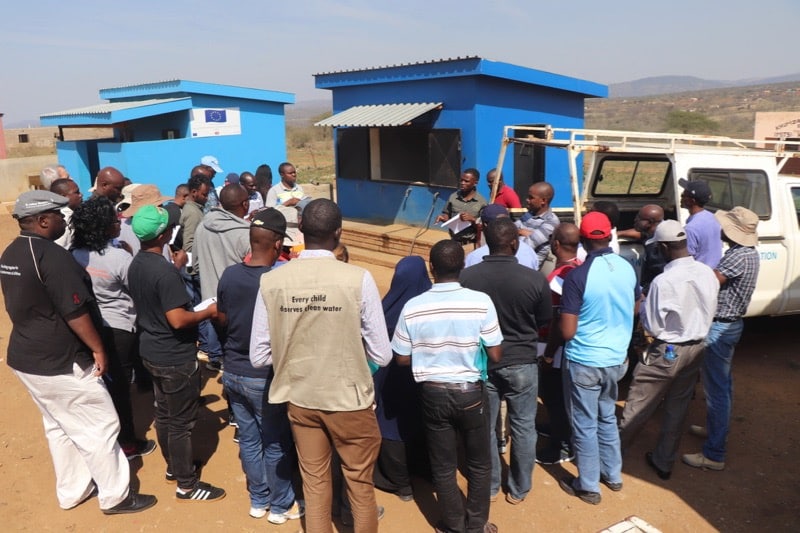
Students from DRI’s WASH Capacity Building Program on a field trip to a World Vision and eSwatini Water Services Corporation Program site in Matsanjeni, southeastern eSwatini. Students learned about management of piped water supply systems, sanitation technologies and transboundary water issues. September 2018. Credit: Braimah Apambire/DRI.
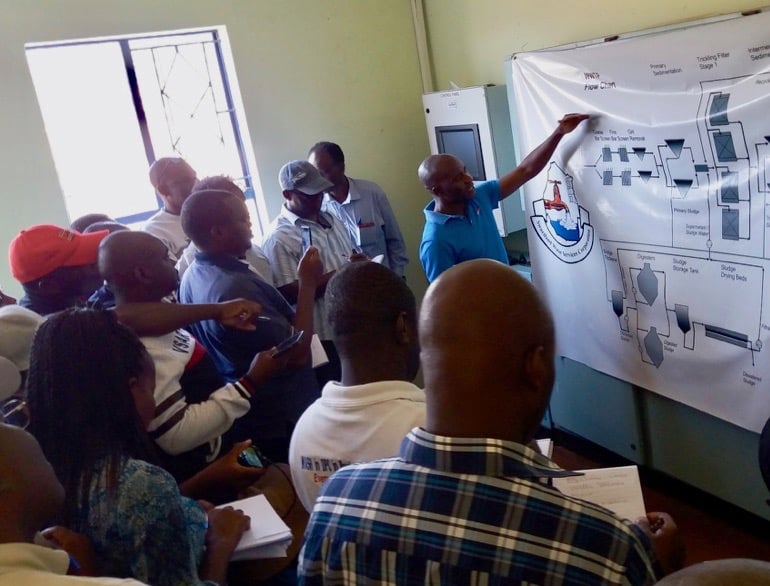
Students from DRI’s WASH Capacity Building Program on a University of eSwatini University-led field trip to the Mbabane Wastewater Treatment site. Credit: Braimah Apambire/DRI. September 2018.
“The WASH Capacity Building Program is a partnership between DRI, the University of Nevada, Reno, Drexel University, and World Vision,” explained Braimah Apambire, Director of CIWAS. “We’ve developed six courses which we teach partly online and partly face-to-face, and the students take four of those courses to complete our post-graduate certificate program. In April, we taught two courses in Ghana, and the two courses that we just taught in eSwatini were the next in the series.”
The current cohort — the third since the program’s pilot season in 2016 — consists of 30 students from 18 African countries. In eSwatini, their coursework focused on water supplies and environmental management in developing countries, and on cross-cutting issues in WASH. The classes were taught by Apambire, DRI’s Rosemary Carroll, Ph.D., and Alan Heyvaert, Ph.D., and Emmanuel Opong, Ph.D., of World Vision.
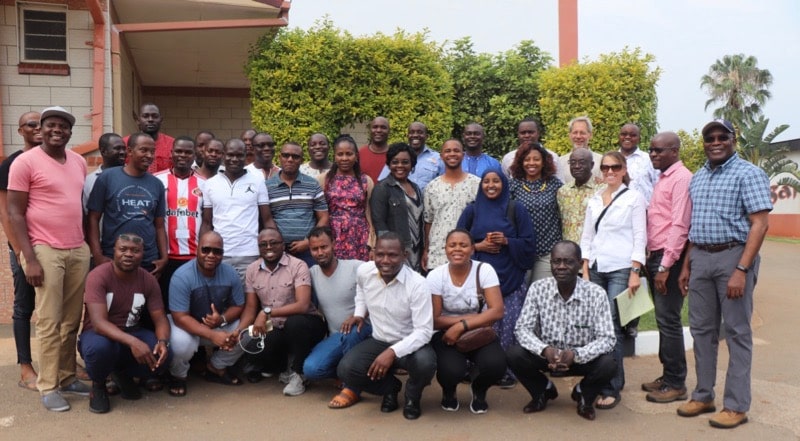
Participants in DRI’s WASH Capacity Program gathered in eSwatini during August and early September 2018 to complete courses in cross-cutting issues in water, sanitation, hygiene and environmental issues. The 2018 cohort includes 30 students from 18 countries. Sept. 2018. Credit: World Vision eSwatini Communications.
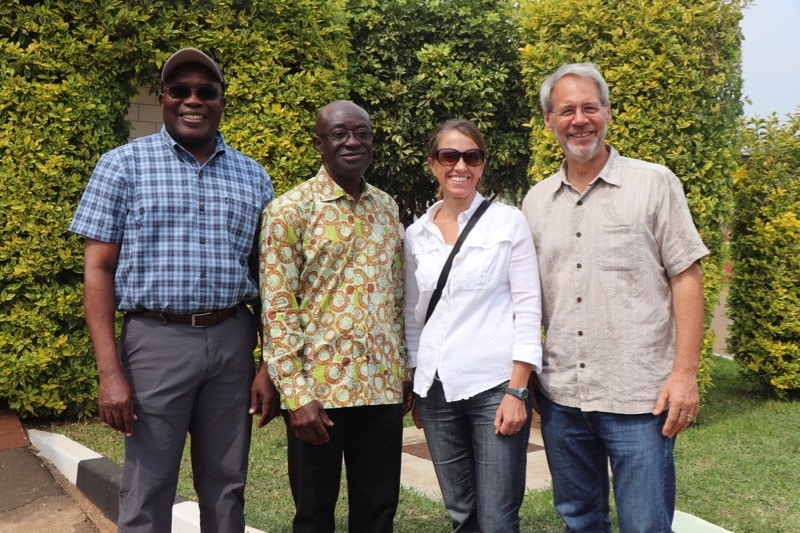
From left to right: Courses were taught by instructors Braimah Apambire, Ph.D. (DRI), Emmanuel Opong, Ph.D. (World Vision), Rosemary Carroll, Ph.D. (DRI), and Alan Heyvaert, Ph.D. (DRI). Sept 2018. Credit: World Vision eSwatini Communications.
The classroom time was interspersed with field trips to rural areas, dams, water and sanitation facilities, wastewater treatment plants, and more. Students got a firsthand look at some of the WASH challenges that are common in eSwatini and a chance to experience some of the region’s unique culture and countryside. CIWAS collaborators from the University of eSwatini gave guest lectures and organized field trips for the students during face-to-face teaching in the country.
“ESwatini is a mountainous country and very, very beautiful,” Apambire said. “It is a kingdom with a king who is the ruler of the country, and a traditional culture that is almost completely intact. Their government and NGOs, including World Vision, take interest in developing social programs that help people, especially the poor. But they still have rural areas that do not have water and sanitation facilities.”
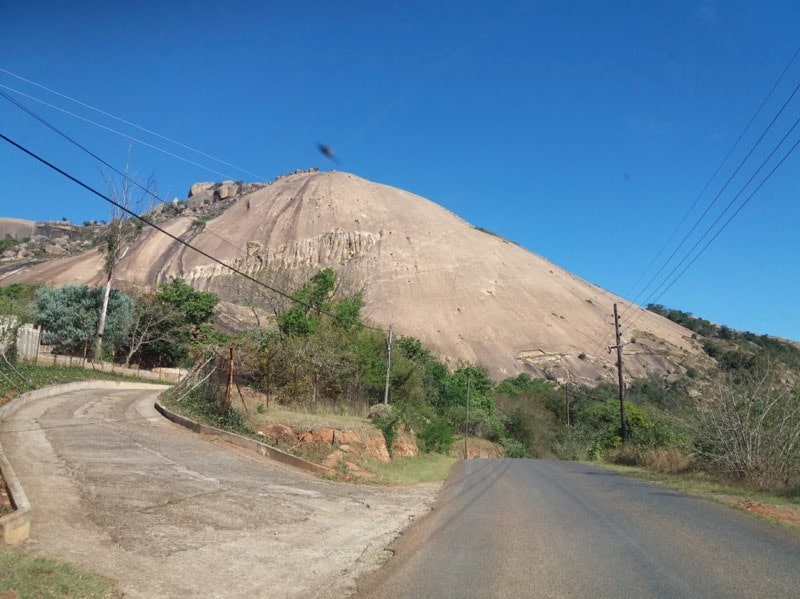
Sibebe Rock, north of Mbabane, Capital of eSwatini, one of southern Africa’s most impressive geological features. Sept 2018. Credit: Braimah Apambire/DRI.
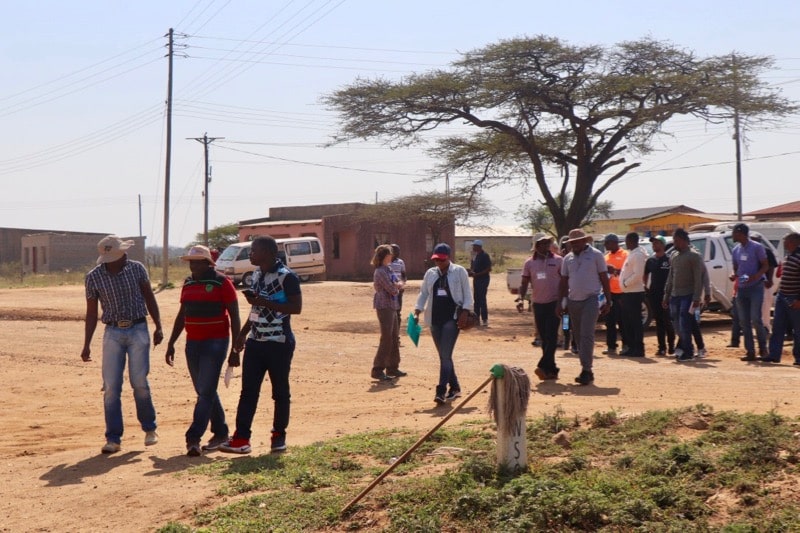
Students from DRI’s WASH Capacity Building Program take a field trip to eSwatini’s Buka Community. September 2018. Credit: Braimah Apambire/DRI.
Most notably, says Apambire, people of eSwatini are currently experiencing WASH challenges related to an ongoing drought, which neighboring South Africa is experiencing as well. DRI has had discussions with the University of eSwatini and some governmental departments about how the institute can help address their challenges.
“Because of the impact of climate change and reductions in rainfall, they are having some existing wells dry up,” Apambire said. “There needs to be more research to find out what some of the causes are and how to mitigate that. Artificial recharge is one option, and they probably also need to look for alternative sources of drinking water for those communities. That’s their biggest challenge right now.”
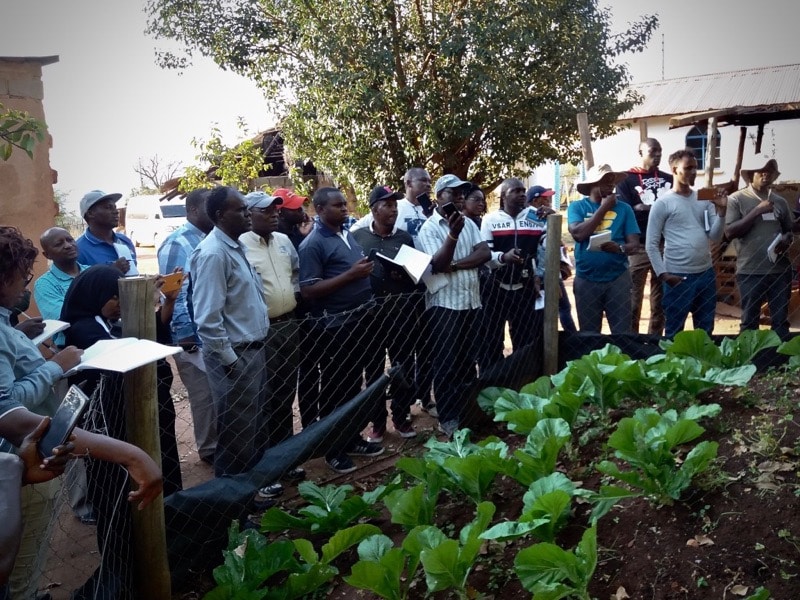
Students from DRI’s WASH Capacity Building Program on a University of eSwatini University-led field trip to a house in the Buka community where wastewater is used to grow vegetables. Credit: Braimah Apambire/DRI.
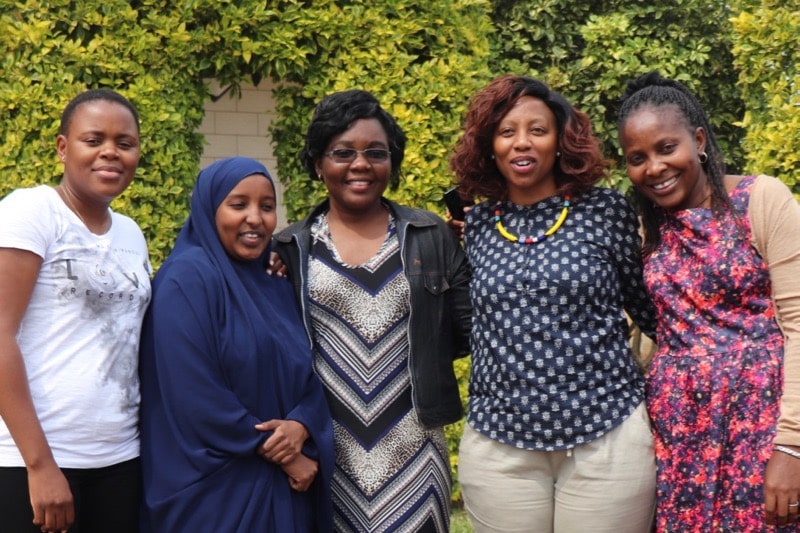
Five women are enrolled in the 2018 cohort of the WASH Capacity Building Program, receiving training that will help them become leaders in the WASH sector. Sept 2018. Credit: Braimah Apambire/DRI.
For women and girls in many African nations, challenges related to WASH impact everything from their ability to go to school each day to the survival and well-being of their children and families. For this reason, Apambire is pleased to report that, for the first time, five of the students in this year’s cohort are female.
“DRI is helping to build women leaders in this sector,” Apambire said. “Women in Africa are the ones that the burden of fetching water falls on. When you are a girl and there is no water in your village, you spend a lot of time going to fetch water, sometimes a mile or two away. Then you are not able to go to school, so it affects education. Having women become trained as WASH professionals and go back to the villages really empowers them to become a part of the implementation and management of these projects.”
This fall, students in the 2018 cohort of the WASH Capacity Building Program will finish their coursework online, with instruction from Apambire, Seshadri (Shey) Rajagopal, Ph.D. of DRI, Emmanuel Opong, Ph.D., and John Akudago, Ph.D., WASH Sector Expert. The program is now accepting applications for their 2019 cohort.
Learn more:
Follow CIWAS on Twitter at @driciwas – https://twitter.com/driciwas
For more information on CIWAS, please visit: https://www.dri.edu/ciwas/
For more information on the WASH Capacity Building Program, please visit: https://www.dri.edu/ciwas/wash-capacity-building-program/