An ambitious experiment in the Reno desert is bringing together researchers from across Nevada to apply cutting-edge technology to wildfire research.
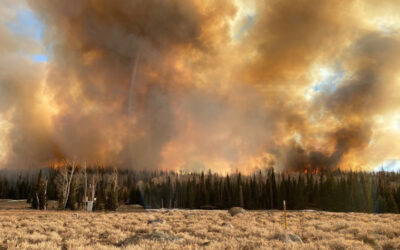
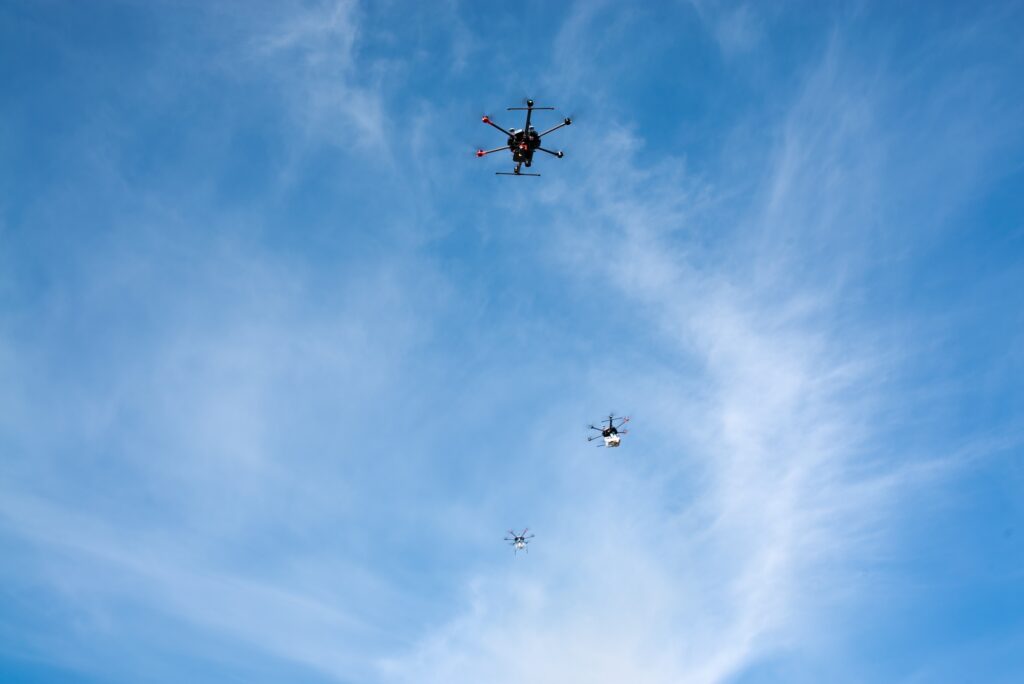
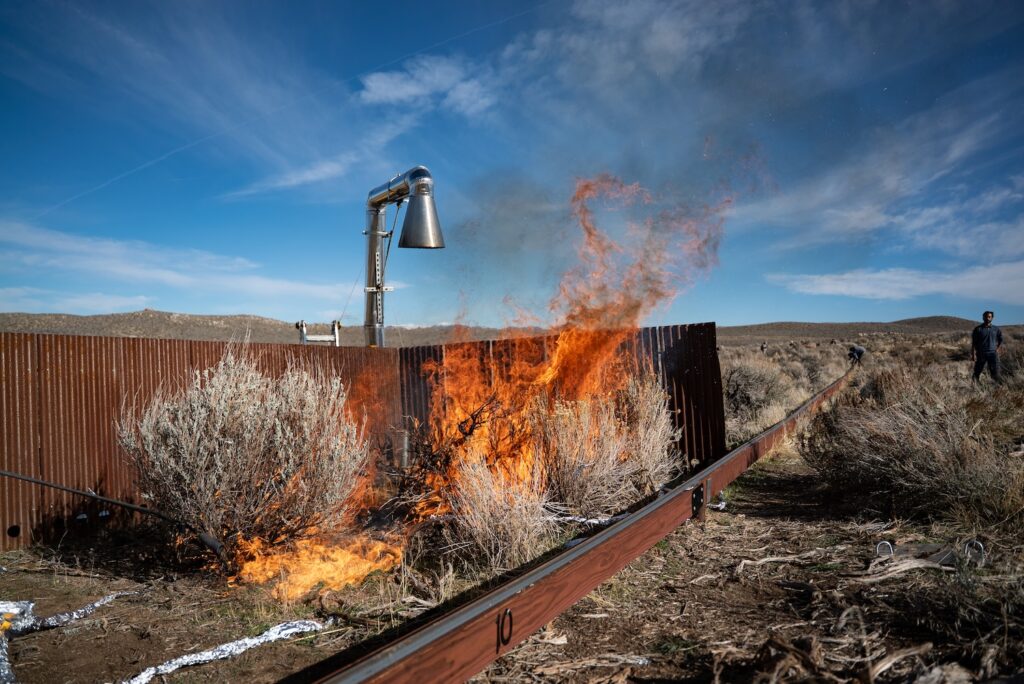
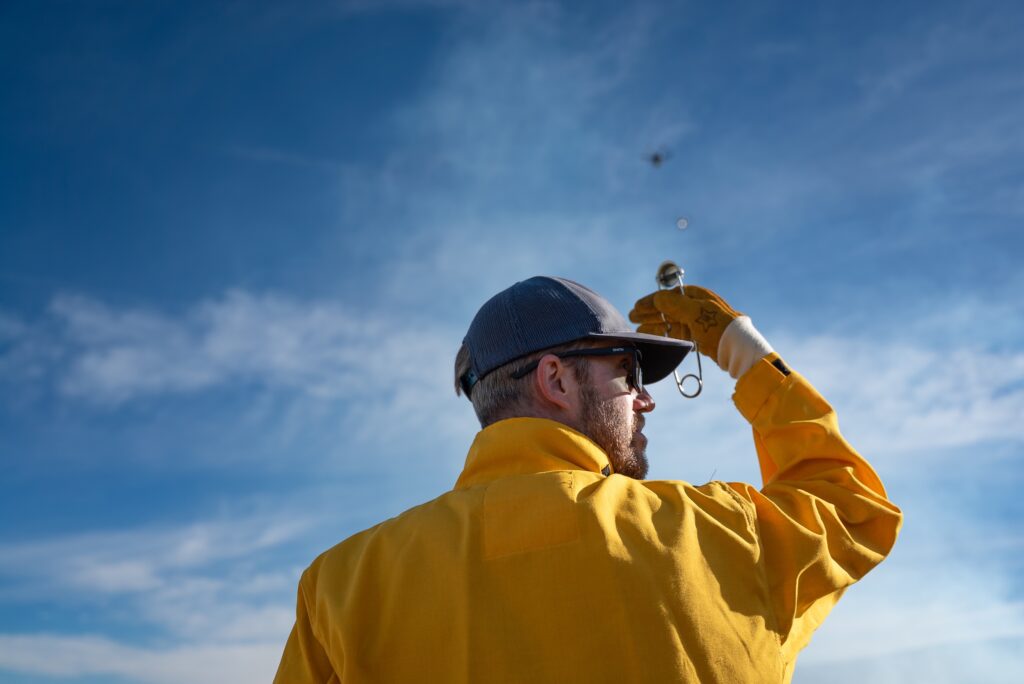
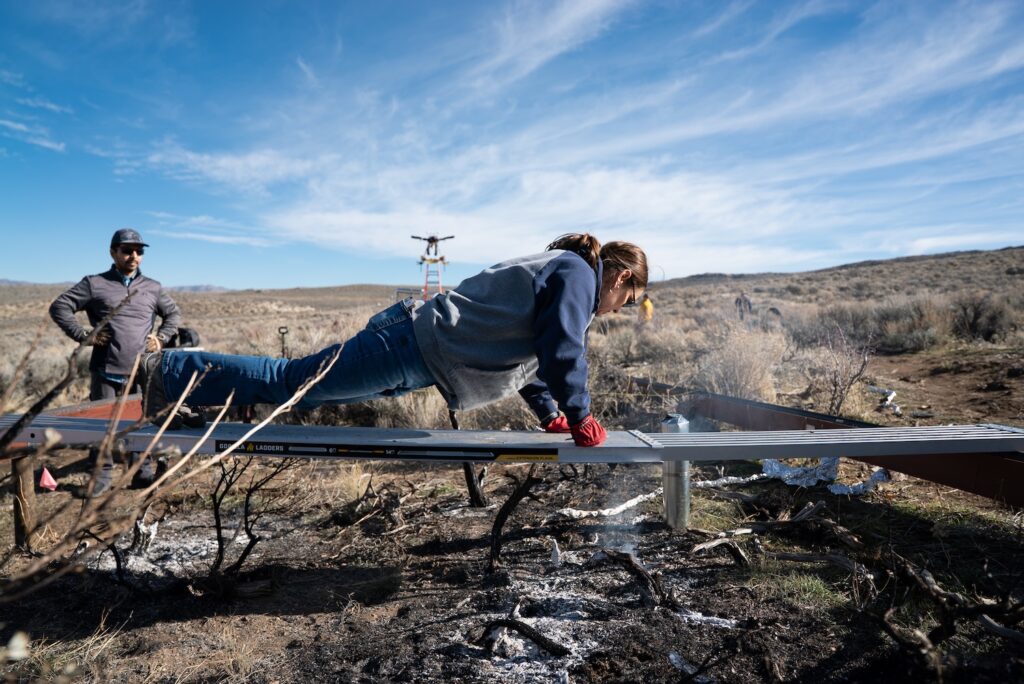
On a perfect, crisp fall day with blue skies, scientists in yellow safety coats gather in the sprawling desert north of Reno. They watch as flames consume a burning bush and quickly spread through the surrounding grasses. The fire is completely controlled and monitored by dozens of sensors as three enormous drones buzz directly overhead, following the curl of smoke as it dances in the light breeze.
This day has been years in the making, with scientists from across Nevada collaborating to bring the ambitious project to life. Known as Harnessing the Data Revolution for Fire Science, the project is bringing researchers from DRI, UNR, and UNLV together to tackle dozens of questions about wildfires — from the impacts on air quality and hydrology to the way that plants and soils recover from burns.
As the drones buzz overhead, around 30 scientists move in coordinated fashion to monitor the flames, adjust equipment, and take measurements for their research. They are working against time in an effort to complete the burns before the wettest days of the year set in. With the research site situated on land managed by the Bureau of Land Management, the project was severely delayed by the late 2025 extended government shutdown. As the days turned into weeks, the researchers had to cover the entire site with tarps to protect it from early season rains. Wet vegetation would have delayed the burns even longer.
The flames are confined inside of what looks like a small railway that stretches for about 100 meters. At one end of the railway is a greenhouse that is automated to move down the track 24 hours a day, 7 days a week, for at least a year after the burns are completed. Equipment inside will take evapotranspiration and carbon flux measurements of the landscape in snapshots – sealing to each of the 20 plots for about a minute at a time, before the plants can sense the change. This particular stretch of land about 30 minutes north of Reno, surrounded by sloping hills dotted with snow, was chosen because the plants within it represent the biodiversity of the Great Basin sagebrush ecosystem.
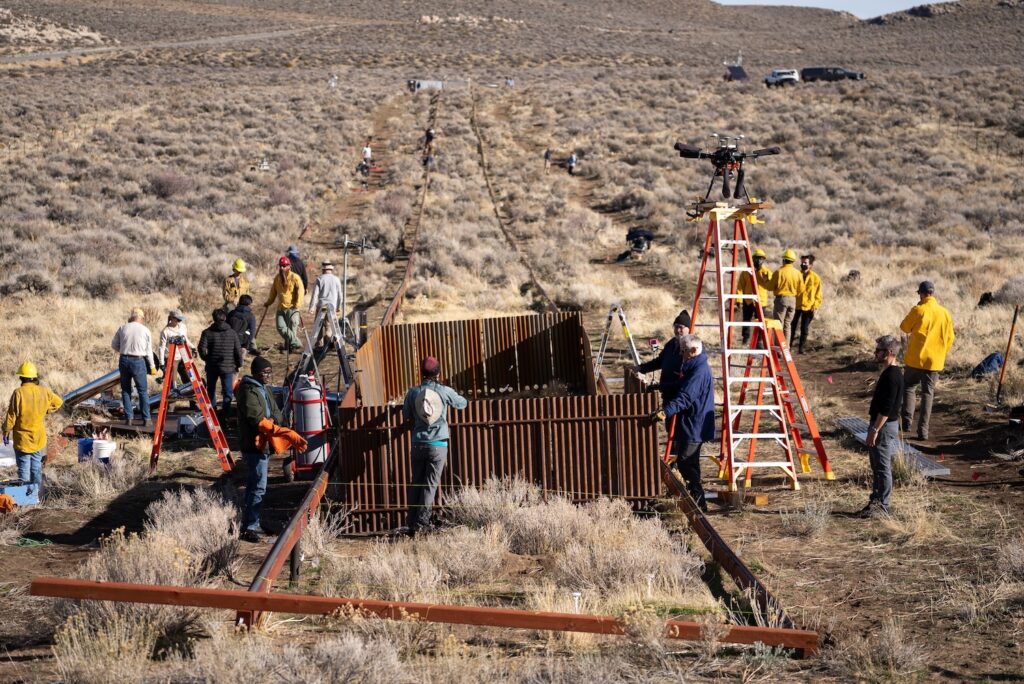
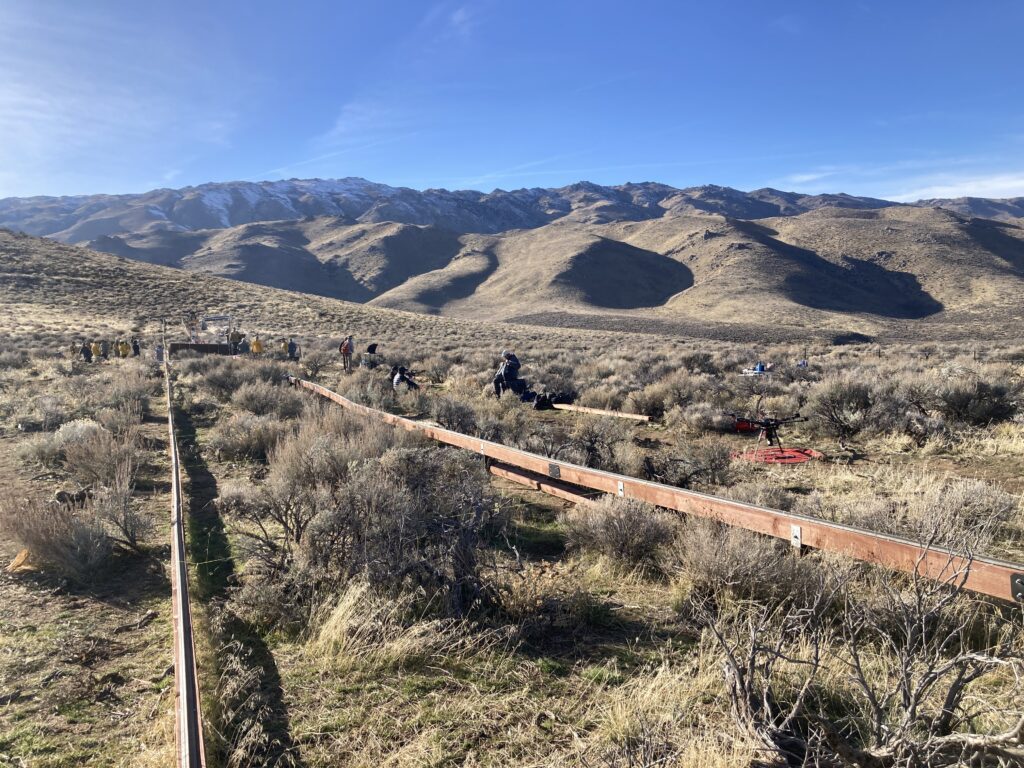
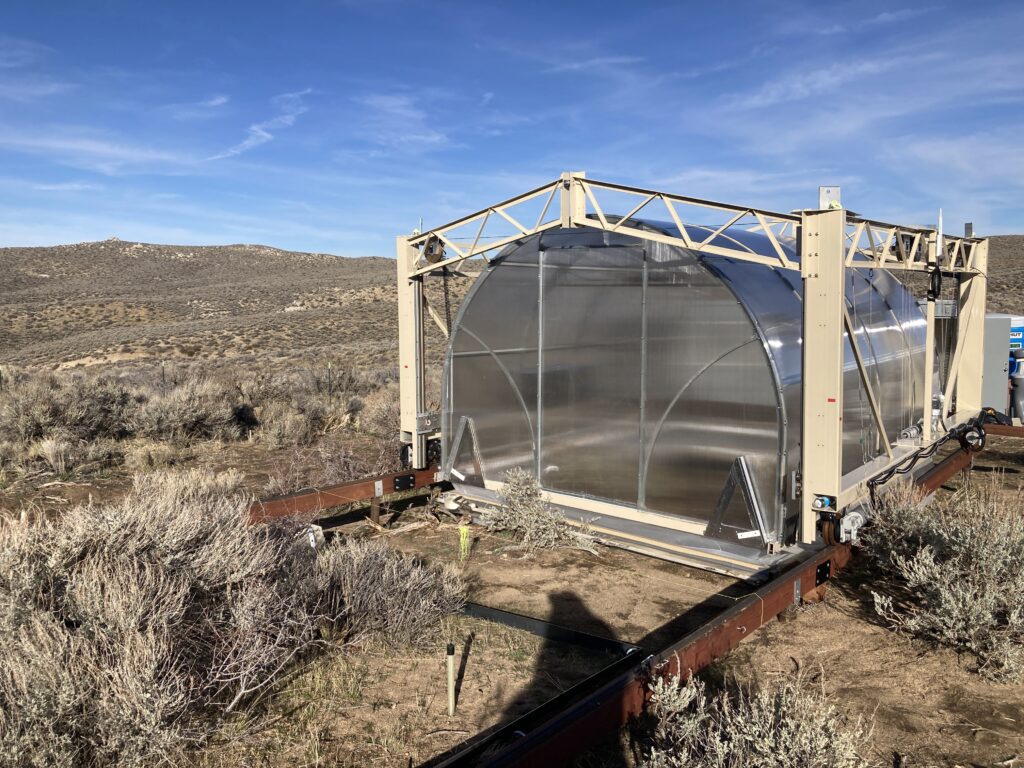
The greenhouse will enable researchers to capture how the ecosystem’s metabolism changes over time as the plants recover from the fire – revealing whether sagebrush ecosystems act as carbon sinks or sources before and after burns. A nearby weather station is recording evapotranspiration and carbon flux for the broader area which can be compared to the data measured in the plots by the greenhouse sensors.
“Because measurements are collected alongside soil moisture, temperature, vegetation composition and burn severity, the Chamber allows us to link ecosystem function and physical drivers to fire impacts,” said Nic Beres, one of the project leads, in a presentation about the work.
Nevada ranks high on the list of states at risk from large wildfires, thanks to our dry climate and the ubiquity of invasive grasses.
“Our sagebrush landscape sits at the intersection of high ecological importance and high wildfire risk, making this project very important both at a local scale and at a regional scale,” Beres said. “The project is designed to inform and improve land and fire management by scaling fire effects and impacts — from smaller experimental burns to larger-scale wildfires — across four interconnected science areas that includes ecology, hydrology, fire processes and fire emissions, and atmospheric aging.”
To achieve these goals, the project is treating wildfire as a continuum rather than as a single event, linking together the landscape and climate conditions that exist before the fire, the physical and chemical processes happening during the active burn, and the way the ecosystem responds and recovers. “These post-fire conditions then become pre-fire conditions for the next fire, creating feedback loops that shape long term fire regimes that we have here in the Great Basin,” Beres continued.
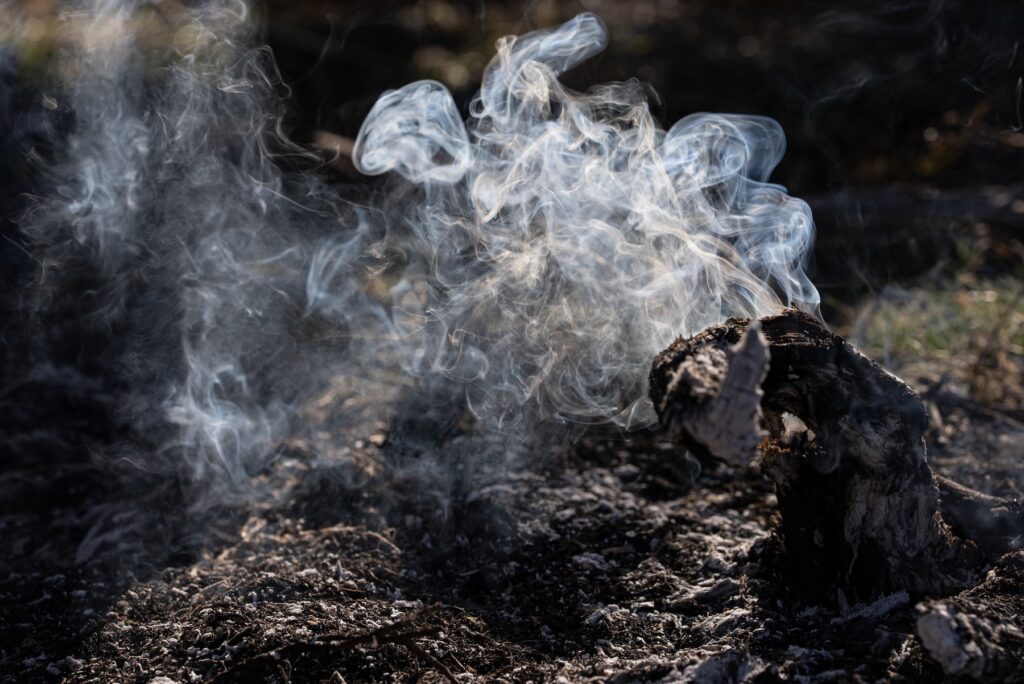
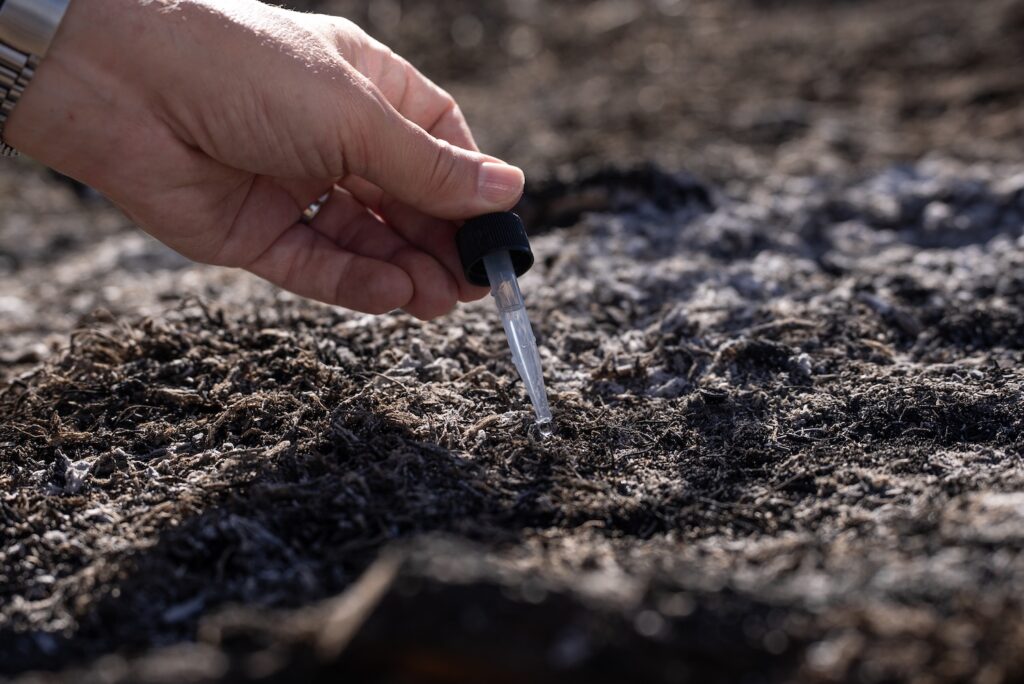
Vera Samburova collecting soil samples as the flames die out.
This holistic approach to the research requires integrating five major research areas:
1) Pre- and post-fire ecology and carbon cycling, for examining vegetation dynamics, carbon fluxes and vegetation recovery following the fire;
2) Hydrology for focusing on how fire causes soil to become water repellent and how it changes soil nutrient dynamics;
3) Fire processes for understanding how combustion dynamics and fire propagation can help to build more accurate wildfire forecasting tools;
4) Fire emissions and atmospheric aging for evaluating smoke composition and its atmospheric impacts;
5) Cyber infrastructure for integrating advanced technologies like intelligent sensor platforms, computer vision, and data fusion.
In addition to these five focal areas, there is also an education and workforce development component led by DRI’s Meghan Collins. This aspect of the project is working to bridge the research with educational opportunities to provide pathways for STEM careers.
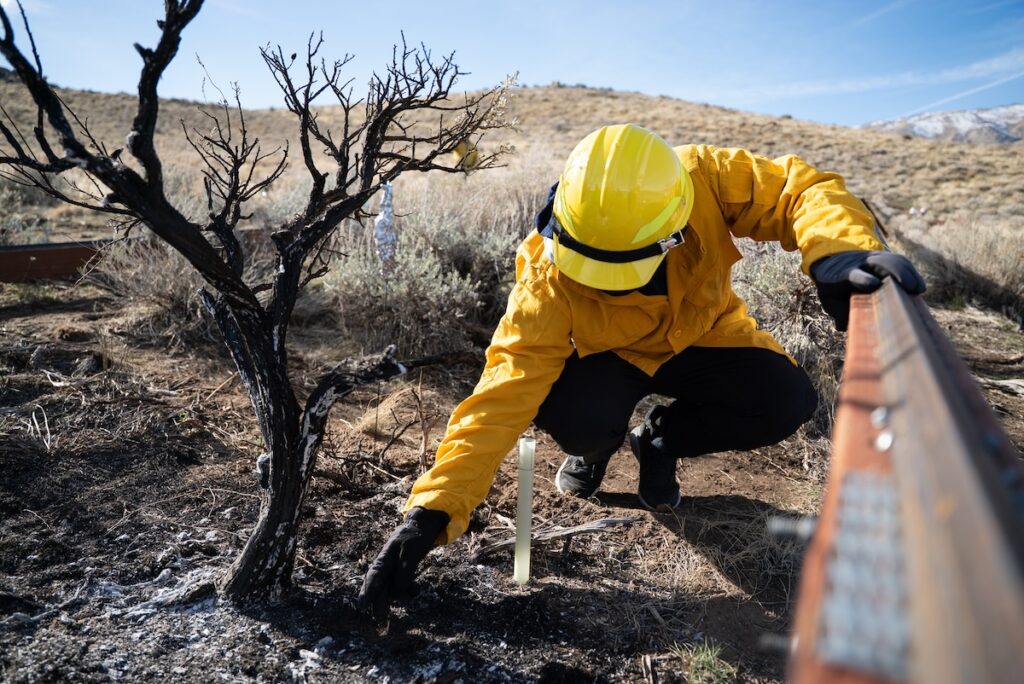
Back at the site, DRI’s Andres Andrade watches as the flames turn to a simmer. He has spent countless hours at the site, surveying every plant within the plots in the years leading up to the burns. He’s painstakingly recorded each species and their biomass, conducting research the way scientists have done it for centuries, with his own two hands and honed observational skills. Andrade’s data will be compared to surveys conducted on the same site entirely by drone, with the comparative data allowing the research team to assess the drone’s accuracy. One day, technology may advance enough that drones could be flown over vast landscapes, rapidly recording the landscape below and putting ecological research into hyperdrive.
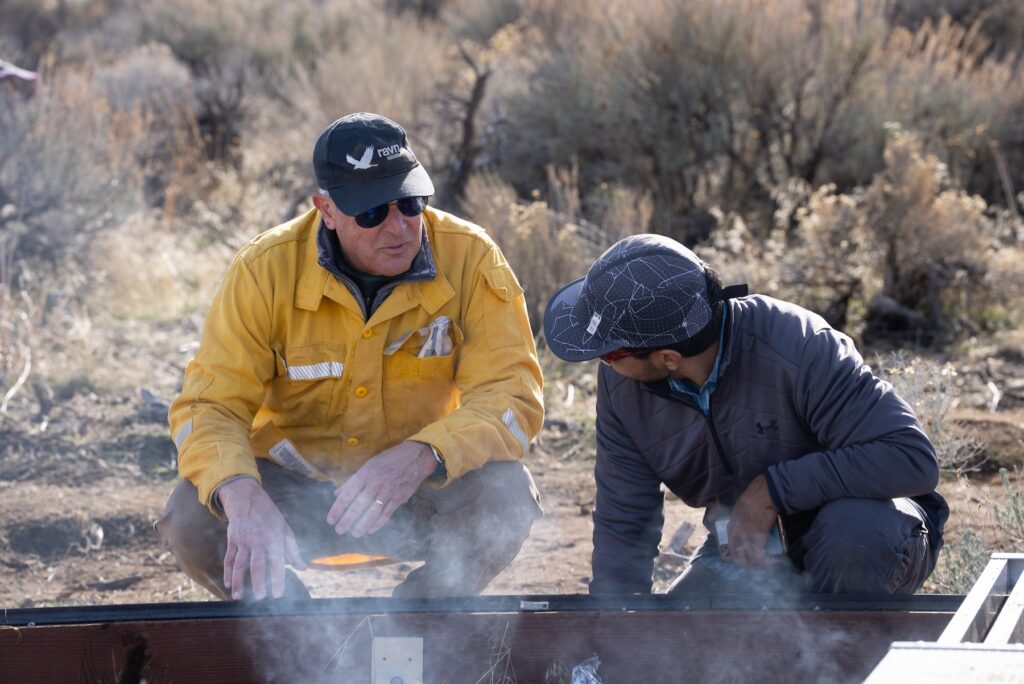
The excitement rippling through the researchers is palpable as each attends to their respective work on one piece of the puzzle. Opportunities for large, collaborative, long-term projects like this are unique due to the vast amount of resources and coordination they require, but the resulting scientific advancements move the field forward in leaps and bounds.
DRI’s Jay Arnone is a big reason for the project’s success. Following a long career researching how global environmental change is impacting terrestrial ecosystems, even his recent retirement can’t keep him from seeing this project to completion. After years of work bringing this project to life, he is finally getting the chance to see it through. “This project has come together because of all the incredible people working on it,” he said.
To support DRI’s wildfire research and other science that matters now, visit www.dri.edu/donate