From Nevada to Jakarta, the work of DRI scientists often has long-lasting impacts in far-off places. This fall, scientists Alan Gertler, Ph.D., John Watson, Ph.D., Judith Chow, Sc.D., Sarath Guttikunda, Ph.D., and Ricky Tropp, Ph.D., received word that air quality monitoring guidelines and reports from a decade-old project in Indonesia had served a beneficial new purpose: providing key evidence in an important court decision that will require stricter air quality standards in the City of Jakarta.
The City of Jakarta is home to 10 million people, and severely polluted by sources that include vehicle emissions, factories, and coal-fired power plants. Additionally, burning of rainforest to create space for palm oil plantations in the countryside causes air pollution that extends into neighboring countries such as Singapore, Vietnam, Laos, and Thailand.
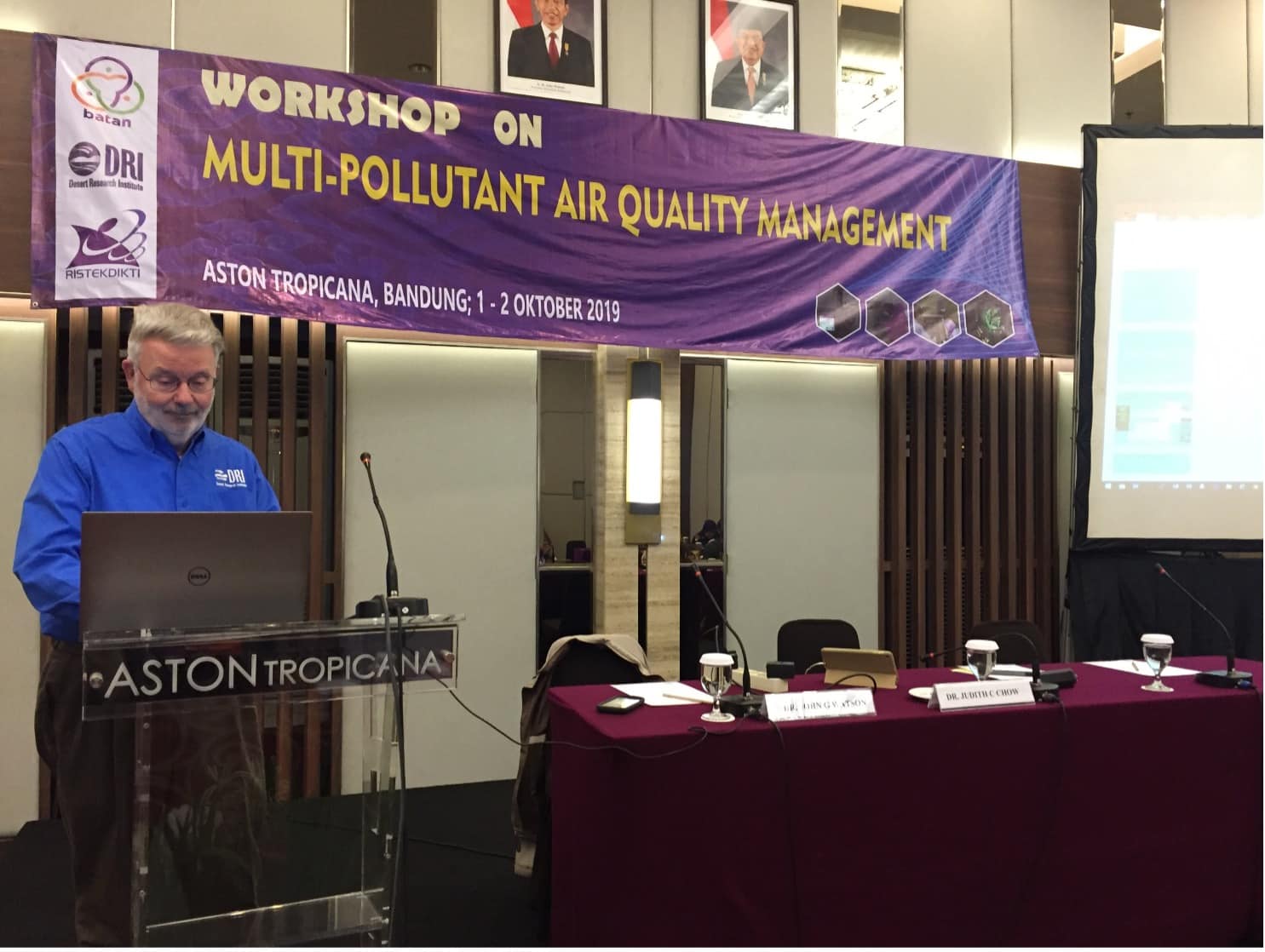
DRI’s John Watson, Ph.D., introduces an air quality training seminar in Jakarta in 2019.
Credit: DRI
In 2011, this DRI team began a multi-year project funded by the U.S. Environmental Protection Agency to develop an urban air quality management program for Jakarta. The first phase of the project consisted of an emissions inventory, an assessment of health impacts of air pollution, development of pollution abatement strategies, upgrading the air quality measurement and management program, training in-country personnel in air quality management, development of an air quality index, and more.
Unfortunately, the second phase of the project, which would have consisted of developing control strategies for emissions reduction and providing air quality information to the public, was never funded.
“Although Phase II of the project was never funded, we did as much as we could with the funding that we had for Phase I,” said Gertler, Principal Investigator and Project Manager for the Jakarta project. “We worked on the project for a number of years and were able to make great progress toward helping stakeholders in Jakarta develop better air quality management capabilities.”
The DRI team completed their work on this project in 2017, but the air pollution problems in Jakarta continued. In 2019, a group of 32 Indonesian citizens decided to take action and filed a lawsuit against Indonesian President Joko Widodo and other top officials for neglecting the citizens’ rights to clean air.
As evidence, the prosecution requested the use of a number of data files and records from DRI’s project. Gertler and Watson were happy to comply – and in September, the court ruled in the Indonesian citizens’ favor, ordering the officials to tighten national air quality standards and fulfill the rights of citizens to a good and healthy environment.
“I’m really glad that someone was able to make use of the work that we did, and that they were successful at winning their case,” said Gertler. “Let’s hope they can make some progress toward cleaner air in Jakarta.”
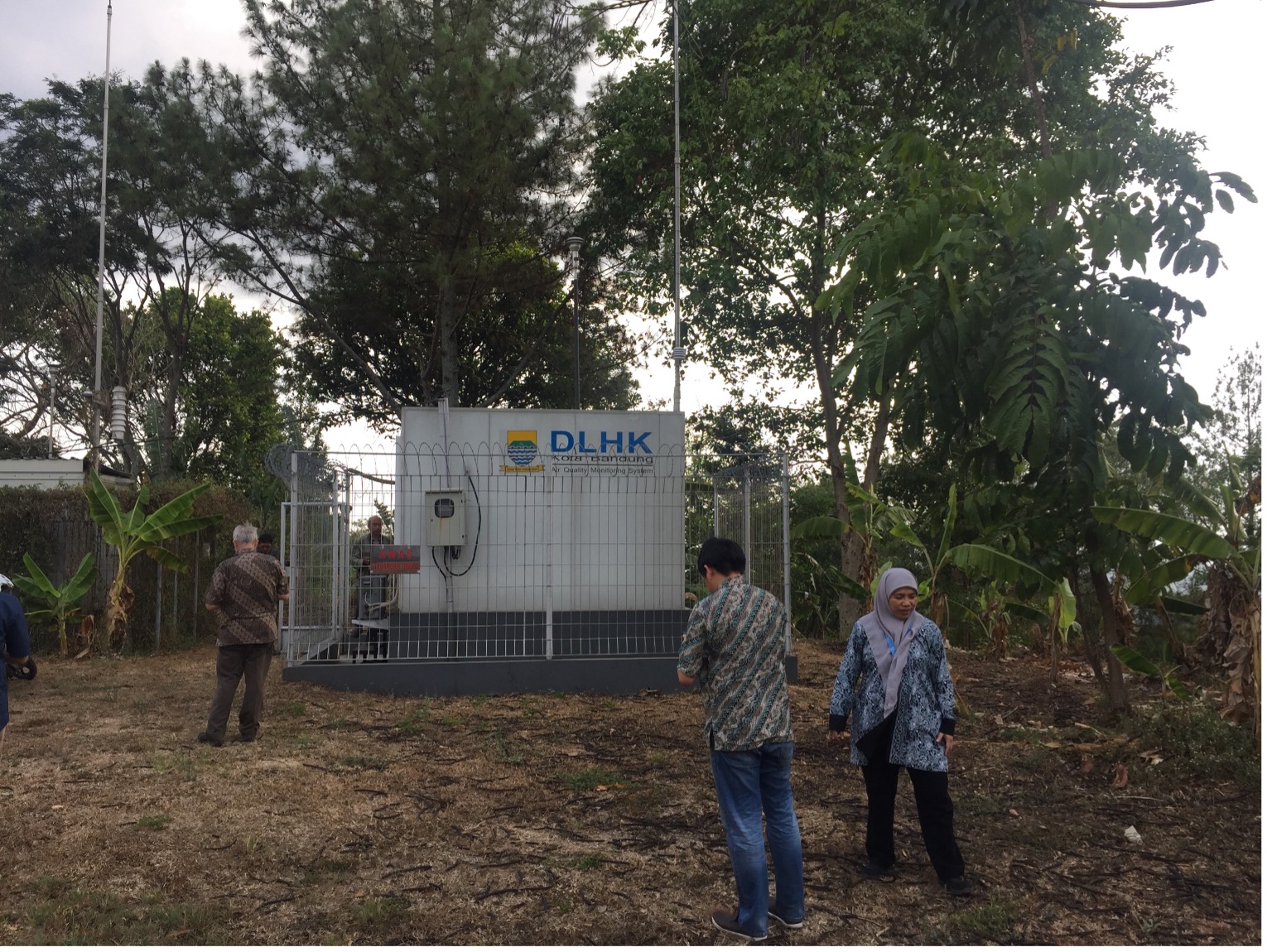
John Watson (to left) visits a recently installed Indonesian air quality monitoring station.
Credit: DRI
###
About DRI
The Desert Research Institute (DRI) is a recognized world leader in basic and applied environmental research. Committed to scientific excellence and integrity, DRI faculty, students who work alongside them, and staff have developed scientific knowledge and innovative technologies in research projects around the globe. Since 1959, DRI’s research has advanced scientific knowledge on topics ranging from humans’ impact on the environment to the environment’s impact on humans. DRI’s impactful science and inspiring solutions support Nevada’s diverse economy, provide science-based educational opportunities, and inform policymakers, business leaders, and community members. With campuses in Las Vegas and Reno, DRI serves as the non-profit research arm of the Nevada System of Higher Education. For more information, please visit www.dri.edu.