New DRI Internship Program Focuses on Mentorship for Inclusion in STEM
Oct 26, 2021
RENO, NEV.
By Kelsey Fitzgerald
Career Development
STEM
Although professional internship opportunities are fairly common in the sciences, many positions are aimed at students who are enrolled in four-year science degree programs. DRI’s new internship program takes a more inclusive approach, creating an opportunity specifically aimed at students from two-year colleges and welcoming those majoring in fields from outside of traditional scientific disciplines.
“Science and innovation thrive when people of diverse skillsets work together, because real-world problems are often very interdisciplinary,” said Internship Program Director Meghan Collins, M.S. “In addition to traditional scientific fields, drawing in students with interests in communications, business, public health, computing, and many other areas can bring new perspectives and new solutions to the table.”
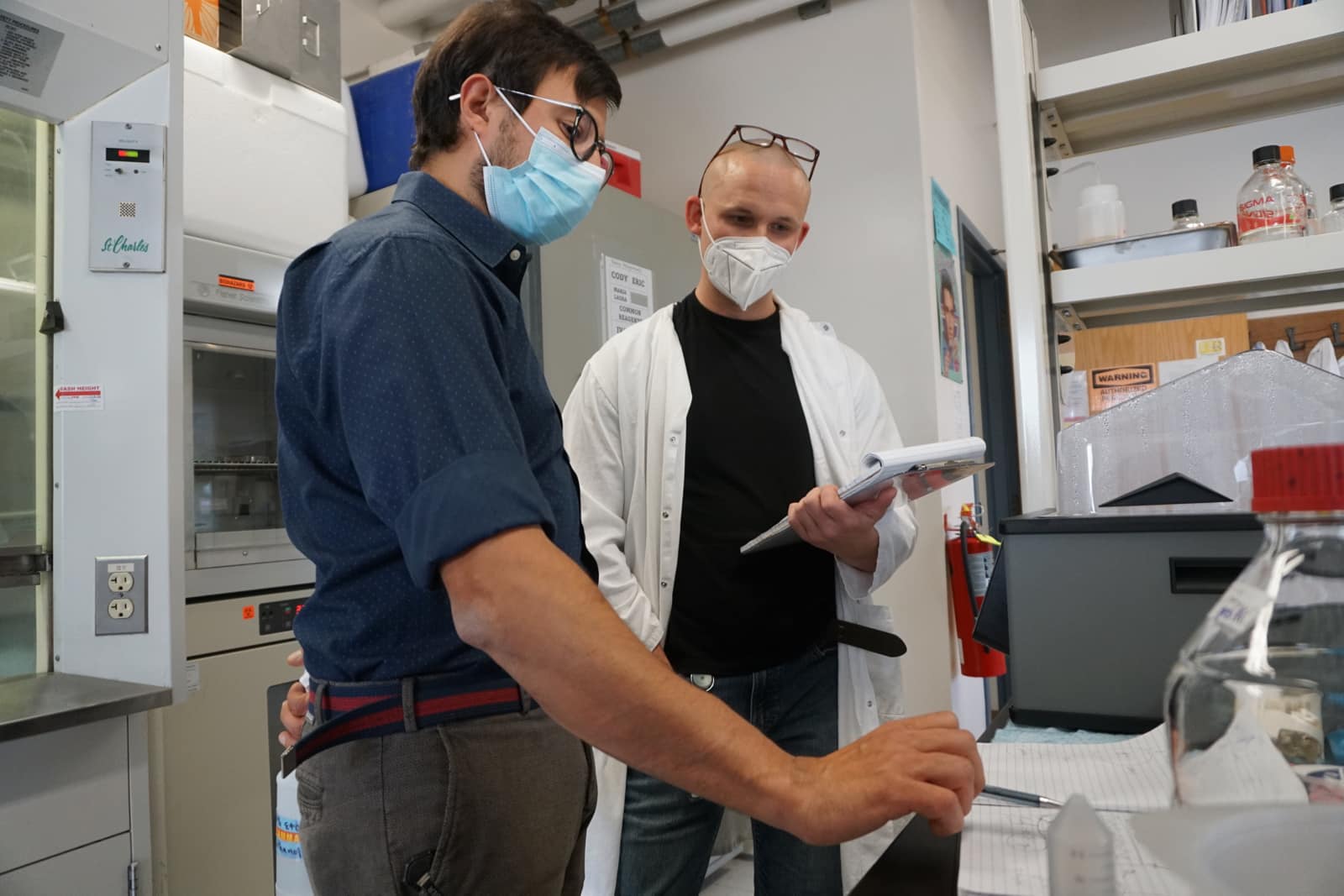
DRI faculty mentor Riccardo Panella, Ph.D., (left) and student intern John Cooper (right) review calculations as part of an ongoing research project that tests a new therapeutic approach to treating metabolic disorders. Panella is an assistant research professor of cancer and genetics with the Center for Genomic Medicine at DRI; Cooper is a student at Truckee Meadows Community College.
One team of interns is working with Erick Bandala, Ph.D., assistant research professor of environmental science from DRI’s Las Vegas campus, to investigate water security in Native American communities of the Southwestern U.S. His team consists of three students from Nevada State College – two environmental studies majors and one math major.
“Many people in Native American communities lack access to running water in their homes and experience problems with water quality as well,” Bandala said. “We are exploring data that was collected by Tribes and water treatment facilities to learn about the scale of the problem and how it can be improved. I love the challenge and hope that my team will come out with helpful information. Water security is a very complicated issue, but the students that I am working with are very enthusiastic, and I am happy to be interacting with them.”
Other project themes for the program’s inaugural semester include documentation and analysis of wildflower superblooms (above-average bursts of blooming wildflowers) in the Western U.S., an investigation into the effects of wildfire on water repellency of soils, a study on how microplastic particles can be transported through the air, and a study investigating the effects of obesity on health challenges in mice.
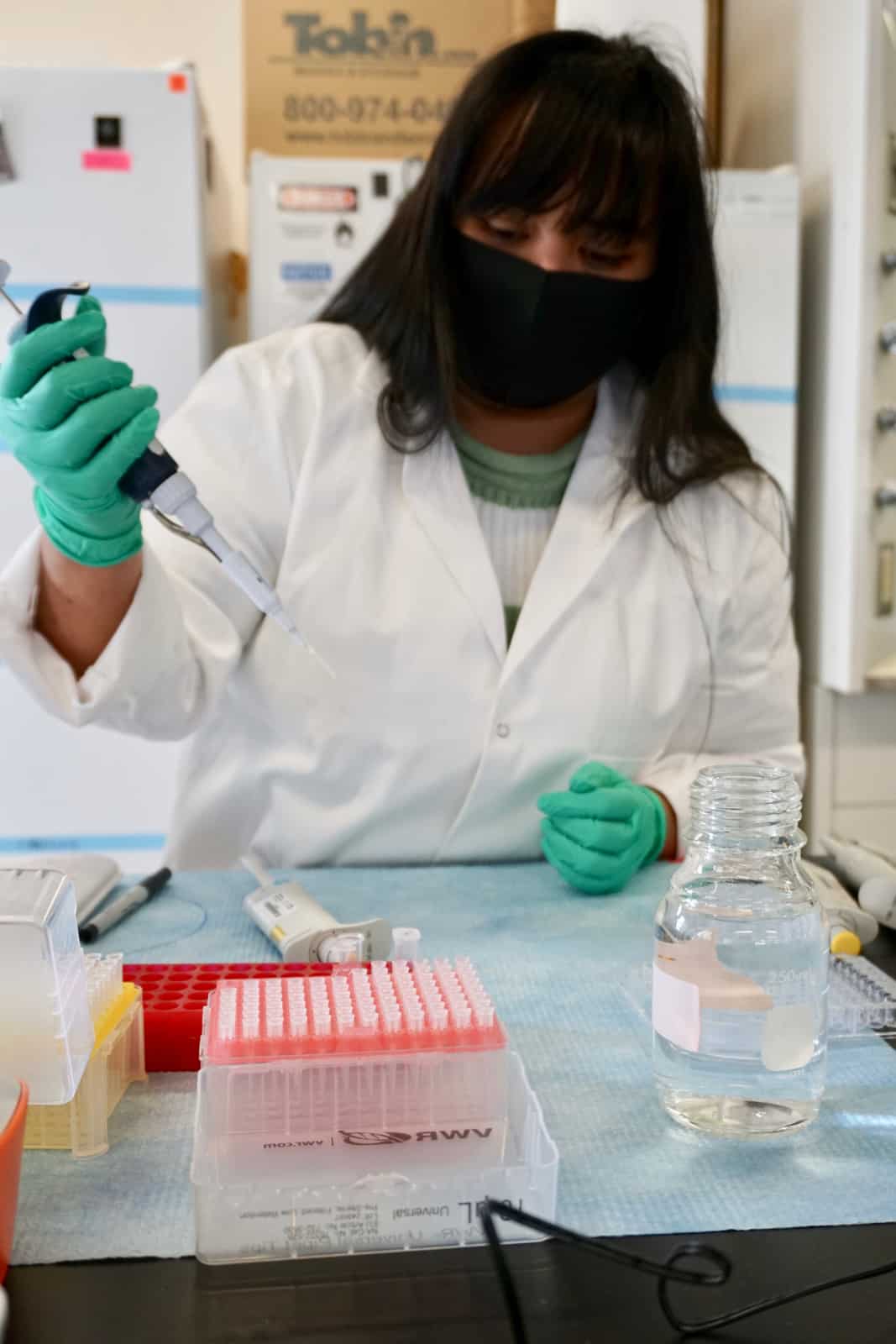
Above, left: Student intern Mary Andres from Truckee Meadows Community College prepares reagents needed to analyze lipid profiles and hepatic enzymes in a study being conducted by DRI’s Center for Genomic Medicine. The results of these experiments will pave the way for a new generation of RNA-based therapies to treat metabolic disorders and prevent cancer progression.
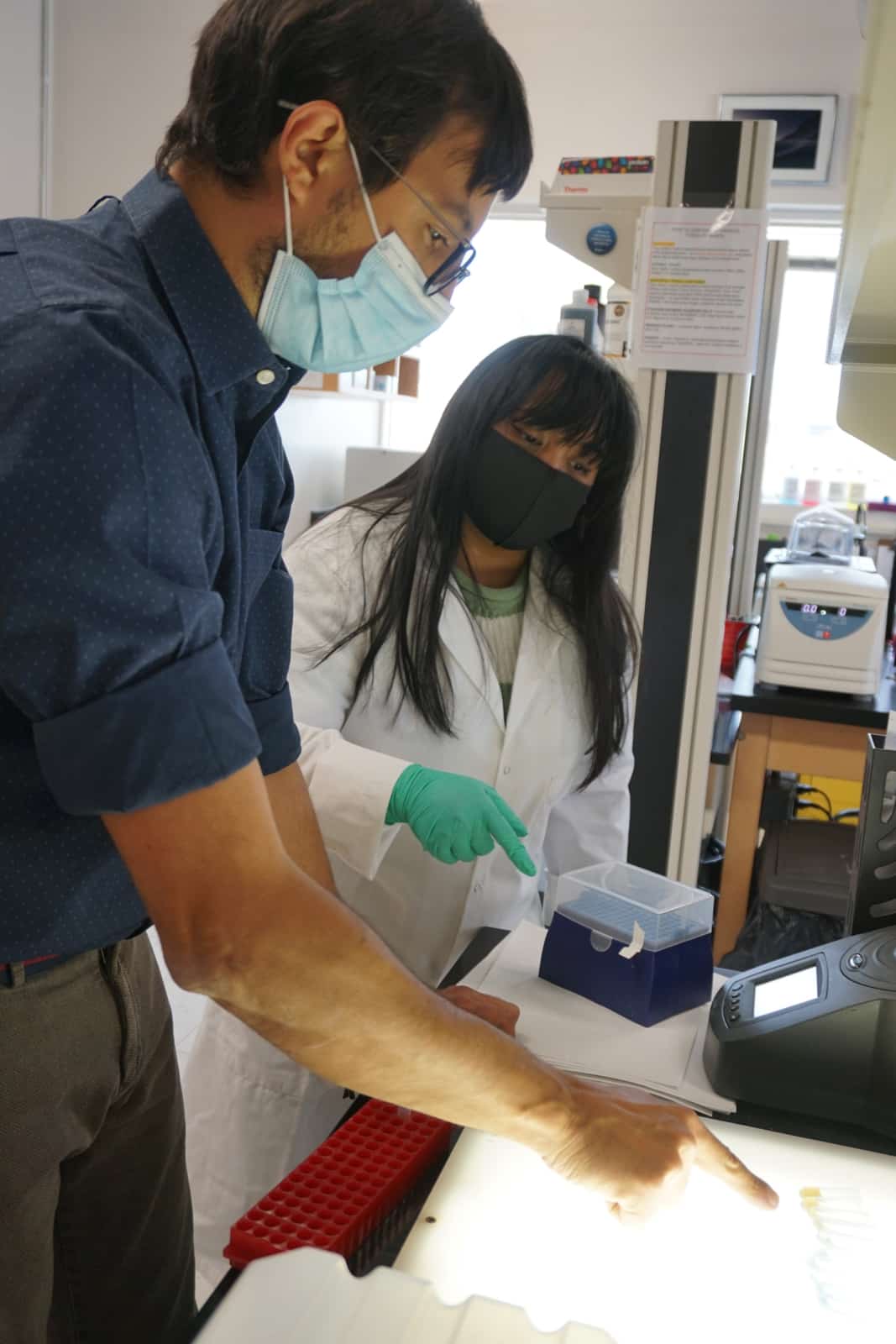
Above, right: DRI faculty mentor Riccardo Panella, Ph.D., (left) of the Center for Genomic Medicine and Truckee Meadows Community College student Mary Andres (right) use a bright light to view a sample in Panella’s laboratory in Reno.
At the end of the semester, the student teams will deliver their project results and receive feedback from their faculty mentors. The end goal is to help foster the next generation of diverse scientists through mentorship, inclusion, and skill building.
“There are a lot of independent internships available to science majors, but not many programs that prepare students to be successful working in the sciences in the real world – especially for students who are coming from two-year college programs or from outside of scientific disciplines,” Collins said. “This program aligns with some of DRI’s larger goals of improving diversity and inclusion at DRI and in the sciences as a whole, while also providing important stepping-stones for students to learn to navigate the culture of science.”
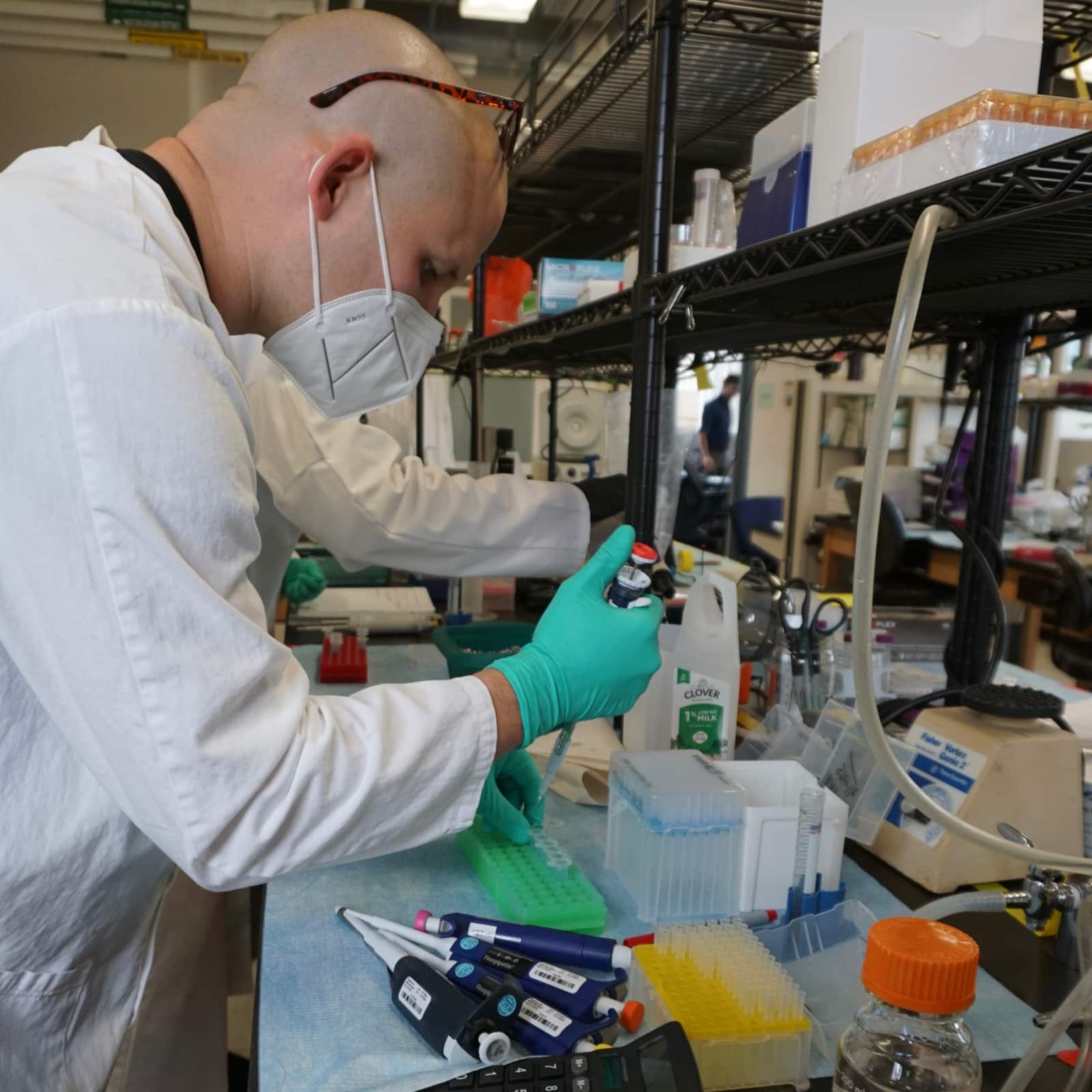
Student Intern John Cooper from Truckee Meadows Community College prepares reagents in Riccardo Panella’s laboratory at DRI in Reno, as part of DRI’s new Research Internship Immersion Program.
More Information:
For more information on DRI’s Research Immersion Internship Program, please visit: https://www.dri.edu/immersion/.
DRI faculty mentors for the Research Immersion Internship Program include Erick Bandala, Riccardo Panella, Eden Furtak-Cole, Markus Berli, Christine Albano, and Meghan Collins.
###
About DRI
The Desert Research Institute (DRI) is a recognized world leader in basic and applied environmental research. Committed to scientific excellence and integrity, DRI faculty, students who work alongside them, and staff have developed scientific knowledge and innovative technologies in research projects around the globe. Since 1959, DRI’s research has advanced scientific knowledge on topics ranging from humans’ impact on the environment to the environment’s impact on humans. DRI’s impactful science and inspiring solutions support Nevada’s diverse economy, provide science-based educational opportunities, and inform policymakers, business leaders, and community members. With campuses in Las Vegas and Reno, DRI serves as the non-profit research arm of the Nevada System of Higher Education. For more information, please visit www.dri.edu.