Meet Graduate Researcher Nic Beres

Meet Nic Beres, a Ph.D. student in atmospheric sciences. At DRI, Beres is working with Dr. Hans Moosmüller from the Division of Atmospheric Science (DAS) in Reno to study the mechanisms by which light-absorbing impurities such as dust reduce surface reflectance of snow and ice.


What brought you to DRI?
I began my master’s degree in atmospheric science through DRI after working in the gaming industry here in Reno. Instead of helping to develop ways to trick people into losing their money behind a slot machine, I wanted to learn more about the natural environment and contribute to a greater good through some subset of climate science. Growing up in the Reno/Tahoe area, DRI was the perfect fit to satisfy this desire to learn more.

What are you studying?
For my Ph.D., I am working to better understand the mechanisms by which light-absorbing impurities reduce surface reflectance of snow and ice. These impurities can include aerosol such as mineral dust or black/brown carbon from combustion processes, or biological material like snow algae.
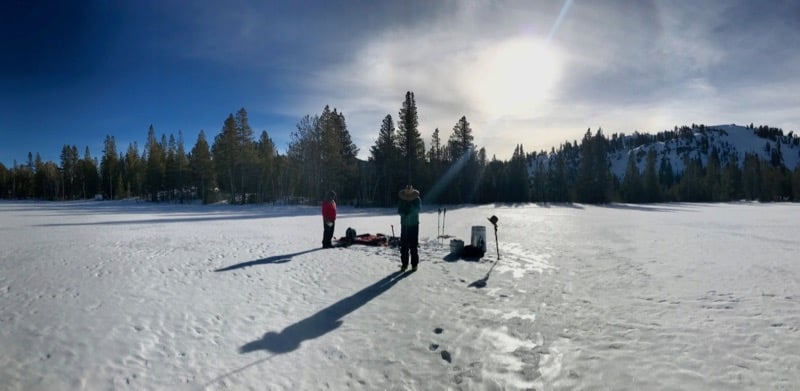
Graduate student Nic Beres conducts field research on surface reflectance of snow and ice. February 2018.

Graduate student Nic Beres conducts field research on surface reflectance of snow and ice. February 2018.

What research projects are you working on? And who at DRI are you working with?
I am primarily working alongside my graduate advisor, Hans Moosmüller. Together, we designed an experimental solution to artificially deposit aerosol of known properties onto the snow surface to derive its incremental reflectance-reducing effect. We can then compare those results to those predicted through modeling. Additionally, I am exploring the lesser-known effect that brown carbon aerosol – which is emitted through combustion processes like wildfire – has on the snowpack. I find myself spending as much time in the field as I do in the lab or behind a computer, so I feel lucky to be where I am.

What are your short-term and long-term goals while at DRI?
Short term: publish.
Long term: publish.

Tell us about yourself. What do you do for fun?
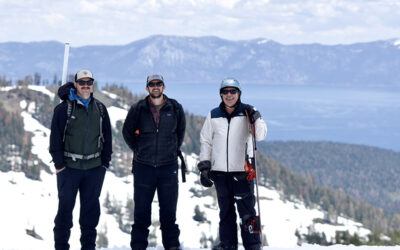
Like many staff, students, and researchers here at DRI, I find myself getting into the mountains. I love rock climbing, hiking, and skiing. I also enjoy photography, travel, and spending time with family, friends, and others that inspire and explore with me.
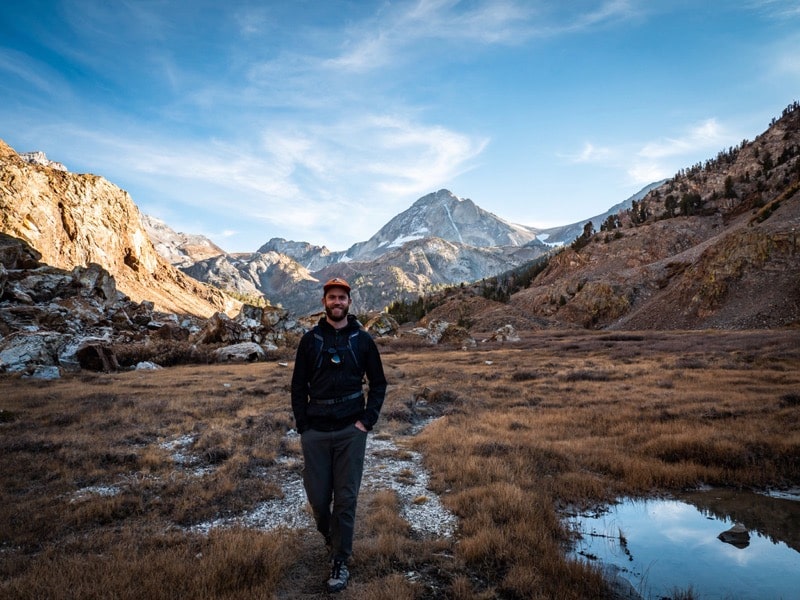
In his free time, graduate student Nic Beres enjoys spending time in the mountains.
In his free time, graduate student Nic Beres enjoys spending time in the mountains.
 

You May Also Like…

DRI’s Monty Majumdar is Working with an International Team of Researchers to Create a Digital Twin of India’s Ganges River Basin

DRI’s Monty Majumdar is Working with an International Team of Researchers to Create a Digital Twin of India’s Ganges River Basin

DRI’s Sayantan (Monty) Majumdar, Assistant Research Professor of Hydrologic Science and Remote Sensing, is joining forces with an international team of researchers to create a digital twin of the entire river basin that will support decision-makers as they work to protect this critical resource. Originally hailing from the river’s fertile lands, Majumdar is now based on DRI’s Reno campus, where he contributes to a wide range of research on water management issues in the Western U.S. As a no-cost Co-Principal Investigator (similar to a volunteer consultant role) on the project, he is excited to contribute the knowledge and models developed by teams like the OpenET project and apply them to India in order to expand their reach and test their efficacy in different climates.

Cloud Seeding for Local Precipitation Enhancement: An Interview With Atmospheric Scientist Frank McDonough

Cloud Seeding for Local Precipitation Enhancement: An Interview With Atmospheric Scientist Frank McDonough

Frank McDonough is a research and forecast meteorologist who leads DRI’s cloud seeding program. His research interests span cloud physics, aviation icing forecasting, and precipitation enhancement.

In this interview, Dr. McDonough answers frequently asked questions about how cloud seeding works and what makes DRI’s program unique. This is the second in a new series of FAQ videos with DRI researchers.

Meet Prakash Gautam 

Meet Prakash Gautam 

Prakash Gautam, Ph.D., is an Assistant Research Professor in the Division of Atmospheric Sciences and the Director of DRI’s Optics Lab: “Gautam Laboratory for Advanced Aerosol Dynamics and Light Scattering Research.” He has been with DRI since August 1, 2022, when he first joined as a Postdoctoral Researcher. Gautam also serves as Graduate Faculty in the Physics and Atmospheric Sciences departments at the University of Nevada, Reno (UNR), where he contributes graduate teaching, mentorship, and research collaboration. His work seeks to understand how atmospheric particles interact with light in order to better understand atmospheric components. 

In the following interview, Gautam shares his dual passions for physics and tennis and offers insight on creating a successful career in science.

Share This