Field Notes From a DRI Research Team in Greenland: A Story Map

Field Notes From a DRI Research Team in Greenland: A Story Map

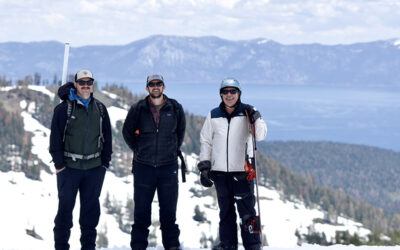
In May 2022, a team led by scientists from DRI in Reno, Nevada departed for Greenland, where they were joined by ice drilling, Arctic logistics, and mountaineering experts. Together, the team plans to collect a 440 meter-long ice core that will represent 4,000 years of Earth and human history.  

For much of their time on the Greenland ice sheet, the team will not have access to the internet or phone service — but they are able to send short text messages back to DRI from a Garmin inReach two-way satellite communicator. You can follow along with their journey on our Story Map, “The Return to Tunu.” 
You May Also Like…

Meet Ziming Ke 

Meet Ziming Ke 

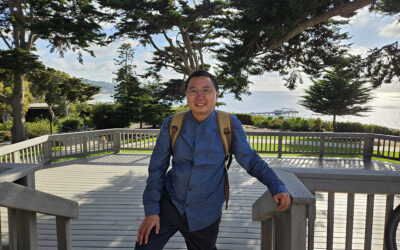
Ziming Ke is an atmospheric scientist who joined DRI in March 2025. He has extensive expertise in earth system modeling and is producing groundbreaking research that integrates wildfire science into global and regional models, including a recent publication that is the first to successfully replicate wildfire-induced thunderstorms in earth system models. He joined DRI as a postdoctoral researcher working with Hans Moosmuller. Ke completed an undergraduate degree in China, a master’s in oceanography at the University of South Carolina, and a Ph.D. in atmospheric physics and chemistry at Georgia Tech.  In the following interview, Ke shares his enthusiasm for wildfire science, spending time in Reno’s wetlands, and watching soccer games.

Cloud Seeding for Local Precipitation Enhancement: An Interview With Atmospheric Scientist Frank McDonough

Cloud Seeding for Local Precipitation Enhancement: An Interview With Atmospheric Scientist Frank McDonough

Frank McDonough is a research and forecast meteorologist who leads DRI’s cloud seeding program. His research interests span cloud physics, aviation icing forecasting, and precipitation enhancement.

In this interview, Dr. McDonough answers frequently asked questions about how cloud seeding works and what makes DRI’s program unique. This is the second in a new series of FAQ videos with DRI researchers.

Share This