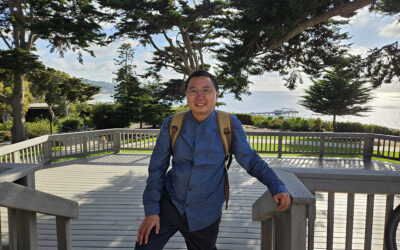
Nicholas Kimutis is a graduate research assistant with the Division of Atmospheric Sciences at DRI in Reno. He is a master’s student studying public health with a specialization in epidemiology at the University of Nevada, Reno. Learn more about Nick and his graduate research in this interview with DRI’s Behind the Science Blog!
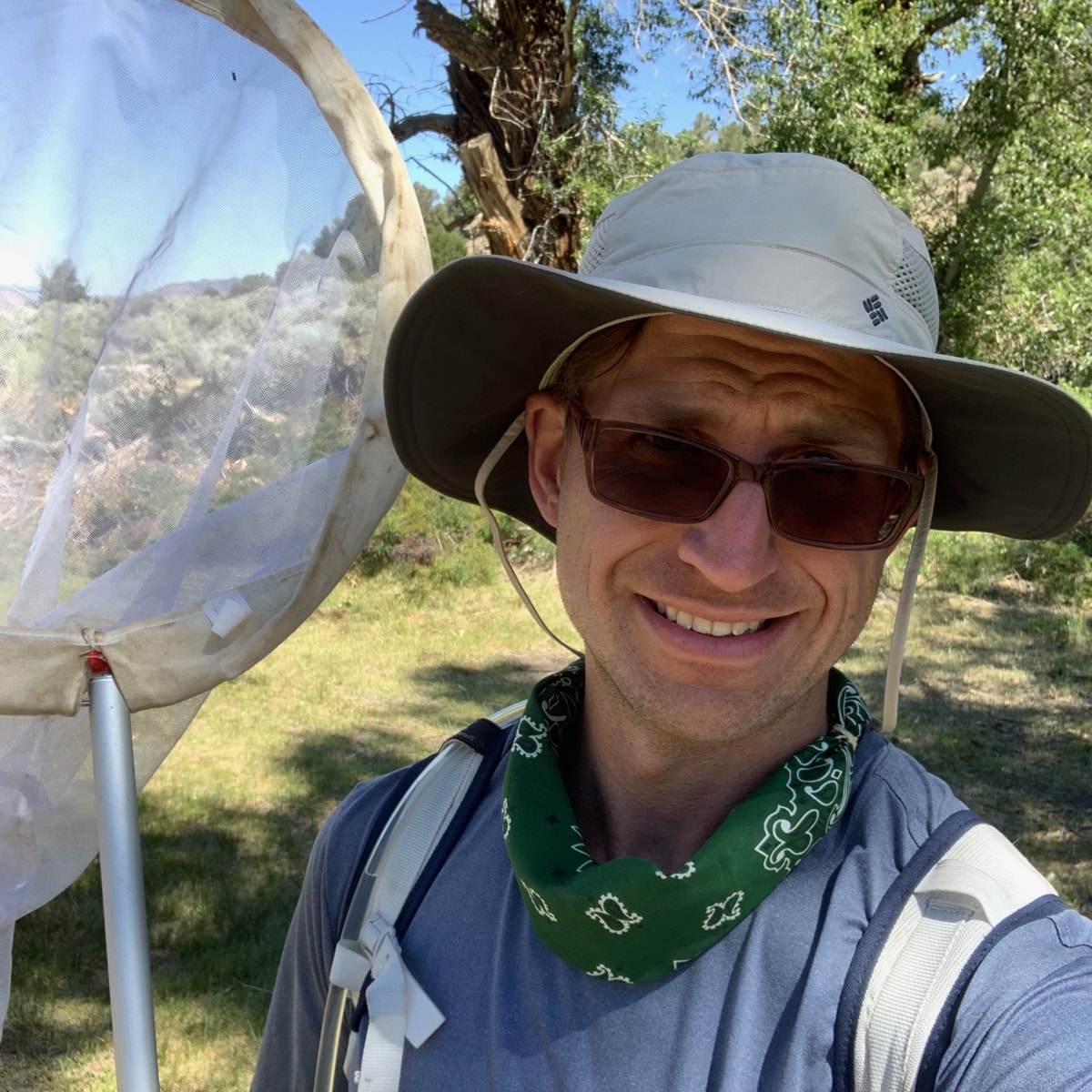
Graduate research assistant Nick Kimutis prepares to capture Speyeria nokomis (butterflies) at Round Mountain in the Humboldt-Toiyabe National Forest.
Credit: Lauren Redosh.
DRI: What brought you to DRI?
Kimutis: I was originally brought into DRI by Meghan Collins, who hired me as an undergraduate intern with the Stories in the Snow citizen science program back in 2017. At that time, I was interested in ice crystal formation as well as communicating science and engaging with the public in an accessible way. After Stories in the Snow, Tamara Wall brought me into the Western Regional Climate Center where I have worked since. What keeps me at DRI is two-fold: First, the amazing and talented people that work here. Second, the translational research, co-productions and community engagement that we conduct in the climate center. I truly believe that the research questions DRI addresses leave the world a better place.
DRI: What are you studying?
Kimutis: During my undergraduate program, I studied microbiology and immunology. As a graduate student, I am studying epidemiology. To borrow Friss and Sellers 2012 definition, “Epidemiology is concerned with the distribution and determinants of health, diseases, morbidity, injuries, disability, and mortality in populations.” Specifically, I am interested in the intersection of climate and public health. I believe humanity’s biggest public health crisis is climate change.
DRI: What research projects are you working on? And who at DRI are you working with?
Kimutis: First and foremost, my job as a graduate research assistant is climate services. Climate Services involves connecting government, academics, media and the public with historical climate data. Tamara Wall serves as my primary mentor at DRI and Lyndsey Darrow serves as my advisor at UNR. I also work with Tim Brown, Greg McCurdy, Dan McEvoy and Pam Lacy.
In addition to climate services, I am working on two projects that involve health. The first is an extreme heat project located in San Diego County. This work is being done with Kristin VanderMolen and Ben Hatchett. This project aims to make a series of recommendations, based on focus group discussions with vulnerable populations, to the San Diego County Health and Human Services Agency on extreme heat messaging.
Secondly, I am assisting on an EPA Project that will test and install air quality monitoring sensors in rural Nevada. This project will also generate recommendations for Emergency Managers on air quality messaging. This project includes Kristin VanderMolen, Meghan Collins, Yeongkwon Son, Greg McCurdy, Pam Lacy, Tamara Wall and collaborators at the Nevada Division of Environmental Protection.
DRI: What are your short-term and long-term goals while at DRI?
Kimutis: My biggest goal at DRI is to do meaningful work that ultimately helps people. At the same time, I want to grow and refine my skills as a researcher. I am committed to an inclusive, diverse, equitable, and accessible environment and serve on DRI’s IDEA Committee to help foster and grow that culture.
DRI: Tell us about yourself. What do you do for fun?
For fun, I enjoy all things outdoors including camping, hiking, rock climbing, swimming, biking and paddle boarding. I also have a Rottweiler, named Simon, who occupies quite a bit of my time.
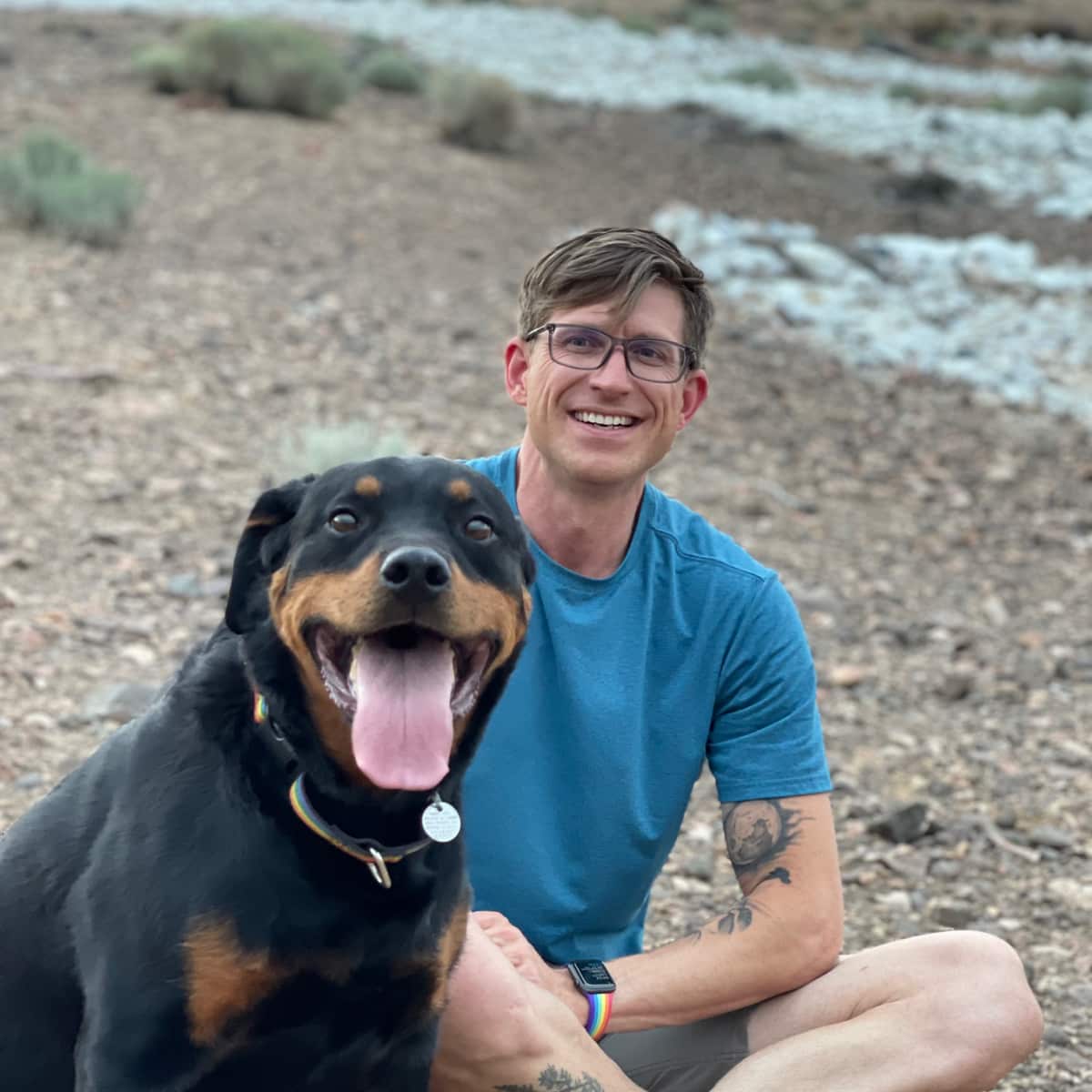
Nick Kimutis and his dog Simon enjoy camping, hiking, and other outdoor adventures around Reno.
Credit: Ryan Wong
Additional Information:
For more information on graduate programs at DRI, please visit: https://www.dri.edu/education/graduate-programs/