
Evaluation of Groundwater Pathways and Travel Times from the Nevada Test Site to the Potential Yucca Mountain Repository Pohlmann, K. F., Zhu, J., Ye, M.,
Assessing the time of final deposition of a Youngest Toba Tuff deposit in the Middle Son Valley, India – a luminescence approach approach using multiple methods
Assessing the time of final deposition of a Youngest Toba Tuff deposit in the Middle Son Valley, India – a luminescence approach approach using multiple methods Neudorf, C.M., Roberts, R. G., Jacobs, Z.,
Ash from Changbaishan Millennium eruption recorded in Greenland ice: Implications for determining the eruption’s timing and impact
Ash from Changbaishan Millennium eruption recorded in Greenland ice: Implications for determining the eruption's timing and impact Sun, C., Plunkett, G., Liu, J.,
Evaluating storm surge predictability on subseasonal timescales for flood forecasting applications: A case study for Hurricane Isabel and Katrina
Evaluating storm surge predictability on subseasonal timescales for flood forecasting applications: A case study for Hurricane Isabel and Katrina Khalid, A., Miesse, T., Erfani, E., Thomas, S., Ferreira, C., Pegion, K., Burls, N., Manganello, J. (2021). Evaluating...
Subsurface Hydrology-Temperature effects on soil bulk dielectric permittivity measured by time domain reflectometry: Experimental evidence and hypothesis development (Paper 1998WR900006)
Subsurface Hydrology-Temperature effects on soil bulk dielectric permittivity measured by time domain reflectometry: Experimental evidence and hypothesis development (Paper 1998WR900006) Wraith, J., Or, D. (1999). Subsurface Hydrology-Temperature effects on soil bulk...
Using a stochastic modeling framework to determine the importance of extended hyporheic travel times for biogeoprocessing
Using a stochastic modeling framework to determine the importance of extended hyporheic travel times for biogeoprocessing Aubeneau, A. F., Drummond, J. D., Basu, N. B., Schuer, R., Tank, J. L., Packman, A. I. (2011). Using a stochastic modeling framework to determine...
Extremal behavior of a coupled continuous time random walk
Extremal behavior of a coupled continuous time random walk Schumer, R., Baeumer, B., Meerschaert, M. (2010). Extremal behavior of a coupled continuous time random walk, Physica A, 10.1016/j.physa.2010.10.018
Timing and magnitude of Last Interglacial ocean warming
Timing and magnitude of Last Interglacial ocean warming Shackleton, S. A., Severinghaus, J. P., Baggenstos, D.,
Evaluation of Timber Mountain Recharge and Groundwater Flow in Relation to Pahute Mesa-Oasis Valley Flow System
Evaluation of Timber Mountain Recharge and Groundwater Flow in Relation to Pahute Mesa-Oasis Valley Flow System Hershey, R. L., Parashar, R., Cooper, C. A., Heintz, K. M., Pham, H. V., Lyles, B. F. (2020). Evaluation of Timber Mountain Recharge and Groundwater Flow in...
Two Newly-Discovered Quarry Sites and the Timing and Nature of Toolstone Acquisition in Dugway Proving Ground, Southern Great Salt Lake Desert, Utah
Two Newly-Discovered Quarry Sites and the Timing and Nature of Toolstone Acquisition in Dugway Proving Ground, Southern Great Salt Lake Desert, Utah Page, D. J., Schmitt, D. N. (2010). Two Newly-Discovered Quarry Sites and the Timing and Nature of Toolstone...
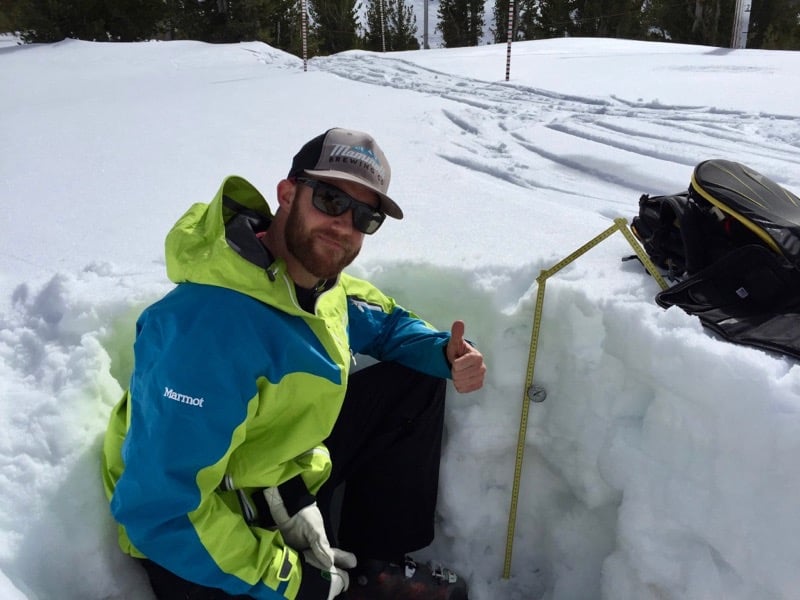
Meet Graduate Researcher Nic Beres
Meet Nic Beres, a Ph.D. student in atmospheric sciences. At DRI, Beres is working with Dr. Hans Moosmüller from the Division of Atmospheric Science (DAS) in Reno to study the mechanisms by which light-absorbing impurities such as dust reduce surface reflectance of...

DRI Honors Outstanding Contributions of Faculty and Staff at 2021 Celebration of Science
Each year, the Desert Research Institute (DRI) honors the incredible commitment and dedication of our faculty and staff through an award ceremony called the Celebration of Science. This year’s event was held virtually and recognized the winners of this year’s Nevada...
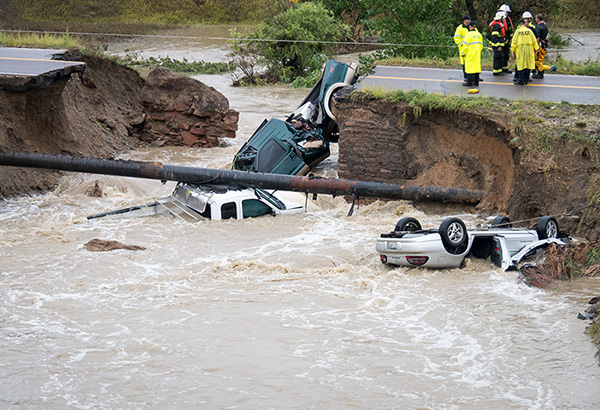
Preparing for the Floods That Follow the Fires
A conversation with Guo Yu and Jeremy Giovando about their new research examining post-fire flood frequency. The study expands on previous frameworks to account for the compounding impacts of repeated wildfires on flood risk, using a southern California watershed as a case study.
Community vulnerability is influenced by various determinants beyond socioeconomic status and plays a crucial role in COVID-19 disparities. This study aimed to develop and evaluate a novel community vulnerability index (CVI) related to temporal variations in COVID-19 incidence to provide insights into spatial disparities and inform targeted public health interventions in Clark County, Nevada. Utilizing data from the American Community Survey and other sources, 23 community measures were identified at the census tract level. The CVI was constructed using a lagged weighted quantile sum (LWQS) regression linking these measures to the monthly COVID-19 incidence from March 2020 to November 2021. The Besag–York–Mollié model subsequently evaluated the spatial association between the CVI and COVID-19 incidence, controlling for temporal and spatial autocorrelations. This study identified minority status, housing inadequacy, and inactive commuting as primary contributors to the CVI that consistently influenced COVID-19 vulnerability over time. The CVI demonstrated significant spatial disparities, with higher values found in northern Clark County and the northeastern Las Vegas metropolitan area. Spatial analyses revealed varying associations between COVID-19 incidence and the CVI across census tracts, with significant associations clustered in the northern and eastern regions of the Las Vegas metropolitan area. These findings advance our understanding of the complex interplay between community conditions and COVID-19. The CVI framework may be applied to other COVID-19 outcomes such as testing, vaccination, and hospitalization, offering a valuable tool for assessing and addressing community vulnerability.
Community vulnerability is influenced by various determinants beyond socioeconomic status and plays a crucial role in COVID-19 disparities. This study aimed to develop and evaluate a novel community vulnerability index (CVI) related to temporal variations in COVID-19...

Tim Minor
Timothy Minor Tim.Minor@dri.edu 775-673-7477 Hourly Research Scientist GIS/Remote Sensing Emeritus Scholar Division of Earth and Ecosystem Sciences Hourly Temporary Faculty (LOA)
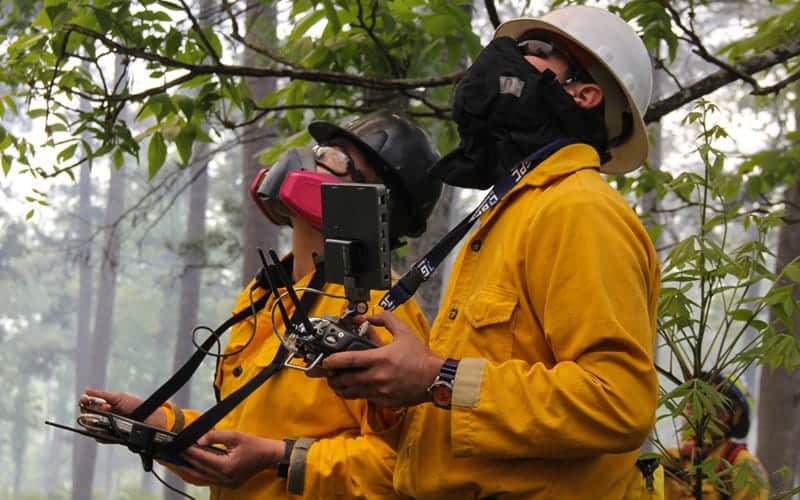
Prescribed Fire Science Key to Sustaining Fire We Use
A team of leading fire scientists, including DRI’s Adam Watts, PhD, are advocating for fire research to place a priority on the area of prescribed fire science. In a recently published article in Frontiers in Fire Ecology, Watts and colleagues argue that while the...
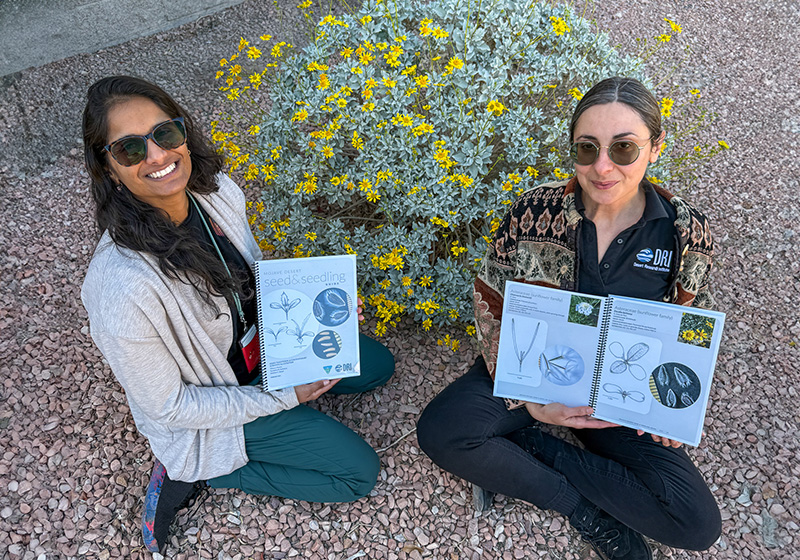
Tiffany Pereira Blends Art and Science in New Mojave Seedling Guide
The ecologist and illustrator created a first-of-its-kind seedling guide to help land managers and community members identify native plant seeds and aid with restoration work. DRI sat down with Pereira for more information about her goals and inspiration for the project, the benefits of fusing art with science, and the miracles contained in the tiniest seeds.
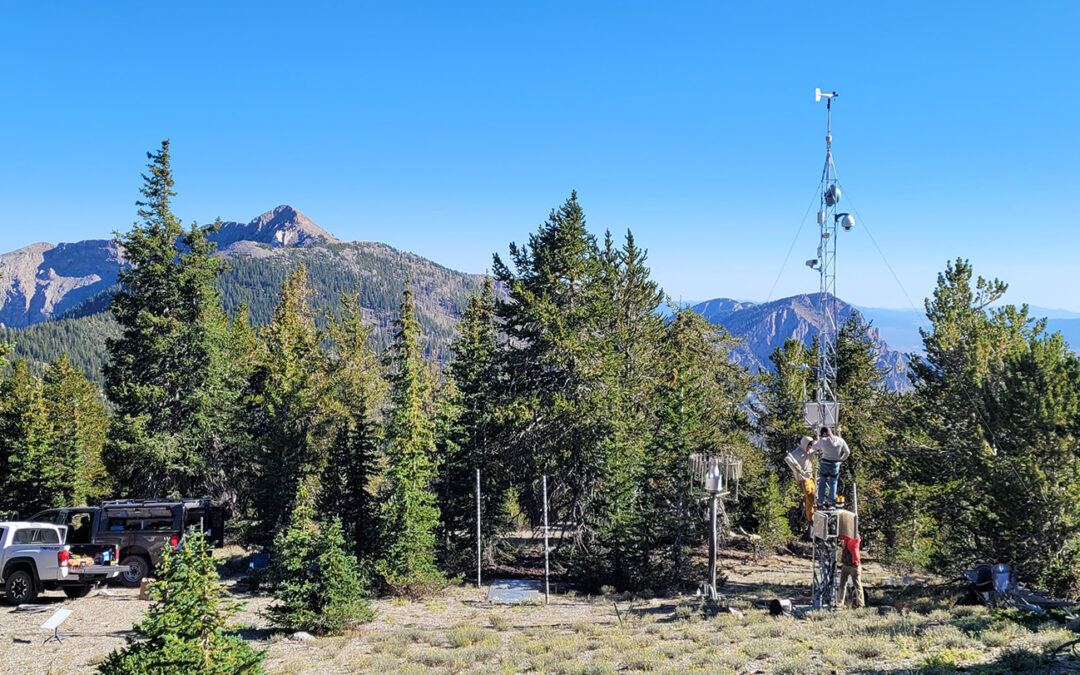
Long Science in the Nevada Bristlecone Preserve
Ancient bristlecone pines have been collecting data for us for millennia. Anne Heggli’s research aims to provide a nearly microscopic look at how the climate in the Great Basin is changing, from hour to hour and season to season. With scientific monitoring equipment positioned from the floor of the Great Basin’s Spring Valley up to the peak of Mount Washington, her project examines temperature fluctuations, atmospheric information, and snowpack insights across the region’s ecosystems.
Constraining the timing and climate forcing of the Long Island (Papua New Guinea) and Tarumae (Japan) eruptions and other 17th century volcanic eruptions
Constraining the timing and climate forcing of the Long Island (Papua New Guinea) and Tarumae (Japan) eruptions and other 17th century volcanic eruptions Long Island,Tarumae,Glass geochemistry,Ice cores,Sulfate,Tephra
PM 10 and PM 2.5 variations in time and space
Watson, J. G., Rogers, C. F., Chow, J. C. (1995). PM 10 and PM 2.5 variations in time and space
Effects of time-varying soil properties and canopy structure on paleorecharge in the Mojave Desert
Yin, J., Young, M. H., Yu, Z. (2005). Effects of time-varying soil properties and canopy structure on paleorecharge in the Mojave Desert: Denver, CO
On transport phenomena and equilibration time scales in thermodenuders
Saleh, R., Shihadeh, A., Khlystov, A. Y. (2010). On transport phenomena and equilibration time scales in thermodenuders, Atmospheric Measurement Techniques Discussions, 3, 2931-2960
Timothy Wallace
Timothy Wallace UAS Operator/Pilot Division of Atmospheric Sciences Hourly Temporary Faculty (LOA)
Single particle characterization of ultrafine and accumulation mode particles from heavy duty diesel vehicles using aerosol time-of-flight mass spectrometry
Toner, S. M., Sodeman, D. A., Prather, K. A. (2006). Single particle characterization of ultrafine and accumulation mode particles from heavy duty diesel vehicles using aerosol time-of-flight mass spectrometry, Environ Sci Technol, 40 (12), 3912-3921

Can Scientific Ingenuity Turn the Clock Back on Climate Change?
An interview with atmospheric scientist David Mitchell, Ph.D., who first proposed research into the climate intervention research of cirrus cloud-thinning.