By Kelsey Fitzgerald, Native Climate
Along Alaska’s western coastline, 400 miles from the nearest road system, villagers from the Indigenous community of Newtok – already remarkably resilient – were scheduled for permanent evacuation in mid-October due to the irreversible threat of rising seas. The story, recounted by Newtok resident Della Carl in September at the National Indigenous Climate Conference in Anchorage, Alaska, accomplished what scientific data alone rarely can: it embedded itself deep in the hearts and minds of each member of the audience, making it clear not just that sea level rise is happening, but why it matters. Such is the power of a well-told story.
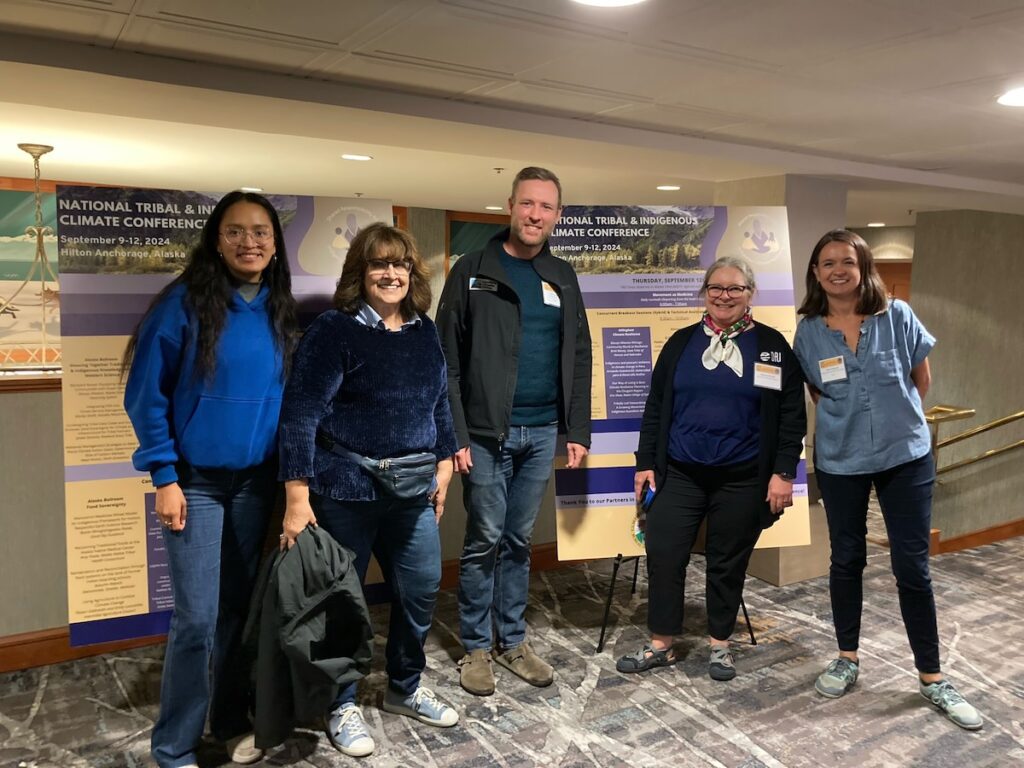
Present in the audience were several members of DRI’s Native Climate team, including Native Climate reporters Mary Cathleen Wilson and Shecota Nez, who had travelled to Anchorage to share their own stories of climate change and Indigenous resilience. Wilson, Nez, and a third member of the climate reporting team, Andra Hawk-Valdez (attending virtually), spent last summer learning about climate change impacts in their own regions and documenting those stories as part of the Native Climate project’s climate reporter program. Wilson is a Tohono O’odham tribal member, Nez is Diné, and Hawk-Valdez is Hunkpapa Lakota from the Standing Rock Sioux Tribe.
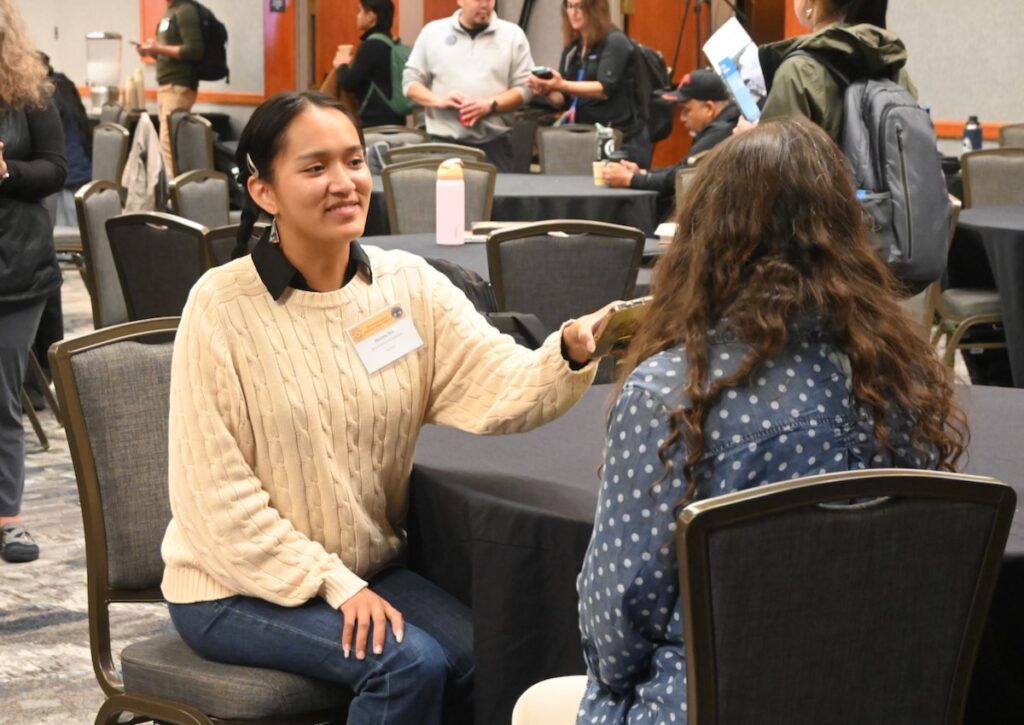
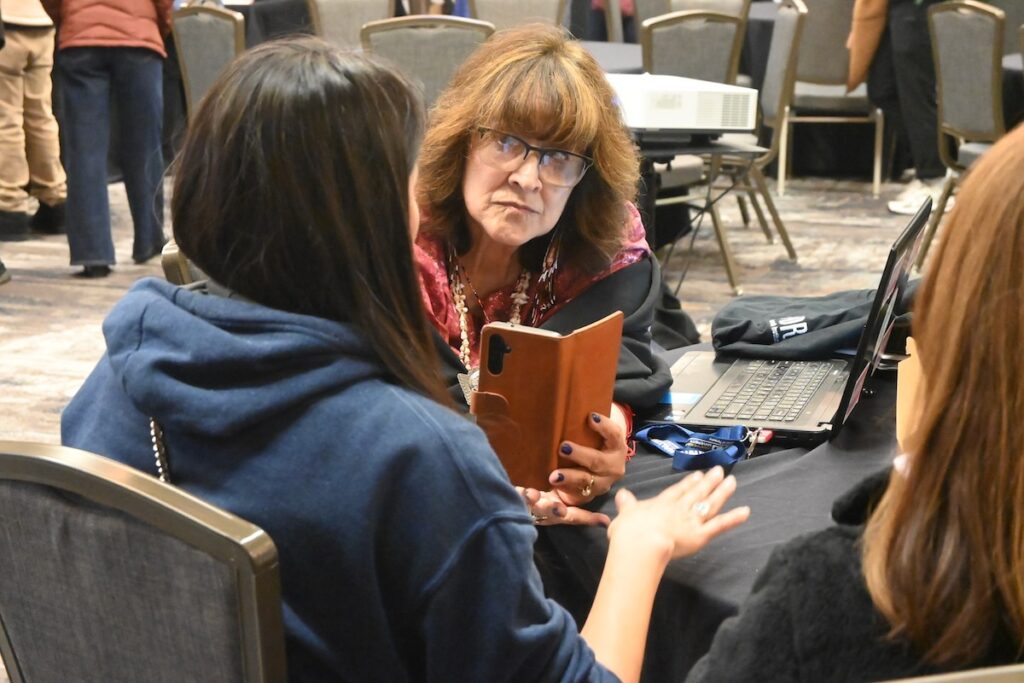
Indigenous communities in the US and around the world are being disproportionately impacted by climate change, but these stories do not always make the news, partially due to lack of diversity in mainstream US newsrooms, which include very few Indigenous journalists. Native Climate’s 10-week climate reporter internship program provides training in journalism and multimedia storytelling for writers who are interested in climate-related communication. Goals of the program are to build awareness nationally about climate change impacts and resilience on Native lands and peoples, and to encourage respect for Indigenous climate adaptation knowledge and practices among western scientists and the public.
“We have created a program where we engage with Native climate reporters, and we ask them to talk to us about what has happened in their communities as far as climate impacts, and then to communicate that in their own voice, in their own way, in their own media, not only about impacts but how their communities are demonstrating resilience,” said Native Climate Program Director Maureen McCarthy.
During the summer of 2024, the climate reporter team met twice weekly (remotely) with Native Climate communication coordinator Kelsey Fitzgerald to work through the steps in the reporting and writing process. Over the course of the program, the reporters each developed their own stories and poetry connecting climate data with on-the-ground experiences from their communities. They worked in collaboration with Native Climate’s data specialist, Kyle Bocinsky, to identify locally relevant datasets and make connections between their stories and larger-scale climate trends.
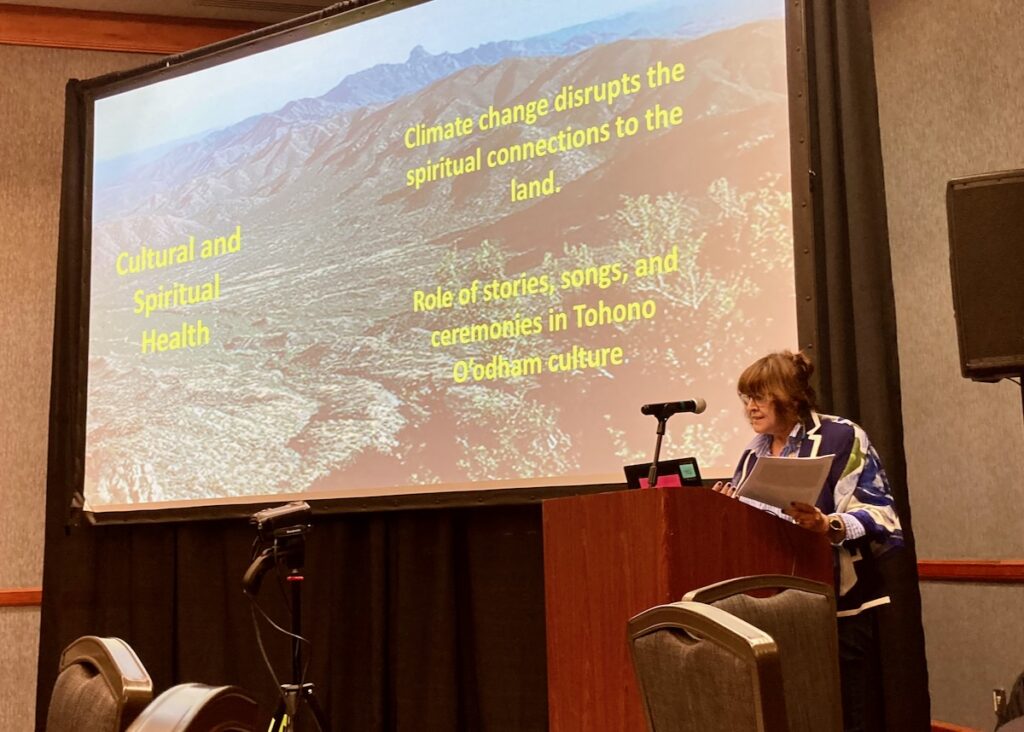
At the conference in Anchorage, Wilson, Nez, and Hawk-Valdez presented their summer projects, in a workshop titled “Indigenous Ground Truths: What is Your Climate story?” They were accompanied by McCarthy, Fitzgerald, Bocinsky, and Native Climate research fellow Gina McGuire (attending virtually). Bocinsky shared new CMIP6 climate projections for 633 tribally controlled areas in the US, and a selection of work from a second project called All Climate is Local, in which students from Tribal Colleges and Universities produced creative work such as children’s books, games, and videos in response to climate datasets. McGuire, who is ʻŌiwi (Native Hawaiian) and was a member of the climate reporter program during 2022-2023, closed the session with a powerful new poem, “On Us, Our Stories Live or Die.”
During the workshop and in a follow-up “climate conversations” session, the climate reporter team asked other NTICC participants to share their own climate experiences and gained practice interviewing while listening to personal accounts and experiences of extreme heat, drought, wildfire, extreme storms, rising seas, and other climate-related challenges. A selection of these accounts can be found on the Native Climate team’s interactive story map, “Indigenous Ground Truths.”
The climate reporters came away with ideas for new stories, new contacts with tribal organizations working on climate issues across the US, and a greater awareness of the diverse and daunting challenges that climate change is presenting for tribal nations, such as the current rush for minerals on tribal lands.
“This competition for essential resources like copper, lithium, and water for solar cells, wind turbines, and defense technologies mirrors the aggressive extraction that previously devastated the land in the name of Manifest Destiny,” Wilson said. “I felt at home as I joined U.S. tribes united to address climate change, emphasizing listening, collaboration, and protecting Indigenous cultural values in democracy.”
Other presentations from members of the Native Climate team at the NTICC climate conference included “Bridging Waters: A Collaborative Approach to Addressing Water Quality, Water Scarcity, and Climate Change,” (McCarthy, Bocinsky, and Vicki Hebb in collaboration with colleagues from the University of Alaska, Anchorage) and “All Climate is Local: Droughts to Floods on Native Lands” (McCarthy and Bocinsky). Their presentations are available on the Native Climate website.
The stories, poetry, and other creative work produced by the climate reporter team are published on the Native Climate website and are available for sharing by outside news organizations. Creative work from the All Climate is Local project can be viewed on the Native Climate website as well. The team hopes that these storytelling projects help increase awareness of climate change impacts and adaptation on Native lands and inspire greater creativity around the many ways in which climate information can be communicated.
“Our Native and Indigenous partners have taught us a lot as scientists about how to communicate,” McCarthy said. “We as scientists tend to think about writing articles to get published in journals. That is only a very small fraction of how the world communicates. We are grateful to our climate reporters and everyone we interacted with at NTICC who shared their stories of climate resilience.”