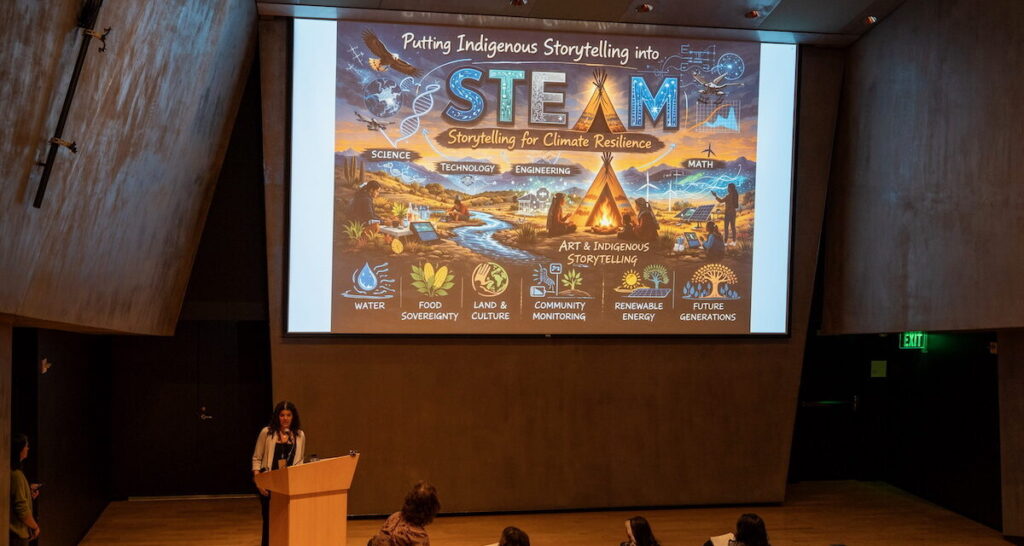
A woman talking on a stage with a projector behind her

Indigenous Storytelling at the 2026 NV STEAM Conference

Last month at the Nevada Museum of Art, a few hundred K-12 teachers from across Nevada gathered on a Saturday morning to contemplate STEAM—the idea that students’ understanding of STEM (science, technology, engineering and mathematics) can be complemented and strengthened by incorporating the arts. The 2026 NV STEAM Conference, cohosted by the Desert Research Institute (DRI), also included a Friday night open house at the DRI campus.

As part of the conference, the Native Resilience project led two sessions titled “Storytelling for Resilience: Bridging Indigenous Knowledge and Climate Science,” highlighting how our project uses storytelling to spread awareness about climate-related challenges and resilience in Indigenous communities.
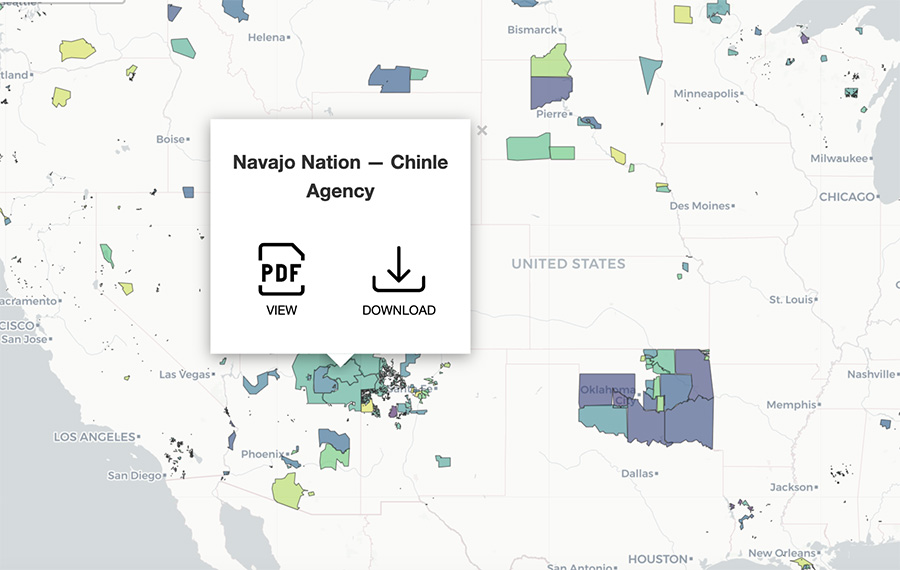
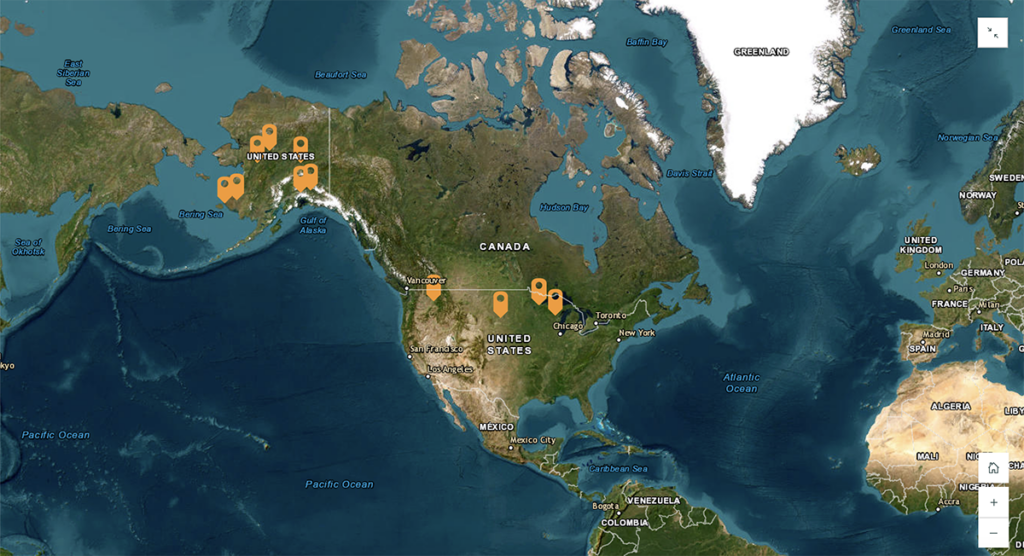
Map of the western United States that shows you can click on Tribally controlled regions for more information.

New Climate Projections Released for Tribal Lands

Earth’s climate future is often discussed in terms of degrees of warming, but for farmers and ranchers, temperature is not the only metric that matters. Other variables such as the number of frost-free days, timing of first snowfall, or changes in spring and summer precipitation are critical to planning future planting, growing, irrigating, and harvesting activities. To help Native agricultural producers prepare for the changes to come, Native Climate has compiled detailed local climate projections for 633 tribally controlled areas in the United States, including Alaska Native Villages and State Designated Tribal Areas, and climate divisions for the State of Hawai‘i.

Map of North American with orange markers indicating locations of extreme weather events.

Native Climate Reporter Team Presents, Listens, and Learns at Indigenous Climate Conference in Alaska

Along Alaska’s western coastline, 400 miles from the nearest road system, villagers from the Indigenous community of Newtok were scheduled for permanent evacuation in mid-October due to the irreversible threat of rising seas. The story, recounted by Newtok resident Della Carl in September at the National Indigenous Climate Conference in Anchorage, Alaska, embedded itself deep in the hearts and minds of each member of the audience, making it clear not just that sea level rise is happening, but why it matters. Such is the power of a well-told story.

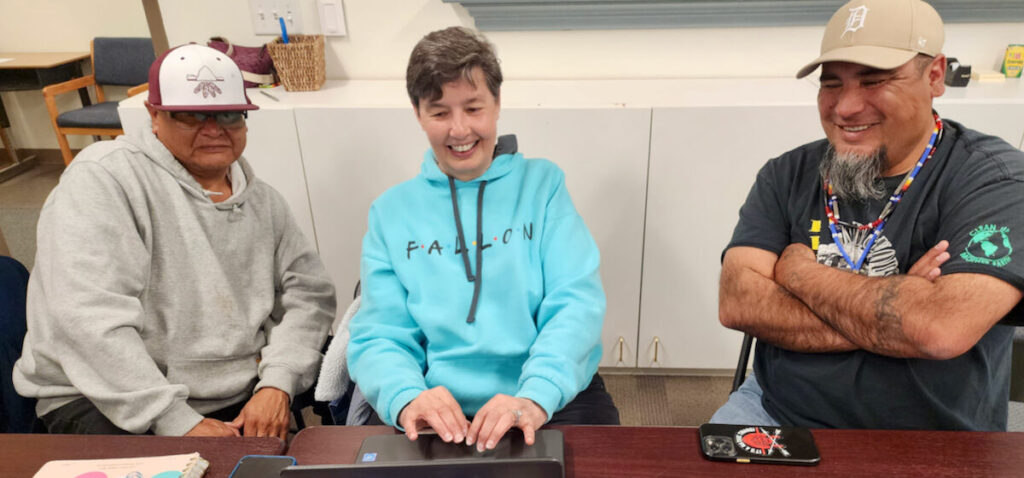
Three educators working around a laptop and smiling.

Native Climate Team Holds Indigenous Education Workshop

The Desert Research Institute’s Native Climate education team, Ileah Kirchoff and Crystal Miller, hosted a collaborative workshop between the Walker River Paiute Tribe and the Fallon Paiute Shoshone Tribe on May 4, 2024. The session focused on Indigenous curriculum development and the incorporation of Traditional Ecological Knowledge (TEK), particularly in lessons about the climate crisis.