Three new research projects sponsored by the Desert Research Institute in 2020 will explore new methods in luminescence dating, groundwater contamination around fracking operations, and the movement of groundwater through rocks and soils.
DRI awards funding to several new faculty and staff projects each year through its Institute Project Assignment (IPA) competition. Winners of the IPA competition receive a research grant from DRI to pursue a topic that interests them and develop ideas that can ultimately be turned into externally funded research projects.
Winners of this year’s IPA competition are Christina Neudorf, Zhiqiang Fan, and Lazaro Perez. Their projects are as follows:
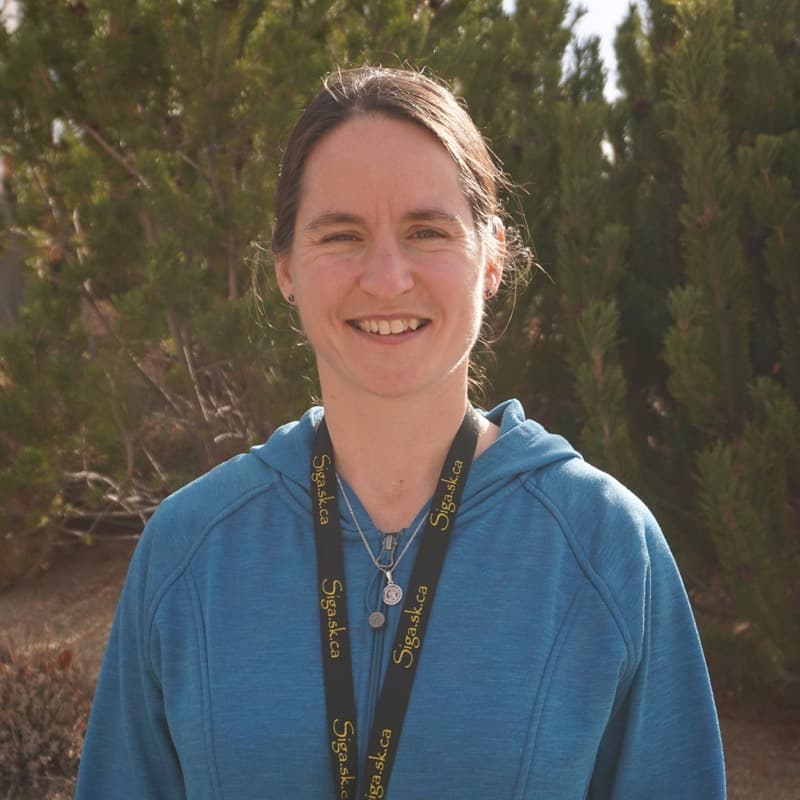
Christina Neudorf: A pilot project to explore the feasibility of dating rock surfaces and carbonate deposits using luminescence dating
Luminescence dating, which uses light emitted by minerals to date events in the past, is a technique most commonly applied to silt or sand samples. Christina Neudorf, manager of the DRI Luminescence Lab (DRILL), will explore new methods in luminescence dating that could be used to date rock surfaces and carbonate deposits such as travertine and tufa that are common in Nevada. Her research aims to diversify the luminescence dating approaches applied at DRILL, and to expand DRI’s capabilities in providing chronologies for past climate change, early human evolution and dispersal, and landscape evolution in response to climate change, tectonics and changing sea level.
Zhiqiang Fan: Hydraulic fracturing induced fault reactivation and groundwater contamination
Hydraulic fracturing, or “fracking,” injects fluid at high pressure into deep-rock formations, creating fractures in the rock through which natural gas can be extracted. Environmental impacts include risk of groundwater contamination. Zhiqiang Fan, a Postdoctoral Fellow in geomechanics with the Division of Hydrologic Sciences, will investigate the potential for flow of fracking fluids from shale formations into groundwater aquifers, including the possibility for accidental reactivation of faults near injection wells. His work aims to improve fracking design and execution to produce gas in a more economically viable and environmentally sound manner.

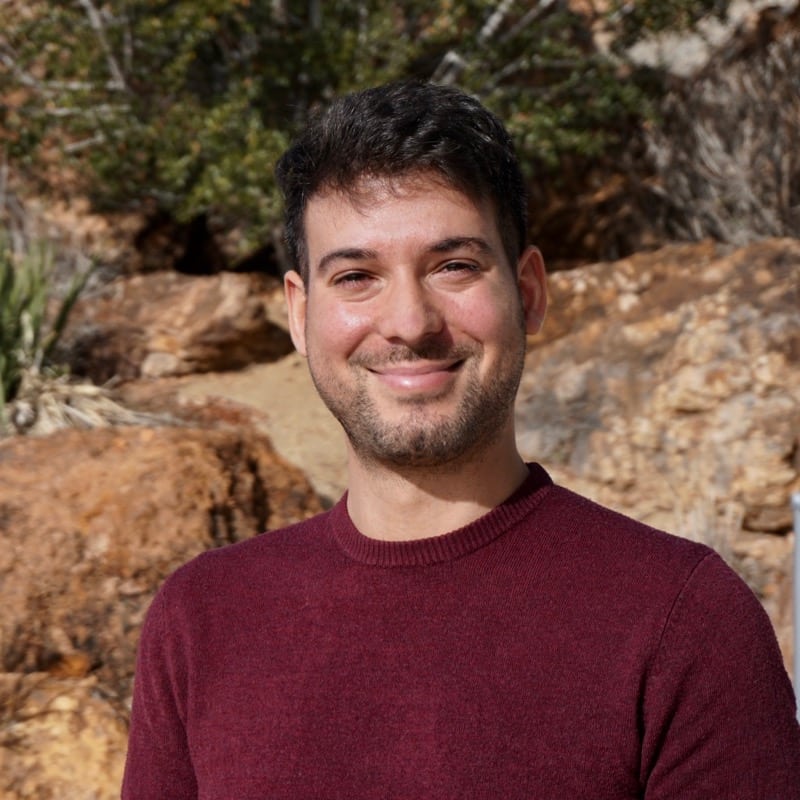
Lazaro Perez: Reactive transport in porous media
Reactive transport modeling is an important tool for understanding the movement and mixing of fluids such as groundwater as it travels through various types of rocks and soils in an aquifer. Lazaro Perez, a Postdoctoral Fellow with the Division of Hydrologic Sciences, will work with Rishi Parashar (DHS) to develop numerical models and conduct simulations of fluid-fluid reactions as they occur in porous media such as different types of rocks. Using the methodology that Perez developed during his Ph.D. work in Spain, they hope to learn about the fluid-fluid reactions that occur as water moves through heterogeneous porous media. An improved understanding of the underlying processes involved in fluid-fluid mixing can also be applied to other scientific disciplines, such as how fluids mix inside of the human body.