Reno, Nev. (Jan. 26, 2026) The Nature Conservancy in Nevada (TNC in Nevada), DRI, and the University of Wisconsin – Madison (UW-Madison) have developed the Nevada GDE Water Needs Explorer Tool. This new online resource helps land and water managers understand how groundwater supports groundwater-dependent ecosystems (GDEs) and how changes in water levels can affect them.
“Groundwater is essential for both Nevada’s ecosystems and communities,” said Laurel Saito, Water Strategy Director for The Nature Conservancy in Nevada. “Understanding how to manage and protect this resource is critical for a sustainable future.”
GDEs like meadows, wetlands, rivers, and some forests and shrublands that rely on groundwater to thrive are critical for both nature and people. Yet in Nevada’s arid climate, these ecosystems face mounting pressure from drought, rising temperatures, and water demands for people and nature. When groundwater levels drop, plants, wildlife, and people can lose access to the water they need, which threatens habitats, economic prosperity, and human health.
“Ecohydrology is understanding the way in which ecosystems affect water resources and how changing hydrology impacts our ecosystems,” said Steven Loheide, Professor of Water Resources Engineering at UW-Madison. “We need quantitative understanding of these two-way interactions to manage either resource effectively.”
“This is especially important in places with varied terrain, like Nevada, where groundwater-dependent ecosystems can occur anywhere from high mountain environments that are cool and wet to some of the hottest and driest places in all of North America,” said Lead Principal Investigator Christine Albano, Associate Research Professor at DRI. “Groundwater-dependent ecosystems’ interactions with groundwater are going to differ dramatically across this range of conditions, so our goal was to quantify these differences.”
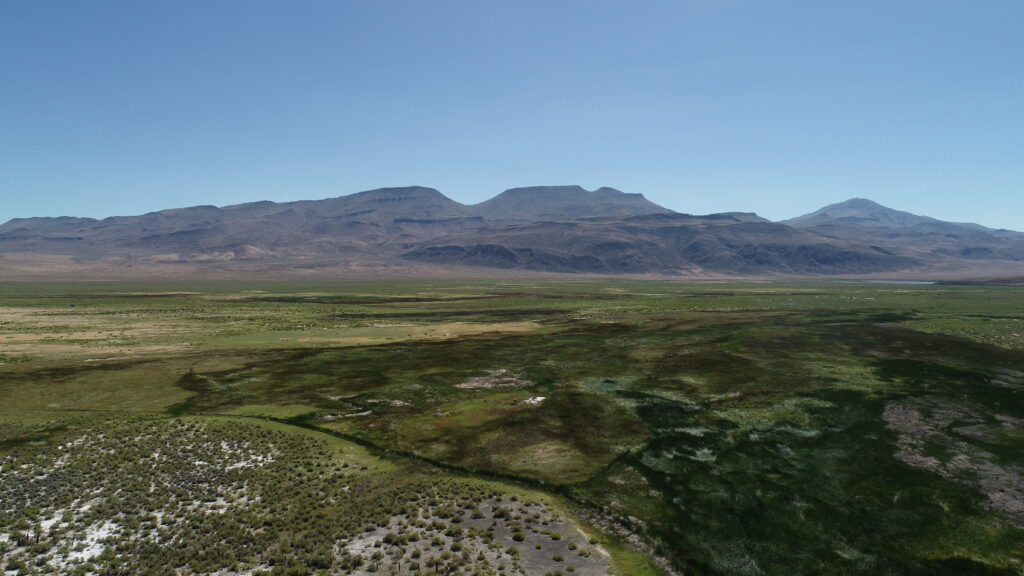
Credit: David Page/DRI.
Until now, managers lacked a way to quickly estimate how much groundwater GDEs use and how sensitive ecosystems are to changes in water levels. This makes it harder to plan for sustainable water use and creates challenges for protecting habitats under changing conditions.
“This tool helps us estimate the water needed to support species and ecosystems we track, and how they may be impacted by changing precipitation and temperature in the future,” said Chantal Iosso, Wetland Program Specialist at Nevada Division of Natural Heritage.
The tool can also help with planning. Christian Kropf, the principal hydrologist at Truckee Meadows Water Authority, said the tool “could be useful for estimating water used by plants to incorporate into our water resource sustainability models.”
Here’s how it works: Users select a location and GDE type to explore how groundwater depth, soil, and climate conditions affect plant growth and water use. The Nevada GDE Water Needs Explorer then estimates how much water plants draw from groundwater (called groundwater component of evapotranspiration or ETGW) and how much extra water becomes available to plants when groundwater is close enough to the surface for their roots to reach it—a benefit known as the groundwater subsidy. Having these estimates can help with managing water in a dry state like Nevada.
“The Nevada Division of Water Resources looks forward to using the Nevada GDE Water Needs Explorer to improve management of groundwater in Nevada,” said Kip Allander, Chief of Hydrology at the Nevada Division of Water Resources.
This research was funded by the U.S. Bureau of Reclamation’s WaterSMART Applied Science program.
To learn more about the tool, visit this link: Nevada GDE Water Needs Explorer Tool