What happens when rain falls on desert soils?
DEC. 14, 2020
LAS VEGAS, NEV.
Soils
Hydrology
Deserts
An updated model from DRI scientists in Las Vegas provides a new understanding of water movement in dry soils
Several years ago, while studying the environmental impacts of large-scale solar farms in the Nevada desert, Desert Research Institute (DRI) scientists Yuan Luo, Ph.D. and Markus Berli, Ph.D. became interested in one particular question: how does the presence of thousands of solar panels impact desert hydrology?
This question led to more questions. “How do solar panels change the way water hits the ground when it rains?” they asked. “Where does the water go? How much of the rain water stays in the soil? How deep does it go into the soil?”
“To understand how solar panels impact desert hydrology, we basically needed a better understanding of how desert soils function hydraulically,” explained Luo, postdoctoral researcher with DRI’s Division of Hydrologic Sciences and lead author of a new study in Vadose Zone Journal.
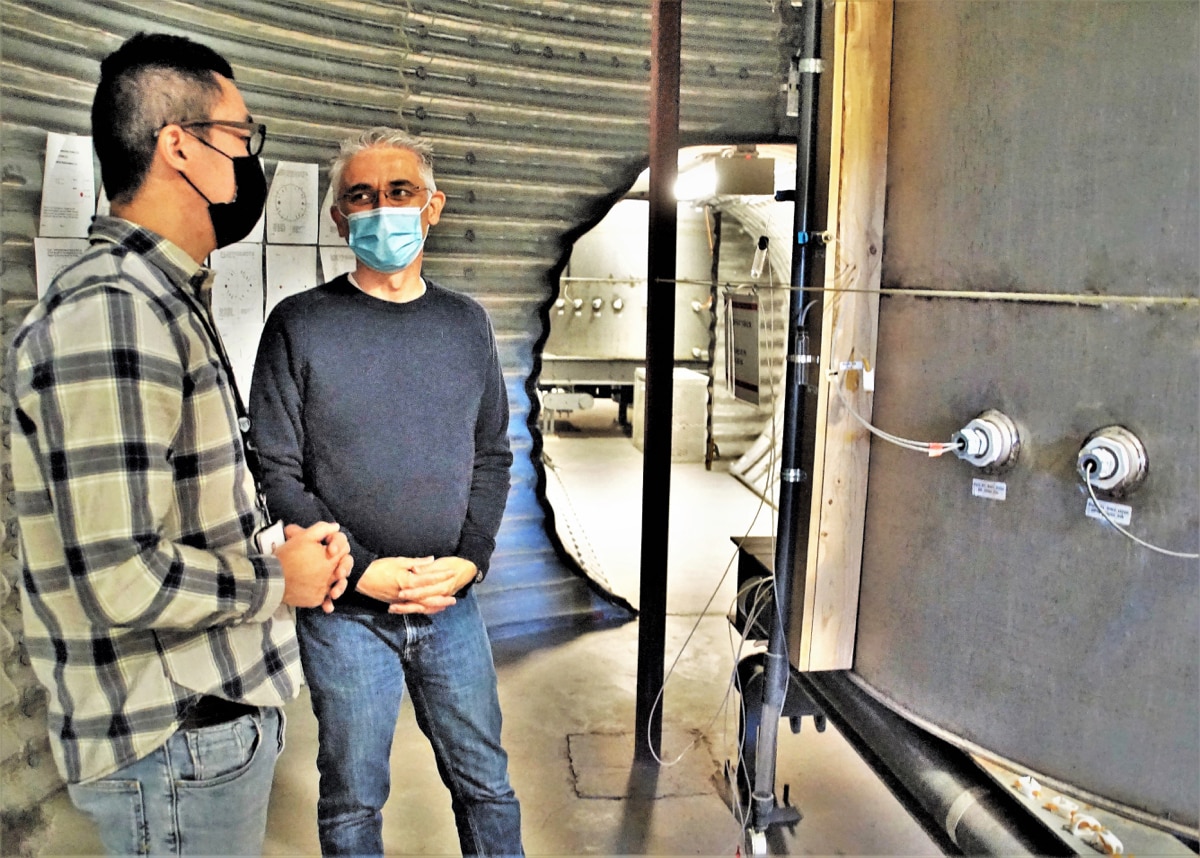
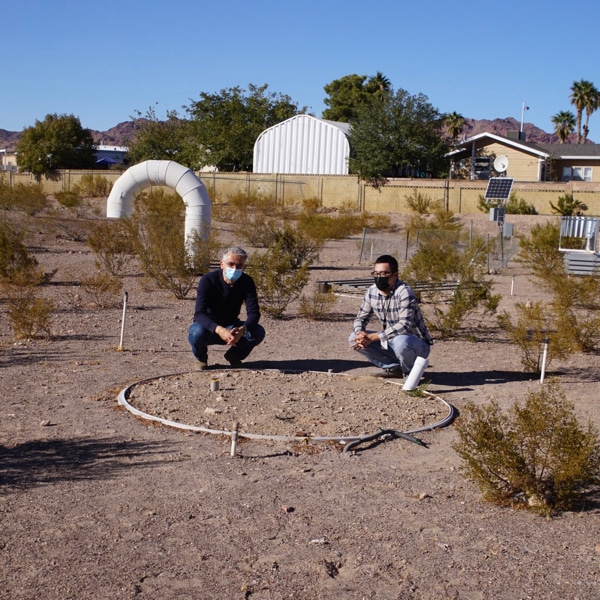
DRI scientists Yuan Luo (left) and Markus Berli (right) conducting research at DRI’s SEPHAS Lysimeter facility in Boulder City, Nev. November 2020.
Photograph by Ali Swallow/DRI.
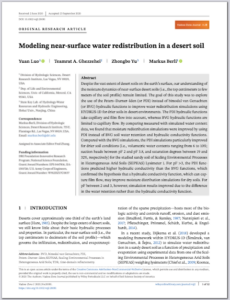
The full text of the paper “Modeling near-surface water redistribution in a desert soil”, is available from Vadose Zone Journal: https://doi.org/10.1002/vzj2.20081.
In the study, Luo, Berli, and colleagues Teamrat Ghezzehei, Ph.D. of the University of California, Merced, and Zhongbo Yu, Ph.D. of the University of Hohai, China, make important improvements to our understanding of how water moves through and gets stored in dry soils by refining an existing computer model.
The model, called HYDRUS-1D, simulates how water redistributes in a sandy desert soil based on precipitation and evaporation data. A first version of the model was developed by a previous DRI graduate student named Jelle Dijkema, but was not working well under conditions where soil moisture levels near the soil surface were very low.
To refine and expand the usefulness of Dijkema’s model, Luo analyzed data from DRI’s SEPHAS Lysimeter facility, located in Boulder City, Nev. Here, large, underground, soil-filled steel tanks have been installed over truck scales to allow researchers to study natural water gains and losses in a soil column under controlled conditions.
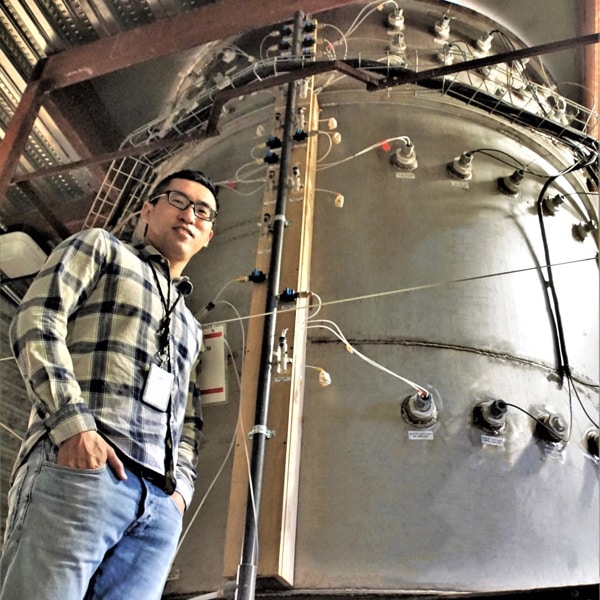
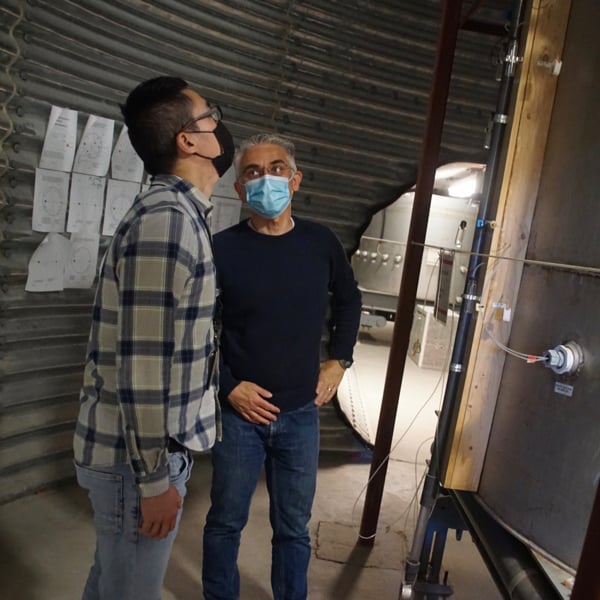
Above: Yuan Luo and Markus Berli of DRI’s Division of Hydrologic Sciences used data from DRI’s SEPHAS Lysimeter facility (shown here) to refine an existing model called HYDRUS-1D, which simulates how water moves through dry soils.
Photographs by Ali Swallow/DRI.
Using data from the lysimeters, Luo explored the use of several hydraulic equations to refine Dijkema’s model. The end result, which is described in the new paper, was an improved understanding and model of how moisture moves through and is stored in the upper layers of dry desert soils.
“The first version of the model had some shortcomings,” Luo explained. “It wasn’t working well for very dry soils with volumetric water content lower than 10 percent. The SEPHAS lysimeters provided us with really good data to help understand the phenomenon of how water moves through dry soils as a result of rainfall and evaporation.”
In desert environments, understanding the movement of water through soils is helpful for a variety of practical uses, including soil restoration, erosion and dust management, and flood risk mitigation. For example, this model will be useful for desert restoration projects, where project managers need to know how much water will be available in the soil for plants after a desert rainstorm, Berli said. It is also a key piece of the puzzle needed to help answer their original question about how solar farms impact desert hydrology.
“The model is very technical, but all of this technical stuff is just a mathematical way to describe how rainwater moves in the soil once the water hits the soil,” Berli said. “In the bigger picture, this study was motivated by the very practical question of what happens to rainwater when falling on solar farms with thousands and thousands of solar panels in the desert – but to answer questions like that, sometimes you have to dig deep and answer more fundamental questions first.”
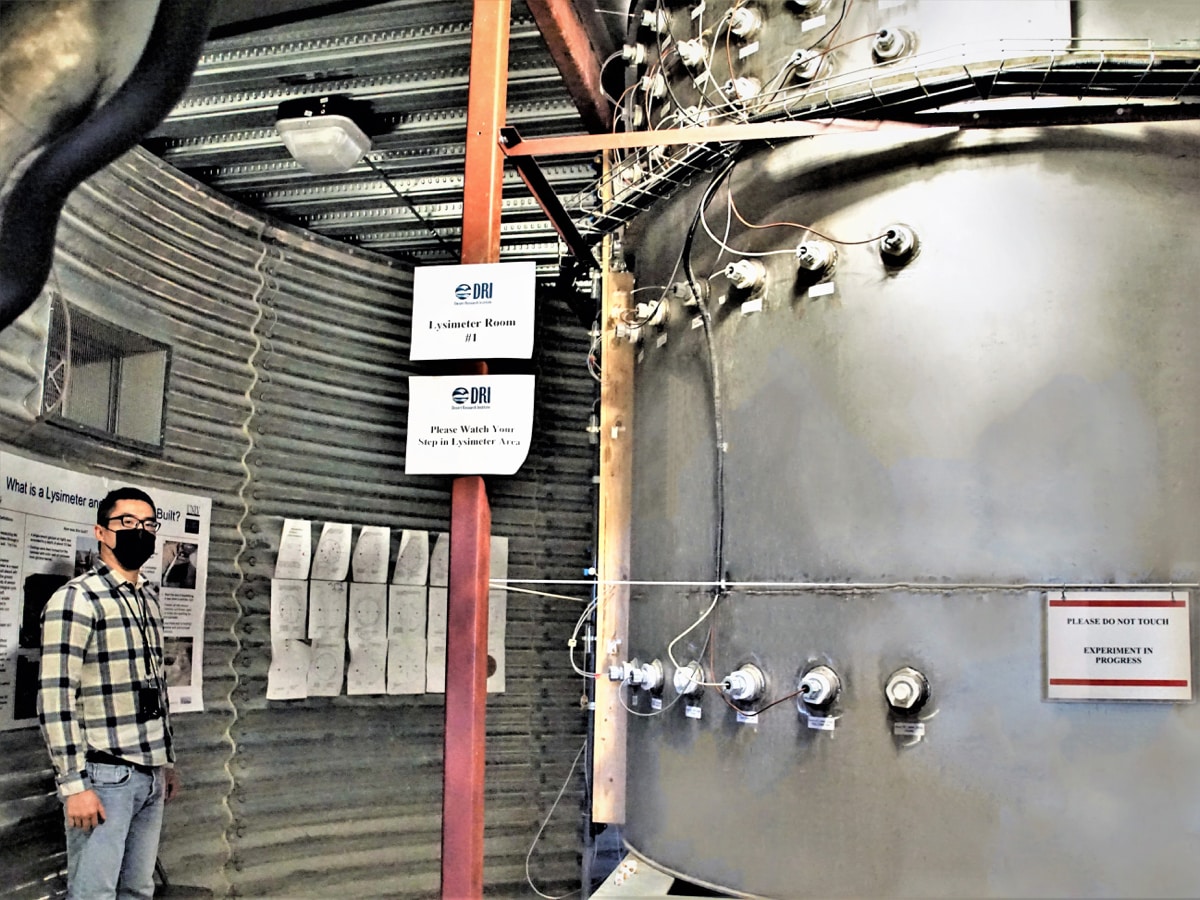
DRI scientist Yuan Luo standes near a weighing lysimeter at DRI’s SEPHAS Lysimeter facility in Boulder City, Nev. November 2020.
Photograph by Ali Swallow/DRI.
“In the bigger picture, this study was motivated by the very practical question of what happens to rainwater when falling on solar farms with thousands and thousands of solar panels in the desert – but to answer questions like that, sometimes you have to dig deep and answer more fundamental questions first.”
Additional Information:
This study was funded by the DRI Foundation Innovative Research Program, the National Science Foundation, and the U.S. Army Corps of Engineers. Rose Shillito, Ph.D. (DRI/ACOE) and Nicole Damon (DRI) also contributed to the success of this project.
The full text of the paper “Modeling near-surface water redistribution in a desert soil”, is available from Vadose Zone Journal: https://doi.org/10.1002/vzj2.20081
To learn more about DRI’s SEPHAS Lysimeter facility, please visit: https://www.dri.edu/sephas/lysimeters/
###
The Desert Research Institute (DRI) is a recognized world leader in basic and applied interdisciplinary research. Committed to scientific excellence and integrity, DRI faculty, students, and staff have developed scientific knowledge and innovative technologies in research projects around the globe. Since 1959, DRI’s research has advanced scientific knowledge, supported Nevada’s diversifying economy, provided science-based educational opportunities, and informed policy makers, business leaders, and community members. With campuses in Reno and Las Vegas, DRI serves as the non-profit research arm of the Nevada System of Higher Education. For more information, please visit www.dri.edu.
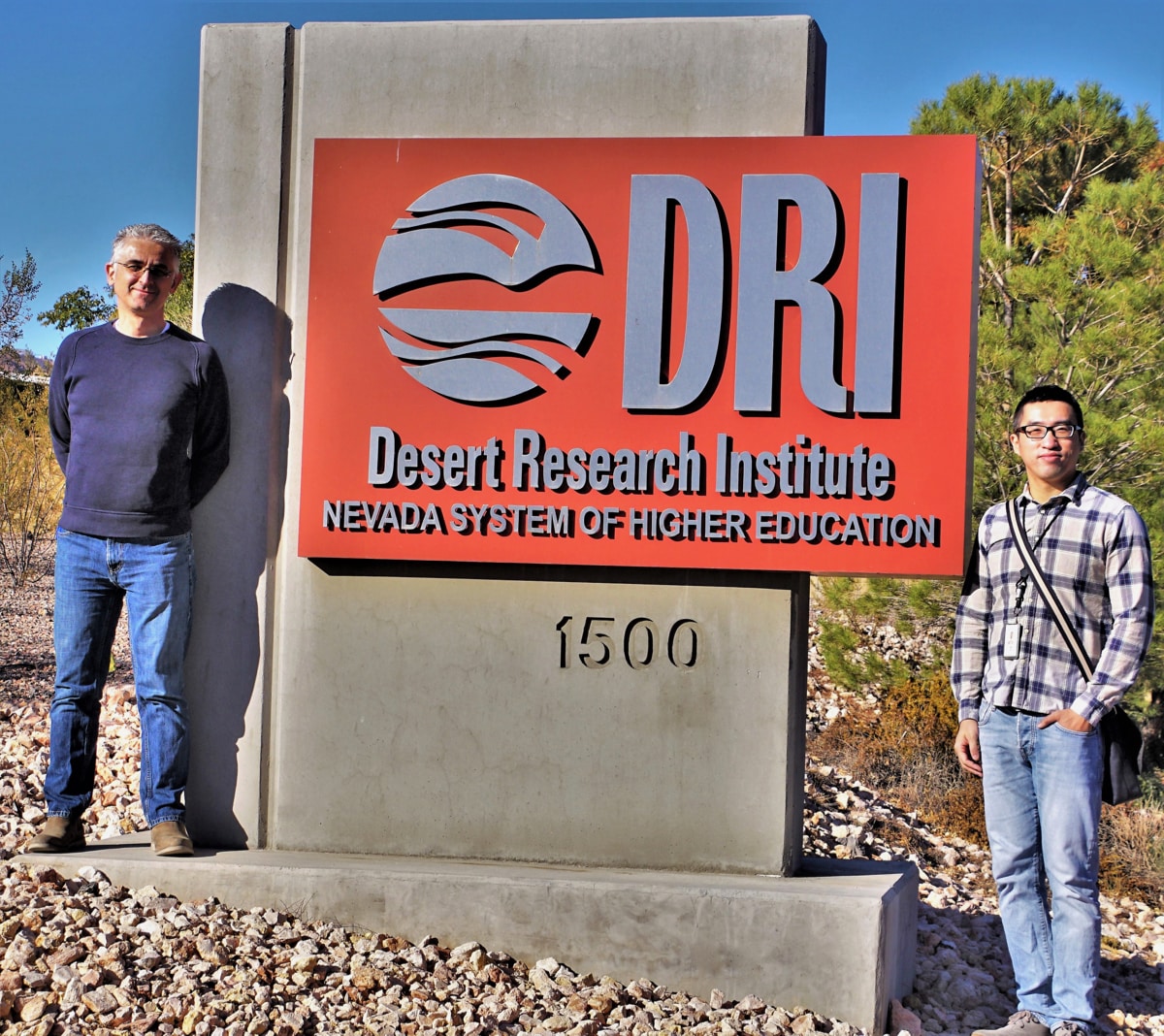
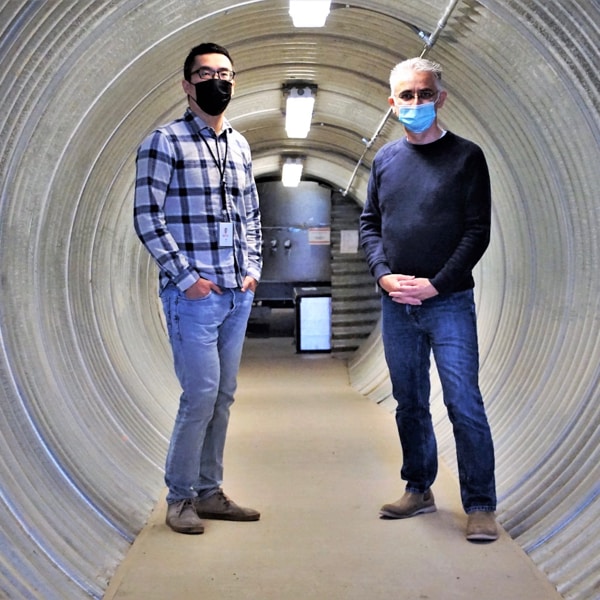
DRI scientists Markus Berli and Yuan Luo. November 2020.
Photograph by Ali Swallow/DRI.