News & Announcements
Working to Solve our Most Challenging Environmental Problems
DRI’s research calls on the expertise and methods of scientists from multiple scientific disciplines. More than 600 highly-skilled scientists, engineers, technicians, students, and staff work collaboratively within and across three research divisions, focused on understanding and answering critical science questions about global climate change, water quality and availability, air quality, the sustainability of desert lands, life in extreme environments, education, and more.

New DRI Study Investigates Formation of Dangerous Compounds by E-cigarettes
Scientists with the Desert Research Institute (DRI) Organic Analytical Laboratory, led by Andrey Khlystov, Ph.D., have been awarded a $1.5M grant from the National Institutes of Health (NIH) to study the formation of dangerous compounds by electronic cigarettes (e-cigarettes).
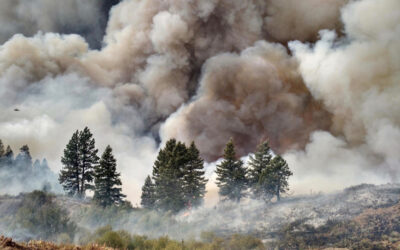
Wildfire Smoke Exposure Linked to Increased Risk of Contracting COVID-19
Wildfire smoke may greatly increase susceptibility to SARS-CoV-2, the virus that causes COVID-19, according to new research from the Center for Genomic Medicine at the Desert Research Institute (DRI), Washoe County Health District (WCHD), and Renown Health (Renown) in Reno, Nev.
Rosen Applauds Over $500,000 Awarded to Desert Research Institute to Mitigate Risk of Wildfire Smoke in Rural Communities
News release reposted from Senator Jacky Rosen. WASHINGTON, D.C. –U.S. Senator Jacky Rosen (D-NV) released the following statement applauding the Environmental Protection Agency (EPA) for awarding a grant totaling $544,763 to the Desert Research Institute...

2020 Lake Tahoe Clarity Report: Trends Holding but Threats Remain
Lake Tahoe, CA/NV (July 8, 2021) – Lake Tahoe’s water clarity measurements, which are indicators of the health of the watershed, averaged 62.9 feet through 2020, the UC Davis Tahoe Environmental Research Center and the Tahoe Regional Planning Agency announced today.
DRI Honors Outstanding Contributions of Faculty and Staff at 2021 Celebration of Science
Each year, the Desert Research Institute (DRI) honors the incredible commitment and dedication of our faculty and staff through an award ceremony called the Celebration of Science. This year’s event was held virtually and recognized the winners of this year’s Nevada...

Visitors and residents help protect Tahoe’s environment with their smartphones
The app update will engage thousands of visitors in protecting Tahoe’s environment by quickly and easily reporting observations of aquatic invasive species, litter, water quality, algae, and more.

Study Launches on Extreme Heat Risk in Coastal Communities
The Desert Research Institute (DRI) and the Houston Advanced Research Center (HARC) announce the launch of a comprehensive extreme heat risk modeling project funded by the National Oceanic and Atmospheric Administration (NOAA) to study and predict the risk of extreme heat within coastal communities.
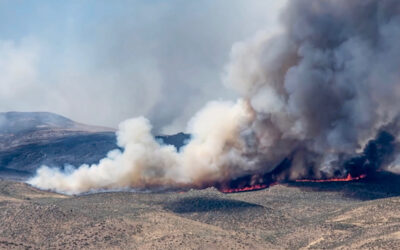
DRI Ice Core Lab Data Shows Magnitude of Historic Fire Activity in Southern Hemisphere
A new study in Science Advances features ice core data from the DRI Ice Core Laboratory and research by Nathan Chellman, Ph.D., Monica Arienzo, Ph.D., and Joe McConnell, Ph.D.
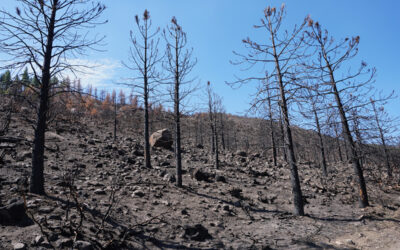
Does Cold Wildfire Smoke Contribute to Water Repellent Soils in Burned Areas?
After a wildfire, soils in burned areas often become water repellent, leading to increased erosion and flooding after rainfall events.
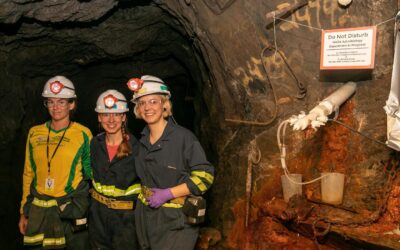
New Study Investigates the Distribution of Deep Underground Microbial Life
Above: DeMMO field team from left to right: Lily Momper, Brittany Kruger, and Caitlin Casar sampling fracture fluids from a DeMMO borehole installation. Credit: Matt Kapust. Las Vegas, Nev. - Below the Earth’s surface, a zone of life known as the continental deep...
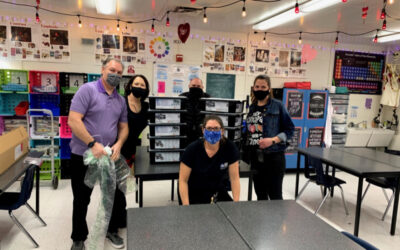
Reno Tech Company Contributes to School Robotics Education
Reno, NV - Virginia Turner and Bob Pratte, teachers at Traner Middle School in Reno, NV, were at the receiving end of a generous donation made by TrainerRoad to help foster STEM education in the Washoe County School District. Based in Reno, TrainerRoad is a virtual...

Monica Arienzo, Ph.D., Receives DRI’s First National Science Foundation CAREER Award
Monica Arienzo, Ph.D., has been awarded a CAREER Award from the National Science Foundation (NSF) – the first such award received by a DRI scientist in the Institute’s 62-year history.