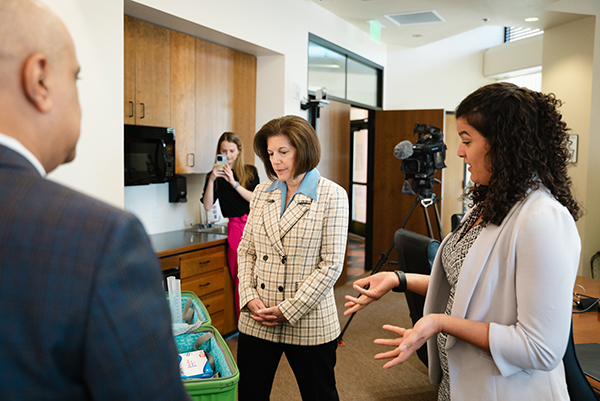
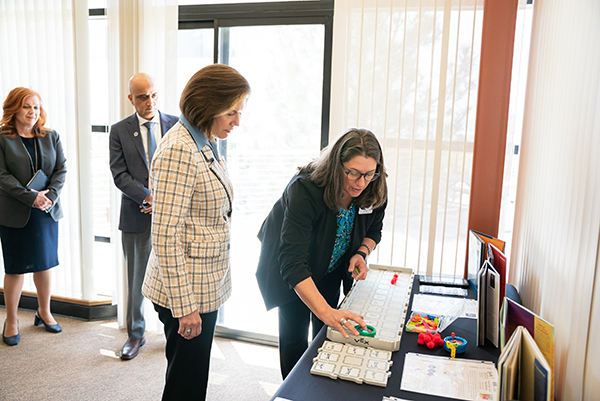
Reno, Nev. – Today, U.S. Senator Catherine Cortez Masto visited DRI for a tour of their upgraded facilities to highlight over $9.2 million in investments she secured through recently passed bipartisan legislation to support DRI’s critical research projects that are helping grow Nevada’s clean energy economy, protect the environment, and preparing students for careers in STEM fields.
“I was thrilled to join the Desert Research Institute today to see how their work is helping ensure Nevada continues lead the way in the fight to combat climate change and drive a sustainable future,” said Senator Cortez Masto. “From developing our lithium resources to preparing Nevada students for the jobs of tomorrow, this funding I delivered will help promote Nevada’s clean-energy industries, create more good-paying jobs, and keep our families healthy.”
“We appreciate Senator Cortez Masto’s continued support of important environmental research and K-12 STEM education,” said DRI President Kumud Acharya. “DRI researchers are conducting science that matters now, and this funding to research environmental pollutants and lithium resource mapping are critical environmental topics important to Nevadans and beyond.”
Senator Cortez Masto recently helped deliver significant community projects funding to support the following DRI initiatives:
- $2,800,000 for K-12 STEM Education Pathways: This funding will support DRI’s STEM Education Program and will help fund new computer science education for K-8 students, support mentorship and workforce development programs for high school students, and provide professional development and free STEM curriculum units for Nevada teachers.
- $1,800,000 for Instrumentation for Environmental Pollution Studies: This funding will support research on environmental pollutants in Nevada and providing education opportunities for students to improve our understanding of emerging contaminants like PFAS (or forever chemicals) and other pollutants in our environment.
- $1,630,000 for Lithium Resource Mapping: This funding will help the state better understand the extent of the critical minerals in Nevada. The project will support a comprehensive geologic map of lithium resources and help study lithium recovery techniques that are critical to supporting the emerging clean energy economy.
- $3,000,000 for Environmental Research to Protect Lake Tahoe: This funding will support research by DRI and UNR to balance the needs of protecting Lake Tahoe with recreational activities.

As part of her Innovation State Initiative, Senator Cortez Masto has consistently worked to create good-paying clean energy and technology jobs across Nevada. In the Bipartisan Infrastructure Law, she championed her bipartisan legislation to promote Nevada’s mining and emerging battery industries and to create the battery manufacturing and recycling program that is funding numerous projects in Nevada. She has supported and recently announced multiple national designations for the University of Nevada, Reno (UNR), including as a U.S. Regional Tech and Innovation Hub and a National Science Foundation Regional Innovation Ecosystem Engine for innovation and job creation in the lithium-ion battery industry. In the CHIPS and Science Act, Cortez Masto secured a substantial increase in research and science funding for institutions like DRI that have historically not gotten their fair share of funds.
###