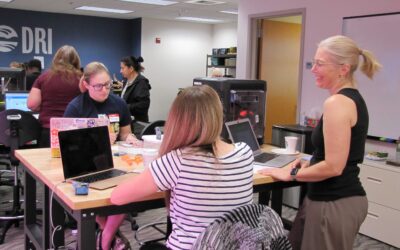
The paid internship will place students from UNR and UNLV with teachers at local schools to develop STEM education materials targeted to specific classroom needs.
DRI is accepting applications for the new STEM Educator Partnership fall internship that will take place from September to December 2023. This paid opportunity is available to current education and science majors at UNR and UNLV, as well as Nevada K-5 educators.
Over the 4-month program, students will pair with a mentor teacher at a local school to create an engaging STEM education product that addresses specific classroom needs. Students will also attend two professional development sessions at DRI to learn more about STEM education and science careers. Participating teachers will be awarded a paid fellowship to act as mentors to students in the classrooms and during the creation of their education product. All participants will be invited to a summative celebration in June 2024.
“Participation in this project promises to be enriching for educators and students alike,” says Emily Mcdonald-Williams, M.S., STEM Education Program Manager at DRI. “This initiative provides educators with the opportunity to serve as leaders through the mentorship program, while simultaneously enhancing classroom supports and elevating their students’ STEM engagement. By pairing undergraduate students majoring in Education and STEM fields together, we foster cross-disciplinary learning and peer-to-peer collaboration. Furthermore, the student groups build their confidence in these topics through classroom engagement and STEM education material development. Ultimately, we believe these experiences will help build a more resilient and STEM-informed workforce in both education and STEM industries.”
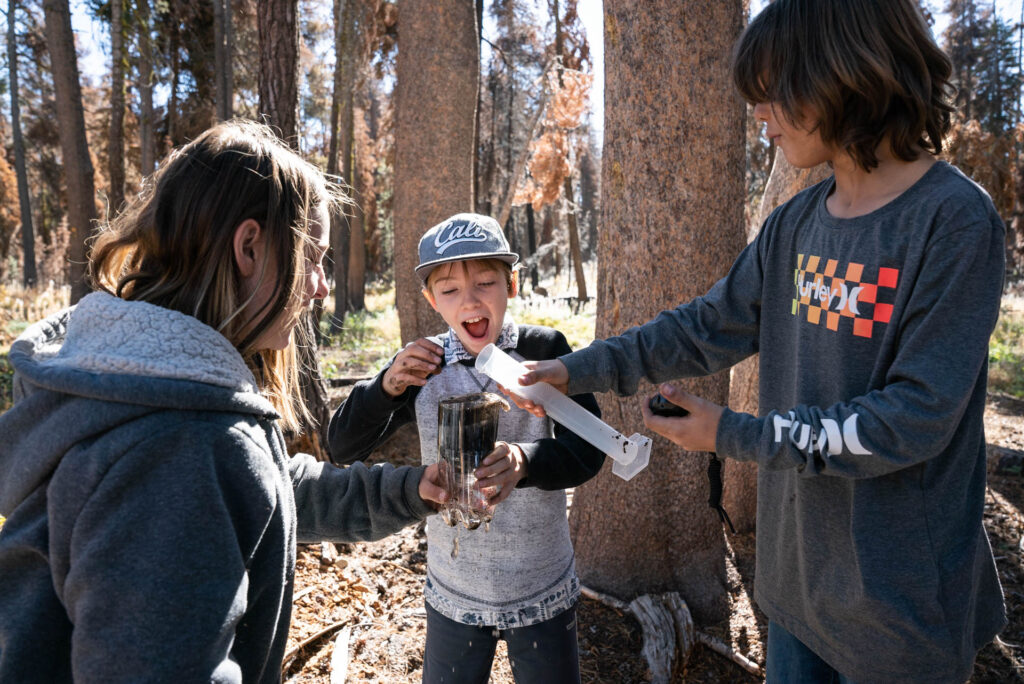
The internship is in collaboration with UNR and UNLV and will take place during the fall and spring semesters. Applications for both students and teachers are being accepted for the fall session. The priority deadline is Sep. 1st, with applications accepted until Sep. 7th:
Funding acknowledgement: This program is 100% funded by a $1,000,000 federal grant issued by the U.S. Department of Education.
More information: For more information about DRI’s STEM education program, Science Alive, visit www.dri.edu/science-alive. Applications for the Spring session will open in January, 2024.
###
About DRI
The Desert Research Institute (DRI) is a recognized world leader in basic and applied environmental research. Committed to scientific excellence and integrity, DRI faculty, students who work alongside them, and staff have developed scientific knowledge and innovative technologies in research projects around the globe. Since 1959, DRI’s research has advanced scientific knowledge on topics ranging from humans’ impact on the environment to the environment’s impact on humans. DRI’s impactful science and inspiring solutions support Nevada’s diverse economy, provide science-based educational opportunities, and inform policymakers, business leaders, and community members. With campuses in Las Vegas and Reno, DRI serves as the non-profit research arm of the Nevada System of Higher Education. For more information, please visit www.dri.edu.
Program Contact:
Monica Gehrig
STEM Education Training and Outreach
E: Monica.Gehrig@dri.edu
Media Contact:
Elyse DeFranco
Science Writer, DRI
E: Elyse.DeFranco@dri.edu