Meet Brianda Hernandez Rosales, Graduate Researcher
MAY 23, 2022
LAS VEGAS, NEV.
Hydrology
Hydrogeology
Rainwater
Above: Brianda fly fishing in Northern California where the Klamath River and the Pacific Ocean meet.
Credit: Mike Hernandez.
Brianda Hernandez Rosales is a graduate research assistant with the Division of Hydrologic Sciences at DRI in Reno. She recently earned her Master’s degree in hydrogeology from the Graduate Program of Hydrologic Sciences at the University of Nevada, Reno (UNR). Learn more about Brianda and her graduate research in this interview with DRI’s Behind the Science blog!
DRI: What brought you to DRI?
Hernandez: I first learned of DRI during my time at Mt. San Antonio College, during a research trip to Capitol Reef National Park. The chief scientist of the park was a hydrogeologist with a degree from the Graduate Program of Hydrologic Sciences at UNR and mentioned his affiliation with DRI. I decided to check out DRI when I had access to the web. I started following the research that was being conducted at DRI and knew that I wanted to somehow make my way to Northern Nevada once I was ready to tackle a graduate degree. Luckily, my research interests aligned with the work of Alexandra Lutz, Ph.D., allowing me to attend UNR and join DRI. It was the best decision I made way back in June 2017 during that hot afternoon overlooking the Capital Reef basin.
DRI: What are you studying?
Hernandez: My focus of study is hydrology/hydrogeology. I am interested in water security issues in the West, particularly in underrepresented communities. Using science to help build climate resiliency among these communities is another interest and passion of mine, as well as science communication.
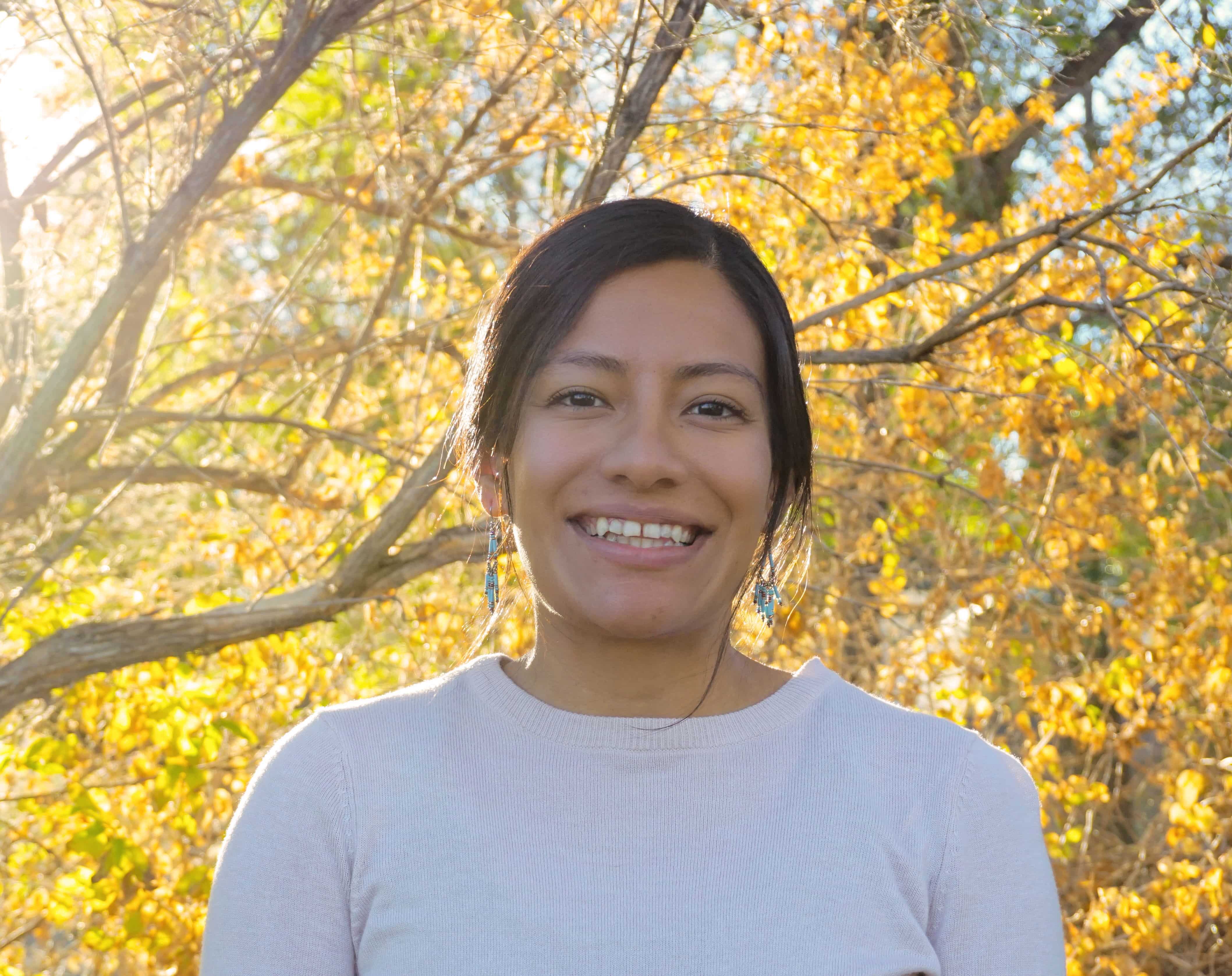
Brianda Hernandez Rosales is a graduate research assistant with the Division of Hydrologic Sciences at DRI in Reno.
Credit: Mike Hernandez.
DRI: What research projects are you working on? And who at DRI are you working with?
Hernandez: My graduate research focuses on assessing the feasibility of rainwater harvesting for food production in Peach Springs, AZ on the Hualapai Indian Reservation. Rainwater harvesting is the concentration, collection, and storage of rainwater to be used at a later time. It has been practiced for centuries in arid and semi-arid environments around the world, however, this practice has been overlooked in the United States as a means to ensure water security in rural areas. Rainwater harvesting can be used to diversify water portfolios and attain food security in vulnerable communities.
COVID-19 and supply-chain issues have exposed the need to assess food security in areas that are considered “food deserts” and rainwater harvesting can be a way to combat those issues, particularly in the Southwest, since monsoonal rains are available for capture during the growing season. This project has been inspirational for me because it can be scaled to any degree and applied to any rural community interested in harvesting rainwater to grow food. I’ve learned that this practice can be applied not only in rural communities but across the United States to reduce the strain on other water supplies. On this project, I work alongside Alexandra Lutz, Ph.D., Christine Albano, Ph.D., and Susie Rybarski at DRI.
In addition to my graduate research, I also worked alongside Maureen McCarthy, Ph.D., and Alexandra Lutz, Ph.D., during summer 2021 on providing content for the COVID-19 Toolkit website through Native Waters on Arid Lands (NWAL) project. I researched the impacts on water quality during drought in the West to help inform Tribal Extension agents, tribal ranchers, and farmers as well as tribal members about these looming issues.
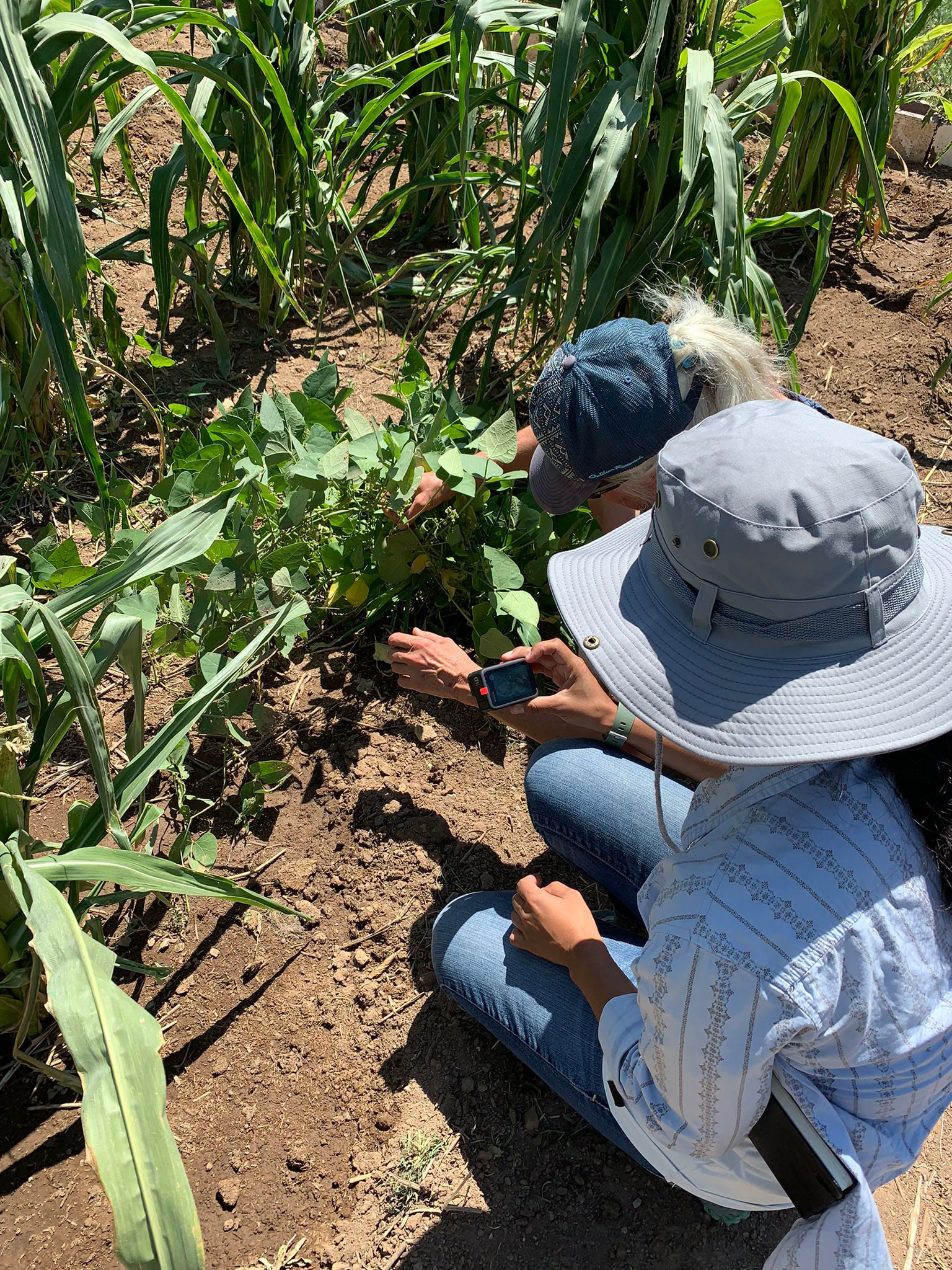
Brianda documenting the crops currently grown in the Hualapai Community Garden in Peach Springs, AZ with support from the Federally Recognized Tribal Extension Program (FRTEP) agent for the tribe, Elisabeth Alden.
Credit: Alexandra Lutz.
DRI: What are your short-term and long-term goals while at DRI?
Hernandez: My overall goal at DRI is to conduct good, reputable science that is accessible to everyone. I think having access to great science is important, now more than ever. My short-term goal is to finish my degree in May 2022. My long-term goal is to continue working with folks at DRI and the NWAL team to assist in the important work that is being done to ensure climate resiliency among the communities that need it most.
DRI: Tell us about yourself. What do you do for fun?
Hernandez: Like many people at DRI, I am a lover of the outdoors! You can find me climbing boulders in the Tahoe Basin, Bishop, California, or throughout the West. I also enjoy mountain biking on any dirt, fly fishing at any body of water, and simply just camping with friends in the mountains or the open desert. We live in such a beautiful area here in the West, it’s nice just to explore.
When I am not outside, I enjoy reading books about people who do things outside (e.g., adventure memoirs, anthropology books) or science books. I also enjoy listening to music, eating delicious food, and drinking wine while having great conversations with family and friends.
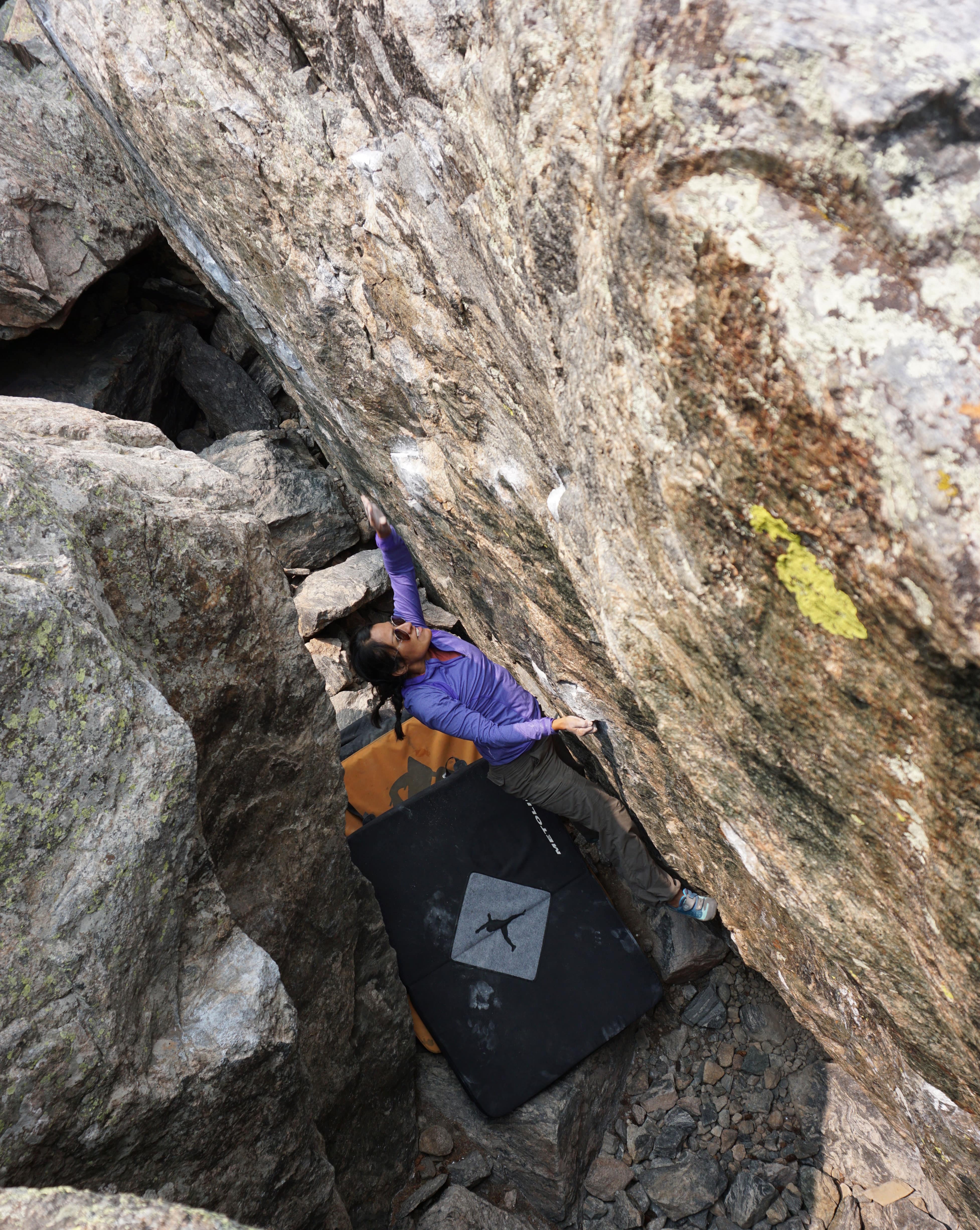
“Pebble wrestling” in Rocky Mountains National Park.
Credit: Mike Hernandez.
Additional Information:
For more information on graduate programs at DRI, please visit: https://www.dri.edu/education/graduate-programs/.