New bill was signed into law by Governor Lombardo and will allocate $1.2M to assist in drought management
The Nevada State Legislature has unanimously passed a measure aimed at funding a statewide cloud seeding project. The appropriation of $1.2M over two years will be allocated to DRI for its multi-location cloud seeding research and operations. This project builds upon the efforts from Save Red Rock and DRI, whose recent “Make it Rain” campaign has provided measurable success in drought remediation and a better understanding of winter storm clouds crossing the southern Spring Mountains.
“It was always our goal to see the state take over funding this incredibly important conservation initiative,” said Save Red Rock advisory board member Pauline van Betten. “When we launched our project, we were hoping to increase precipitation in Red Rock in support of the plant and animal life, and to gain enough public awareness to earn legislative support. We are thrilled to be able to say we did both!”
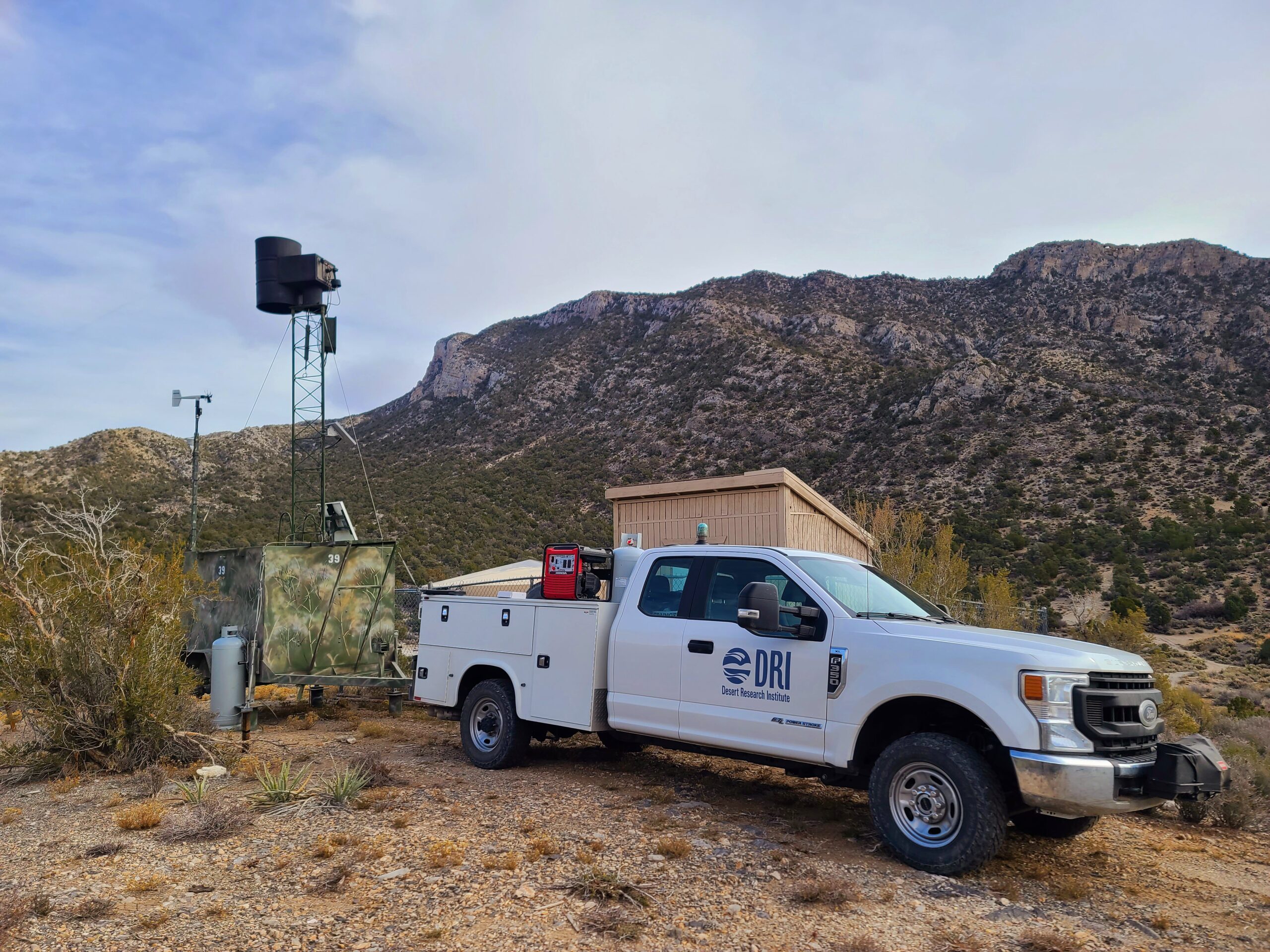
Last fall, Save Red Rock launched a partnership with DRI to privately fund a cloud seeding program in the Spring Mountains, with the ultimate goal of soliciting future governmental funding. That program enjoyed incredible success, raising more than $100,000 and funding a cloud seeding generator targeting the Red Rock Canyon National Conservation Area.
“DRI is a proud pioneer of weather optimization research and practices, which have been used successfully for generations. We appreciate the support of Save Red Rock and its ‘Make it Rain’ campaign. The efforts of Save Red Rock raised awareness of the science of cloud seeding and funded a cloud seeding generator, resulting in more than 6,500-acre ft of water added back into the aquifers of the Red Rock Canyon National Conservation Area. The approval of SB99 by the Nevada legislature will allow us to operate a statewide cloud seeding effort that will help to alleviate some of the effects of drought, and improve knowledge of winter storm clouds crossing Nevada for the next two years,” stated DRI’s Program Director Frank McDonough.
Cloud seeding is a safe and effective method used all over the world to enhance precipitation. It works by sending silver iodide, a natural and non-toxic compound, into a potential storm cloud which increases the the cloud’s precipitation efficiency. Winter seeding techniques feature ground-based generators operated remotely by meteorologists who monitor conditions and carefully evaluate when to seed. Each generator has the potential of adding an average of 3,000-4,000 acre-feet of additional precipitation to the seeded areas.
DRI has been pioneering cloud seeding programs since the early 1960s. It now offers time-tested methods that are proven to enhance snowfall in several mountain ranges, including the Lake Tahoe Basin
(CA/NV), the Walker Basin (CA/NV), the Spring Mountains (NV), the Ruby and Santa Rosa Mountains (NV), the San Juan Mountains (CO), and the Upper Colorado River Headwaters region (CO).
For those interested in learning more about how cloud seeding works, or the partnership project between DRI and Save Red Rock, visit: https://saveredrock.com/make-it-rain/
Learn more about Cloud Seeding on our YouTube Channel
About Save Red Rock
Save Red Rock is a 501c3 organization with a mission to preserve, protect, and enhance the natural, cultural, recreational, and scenic resources in and around the Red Rock Canyon National Conservation Area to ensure natural resource sustainability and promote responsible recreational enjoyment for all user groups now and for future generations.
About the Cottonwood Springs Water Stewards
The Cottonwood Springs Water Stewards is a committee of Save Red Rock whose goal is to preserve the springs and aquifers in Red Rock Canyon. Members of the Stewards include experts in botany, environmental science, land management and more.
About DRI
The Desert Research Institute (DRI) is a recognized world leader in basic and applied environmental research. Committed to scientific excellence and integrity, DRI faculty, students who work alongside them, and staff have developed scientific knowledge and innovative technologies in research projects around the globe. Since 1959, DRI’s research has advanced scientific knowledge on topics ranging from humans’ impact on the environment to the environment!s impact on humans. DRI!s impactful science and inspiring solutions support Nevada’s diverse economy, provide science-based educational opportunities, and inform policymakers, business leaders, and community members. With campuses in Las Vegas and Reno, DRI serves as the non-profit research arm of the Nevada System of Higher Education. For more information, please visit www.dri.edu.