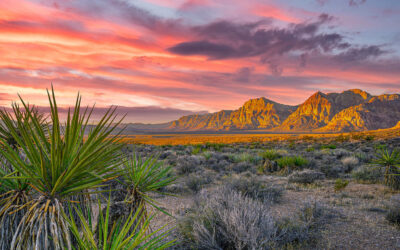
The DRI Conservation Ecology Lab, led by Tiffany Pereira and Tsvetelina Stefanova, helps guide the conservation and restoration of the Southwest’s diverse flora and fauna through basic and applied ecology and collaboration with federal agencies, community non-profits, and more. Central to the Conservation Ecology Lab’s mission to protect desert ecosystems is addressing and educating the public on the detrimental effects of invasive species, particularly on rare and threatened species.
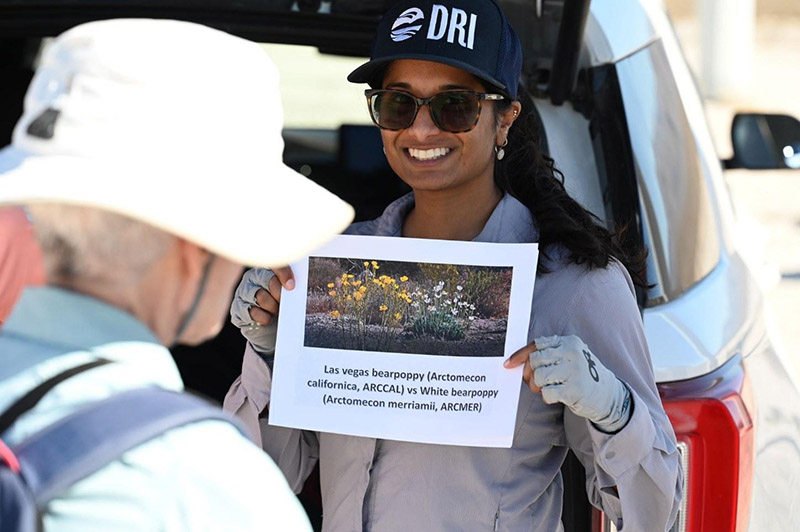
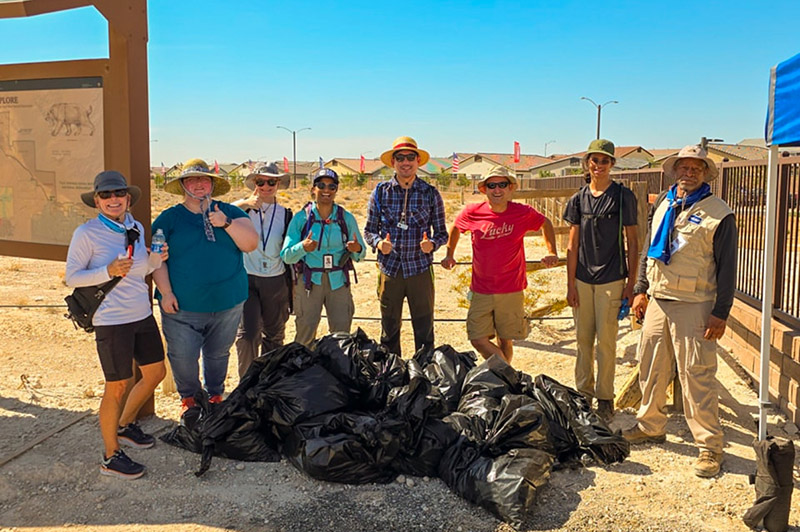
Last year, the Conservation Ecology Lab hosted two public meetups for “Invasive Weed Pulls” at Tule Springs Fossil Beds National Monument in Southern Nevada. This event was planned in conjunction with the nonprofit organization Protectors of Tule Springs and the National Park Service. Volunteers were taught about native ecosystems, the negative effects of invasive weeds, their impact on rare plant species and desert habitat, and the best practices for effective removal. Hundreds of Russian thistle and saltlover plants were removed during these events, preventing thousands of seeds from entering the soil. These invasive species threaten rare plants like the Las Vegas bear poppy and the Las Vegas buckwheat. These events bring awareness to the community and recruit new volunteers for conservation efforts. The Conservation Ecology Lab’s work with Tule Springs Fossil Beds National Monument will continue this year with more volunteer events planned.
Help protect the Southwest’s native flora and fauna from invasive species! Philanthropic support helps the Conservation Ecology Lab procure necessary lab and field supplies, integrate art & science through botanical illustration, and engage and educate the public.
Donate now to support DRI’s Conservation Ecology Lab.